Your kitchen bin is full again. At home in Sharjah, you might be holding an empty bottle in one hand and a takeaway box in the other, wondering what belongs in recycling.
In an office in Dubai, it's often the same problem in a bigger room. Paper, cans, coffee cups, and empty 5-gallon water bottles all build up fast, and nobody wants to guess wrong.
Recycling in Dubai gets easier once you stop treating it like a test. You only need a few simple rules, a steady routine, and a clear place for common items to go. If you also arrange practical services like drinking water delivery UAE for returnable bottles, daily waste feels much more manageable.
Table of Contents
- Why Recycling in the UAE Matters
- Your Guide to Recyclable Materials in Dubai
- Getting Your Recyclables Ready for Collection
- Where to Recycle in Dubai Sharjah and Ajman
- Easy Recycling Habits for Your Home and Office
- Frequently Asked Questions About Recycling
Why Recycling in the UAE Matters
A lot of people want to recycle, but they get stuck on the small stuff. Is this container too dirty, does this lid stay on, and where do the bigger bottles go?
That confusion is normal. Whether you live with your family in Ajman or manage a busy office water point in Dubai, waste piles up when the system isn't clear.
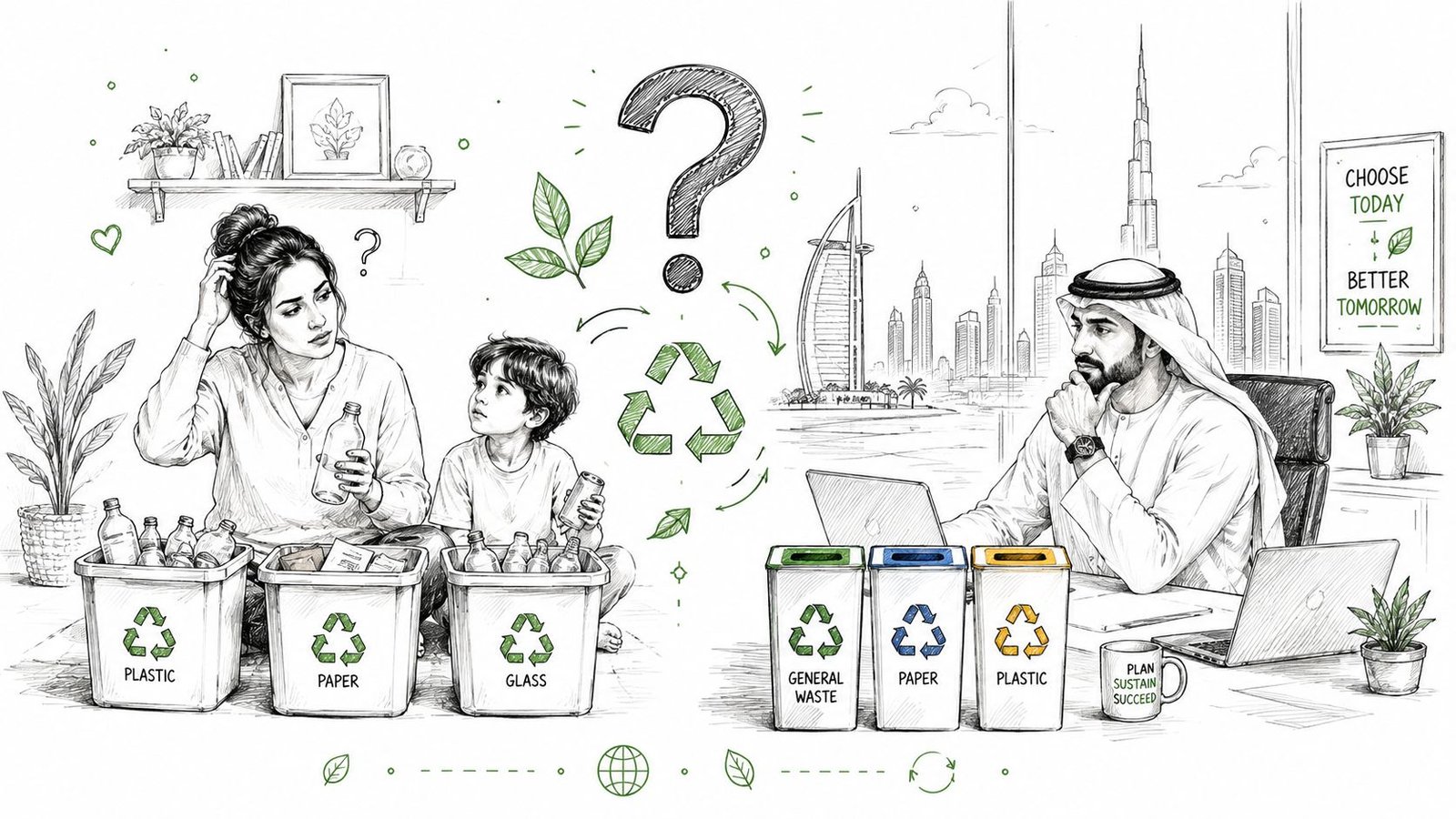
The good news is that recycling in the UAE doesn't have to be perfect to be useful. Small habits matter when many homes and workplaces do them consistently.
A familiar home and office example
At home, the easiest starting point is often the kitchen. You finish groceries, unpack cardboard, empty plastic bottles, and suddenly your general rubbish is mixed with things that could have been sorted.
In an office, the pattern is similar. Delivery boxes, printed sheets, cans from lunch, and bottles from shared water stations all end up together unless someone sets a simple routine.
Practical rule: If an item is empty, mostly clean, and made of a common material like paper, plastic, metal, or glass, it's worth checking for recycling before you throw it away.
That's why many families and office managers do better when they focus on the how rather than the theory. Put one container for recyclables near the place where waste happens, then sort the obvious items first.
Why your small actions count
Recycling supports a more organised, lower-waste way of living across the Emirates. You don't need a perfect zero-waste lifestyle. You just need a repeatable habit that works in your flat, villa, school office, clinic, or workplace.
A useful way to think about it is this:
- At home: Recycling helps you reduce messy overflow in your regular bin.
- At work: Recycling makes shared spaces cleaner and easier for staff to use.
- With bottle returns: Reusable containers, including larger water bottles collected by suppliers, fit neatly into a practical routine.
If you want more local reading on everyday sustainability habits, this guide on recycling in the UAE is a helpful next step.
Your Guide to Recyclable Materials in Dubai
Most confusion comes from mixed materials. A clean bottle is simple. A greasy food box, broken plate, or soft plastic bag is where people start guessing.
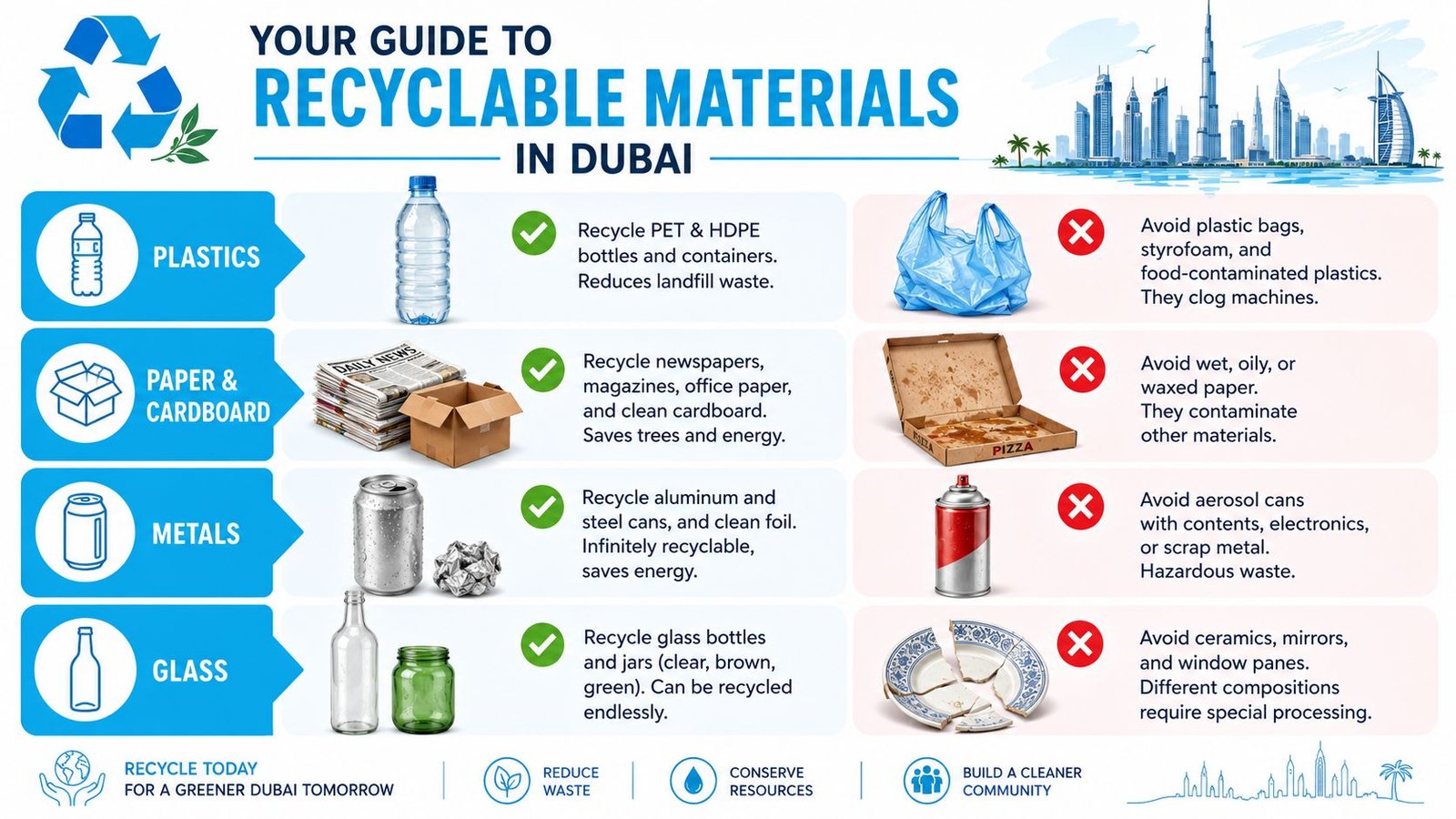
You'll make better decisions if you sort items into four groups. Start with plastics, paper and cardboard, metals, and glass.
Plastics
Plastic is the category that confuses people most. Some plastic items are commonly accepted, while others cause problems during sorting.
Usually okay
- Plastic bottles: Empty water bottles and drink bottles are the easiest example.
- Rigid containers: Food tubs, detergent bottles, and other firm household containers are often easier to process when clean.
- Bottle caps and lids: These may be accepted in some systems, but only if they're clean and local collection allows them.
Usually avoid
- Plastic bags: These often need separate handling and shouldn't be mixed into regular recycling.
- Foam packaging: Light foam food trays and similar items usually don't belong in standard bins.
- Dirty plastic: If it still has sauce, oil, or food stuck inside, leave it out until it's cleaned.
For homes and offices that order clean drinking water UAE in recyclable or returnable containers, it helps to separate single-use bottles from larger returnable ones right away.
Paper and cardboard
Paper looks easy, but cleanliness matters. Dry, flat paper is helpful. Wet or greasy paper is not.
A simple yes and no guide helps:
| Material | What to do |
|---|---|
| Newspapers and office paper | Recycle if dry and clean |
| Clean cardboard boxes | Flatten and recycle |
| Magazines and leaflets | Recycle if dry |
| Oily pizza boxes | Put greasy parts in general waste |
| Wet napkins and tissues | Don't place in recycling |
If your office gets regular deliveries, collapse boxes as soon as they're emptied. That one step keeps the recycling area from turning into a storage corner.
Metals and glass
Cans, tins, and jars are often straightforward. The main issue is leftover contents.
Rinse first. A clean can or jar is far easier to recycle than one with food still inside.
Metals that are usually suitable
- Drink cans
- Food tins
- Clean foil
Glass that is usually suitable
- Bottles
- Jars
Leave out
- Ceramics
- Mirrors
- Window glass
- Broken mixed glass unless your local point accepts it separately
If you want a closer look at bottle-friendly options and container choices, this page about recyclable water bottles gives useful context.
Getting Your Recyclables Ready for Collection
A recyclable item can still be rejected if it's messy. That's why preparation matters almost as much as sorting.
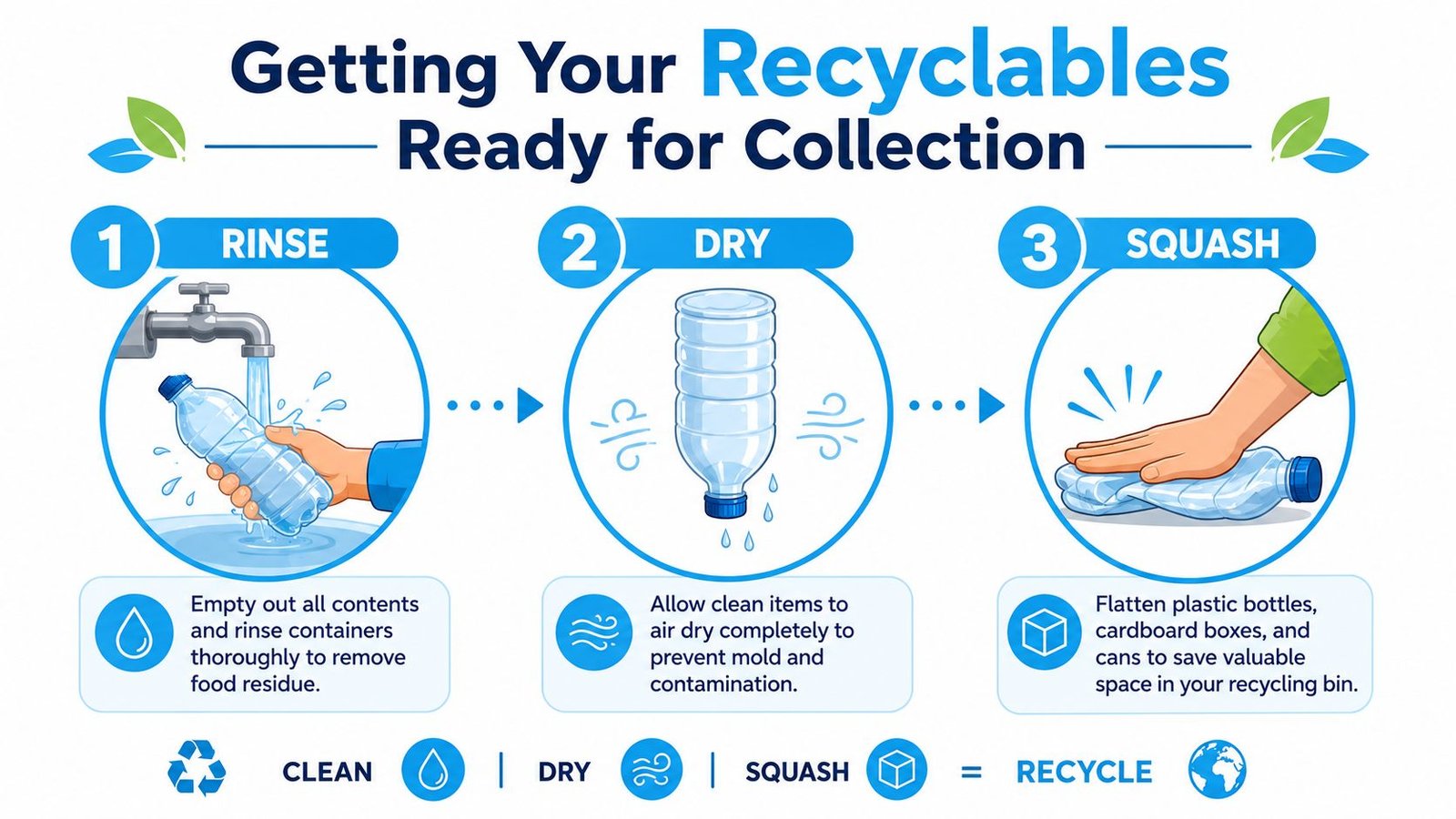
The easiest routine is rinse, dry, squash. It works for families, reception areas, staff kitchens, and storage rooms.
Rinse and dry
You don't need to scrub every item like a plate for dinner. You just need to remove leftover food or drink so the material stays usable and doesn't smell.
For example, if you finish a yoghurt tub at home, give it a quick rinse. In an office pantry, empty cans and bottles should be drained before they go into the recycling container.
- Rinse containers: Remove visible food or liquid.
- Let them dry: A quick air dry helps stop leaks and odours.
- Keep paper dry: Don't mix damp items with cardboard or documents.
A quick visual guide can help your team or family remember the process.
Squash and store
Flattening items saves space. It also makes collection points easier to use, especially in flats, villas, and office utility areas.
Crush plastic bottles when possible. Flatten cardboard after unpacking deliveries. Press cans gently if it's safe to do so.
A tidy recycling area gets used more often. People stop participating when bins overflow or look confusing.
What to do with empty 5-gallon water bottles
This is one of the most overlooked parts of recycling in Dubai. Large 5-gallon water bottles usually don't belong in your normal mixed recycling bin.
Instead, keep them clean, upright, and ready for supplier collection. For many homes and offices using 5 gallon water delivery UAE, the practical routine is simple. When the next delivery arrives, the driver collects the empties for reuse or proper handling.
That's especially helpful in shared workplaces. If you handle office water delivery Dubai, set one clear return area so staff don't scatter empty bottles around the pantry, corridor, or store room.
Where to Recycle in Dubai Sharjah and Ajman
Once your items are sorted and prepared, the next question is where they should go. The answer depends on what you have and how much of it there is.
For daily household waste, many people use nearby municipal recycling bins. For larger clear-outs, community centres and specialist drop-off points are usually the better choice.
Everyday options near you
In many neighbourhoods across Dubai, Sharjah, and Ajman, you'll find colour-coded bins or shared collection points. These work best for regular items like bottles, cans, paper, and flattened cardboard.
If you live in an apartment building, check with building management first. Some towers have their own collection setup, while others direct residents to nearby public points.
A simple way to choose is:
- Neighbourhood bins: Best for small daily amounts.
- Building collection areas: Best when your property already separates waste.
- Community recycling points: Best for larger loads and mixed batches.
Larger drop-offs and special cases
Offices often build up more material than a household does. End-of-month paperwork, delivery packaging, and pantry waste can pile up quickly if there's no regular outlet.
That's when a larger recycling centre or private collection point becomes useful. These locations are often better for bulk cardboard, grouped containers, or items that don't fit comfortably in a small public bin.
If you're waiting for your next water delivery Dubai or water delivery Sharjah, it can be a good time to clear out your other sorted recyclables too. Pairing bottle returns with a regular recycling errand makes the habit much easier to keep.
A simple decision table
| Situation | Best option |
|---|---|
| A few bottles and cans from home | Nearby local recycling bin |
| Cardboard from online deliveries | Flatten and take to a community point if home bins are small |
| Office pantry waste | Use a central office collection area, then move it in batches |
| Empty large water bottles | Hold for supplier pickup |
| Mixed or unclear items | Ask your building or local collection point before dropping off |
The goal isn't to find one perfect place for everything. It's to match each item to the most practical local option in Dubai, Sharjah, or Ajman.
Easy Recycling Habits for Your Home and Office
Good recycling habits stick when they fit your normal day. If a system feels complicated, people stop using it after a week.
The easiest win is to reduce decision-making. Make sorting obvious, keep the containers nearby, and give common items a fixed place.
For your home
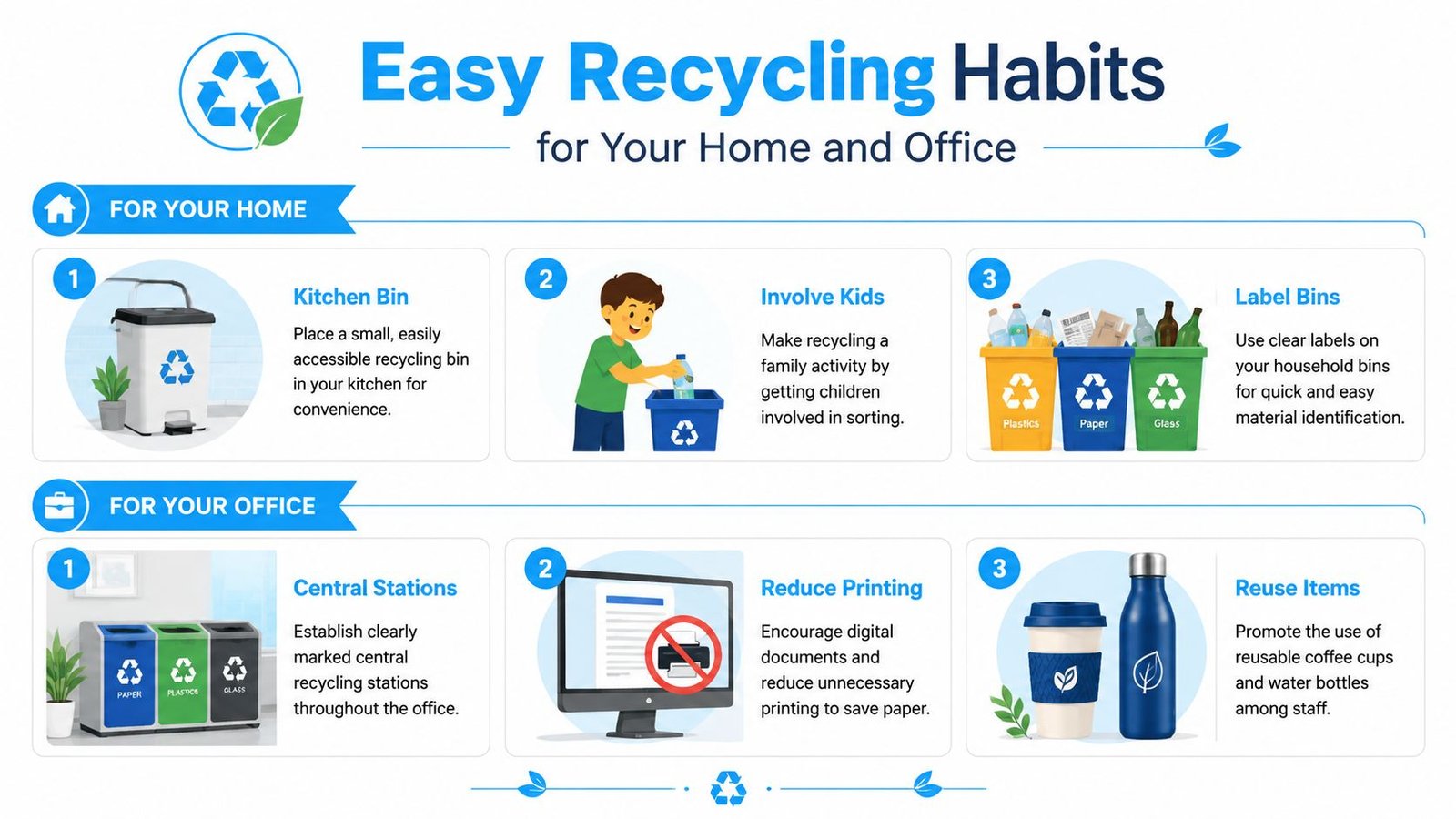
Families usually do best with a simple setup in the kitchen or utility area. You don't need a big system. One clearly marked container for recyclables is enough to start.
Try these practical habits:
- Keep it close: Place your recycling bin where bottles, cans, and boxes are used.
- Teach by item: Show children a bottle, a cereal box, and a can. Real examples work better than long explanations.
- Sort during unpacking: Break down delivery boxes immediately instead of stacking them in a corner.
If your home already uses scheduled drinking water delivery UAE, add empty bottle returns to the same weekly routine. That removes one more thing from your general waste flow.
For your office
Offices need visibility more than motivation. Staff recycle more when bins are easy to find and labels are easy to read.
A workplace routine often works best when you include:
- Central collection stations: Put them near pantry areas, print rooms, or exits.
- Simple labels: Use words and pictures, not long instructions.
- One bottle return point: Keep empty large bottles in a single tidy spot for collection.
- A recycling lead: One person can check that bins stay usable without turning it into a big project.
For teams that handle office water delivery Dubai, bottle returns are one of the easiest wins. A reliable return routine linked to your regular deliveries keeps the area neat and avoids clutter.
You can also think about packaging choices in a broader way. This page on water glass bottle can help if you're comparing container habits and waste patterns in your space.
Keep the system boring and clear. That's what makes people follow it.
Frequently Asked Questions About Recycling
Some recycling questions keep coming up because daily life is messy. A quick answer can save you from throwing useful materials away.
Quick Recycling FAQ
| Question | Answer |
|---|---|
| Do I need to wash containers before recycling? | Yes, but only lightly. Rinse out food or drink so the item is clean enough to store without smell or residue. |
| Can I recycle plastic bags with bottles and cans? | Usually no. Keep plastic bags out of mixed recycling unless a specific collection point accepts them. |
| What should I do with pizza boxes? | If the box is clean, recycle it. If parts are greasy or oily, tear off the clean section for recycling and throw the dirty part away. |
| Can apartment residents recycle easily? | Yes. Start with your building management. Many flats have shared waste areas or can direct you to the nearest community point. |
| Are electronics part of normal recycling bins? | No. Phones, cables, batteries, and other electronics need separate handling through dedicated collection options. |
| Should glass be recycled with paper and plastic? | Follow your local collection setup. Some places accept mixed recyclables, while others want glass handled separately. |
| What do offices do with large amounts of cardboard? | Flatten it, store it dry, and move it in batches to your building collection area or a suitable drop-off point. |
| What should I do with empty 5-gallon drinking water bottles? | Don't put them in regular recycling bins. Keep them clean and return them to your water supplier when your next delivery arrives. |
A simple recycling habit works best when it's tied to something you already do every week. For many homes and offices in Dubai, Sharjah, and Ajman, that includes managing bottle returns alongside regular water delivery Ajman, water delivery Dubai, or water delivery Sharjah schedules.
If you want an easier routine for your home or workplace, order your 5-gallon bottled drinking water from Oxy Plus Water and contact the team on WhatsApp through the website. It's a practical way to keep fresh bottle deliveries and empty bottle returns organised in Dubai, Sharjah, and Ajman.