You’re probably doing one of two things right now. You’re either standing in a supermarket aisle in Dubai, Sharjah, or Ajman wondering why every bottle looks the same, or you’re an office manager trying to set up a dependable water supply without making the wrong call.
That confusion is normal. Bottled water in UAE isn’t just about picking a familiar label. It’s about understanding what you’re buying, how it’s treated, what the label tells you, and whether your supplier can deliver consistently to your home or workplace.
This guide keeps it simple. If you want cleaner decision-making for your family, your staff, or your guests, you’ll leave knowing how to read a bottle and how to choose a service that fits your routine.
Table of Contents
- Why Choosing Your Water in the UAE Matters
- Purified Mineral or Spring What Is the Difference
- How to Read the Label Decoding Quality Marks
- Simple Health Checks pH Balance and Sodium
- Choosing a Reliable Water Delivery Service
- Your Guide to Ordering and Delivery Logistics
- Your Questions Answered
Why Choosing Your Water in the UAE Matters
You notice it fast after arriving in the UAE or taking over an office pantry. A quick supermarket stop turns into a shelf full of near-identical bottles, and a simple delivery order suddenly feels like a decision with health, budget, and convenience attached to it.
For bottled water in the UAE, choosing well is part of daily life. In a hot climate, people buy and drink water often, keep extra stock at home, and depend on regular deliveries for offices, villas, and apartments.
The local context shapes that habit. Drinking water in the UAE is closely tied to desalinated supply, heavy air conditioning, long commutes, and months of strong heat. As a result, many residents pay closer attention to taste, consistency, storage, and delivery reliability than they did before living here.
A useful way to see it is this. Choosing water is a bit like choosing rice or cooking oil for your kitchen. Many options will do the job, but once you know how to judge quality, the label starts to tell you something practical instead of sounding like marketing.
Daily life makes water a bigger decision
At home, the questions are usually simple. Will everyone drink it without complaining about the taste? Is it easy to reorder? Does the label show the details you care about?
In an office, the same choice has more moving parts. Staff need a steady supply in pantry areas and meeting rooms. Visitors expect clean, good-tasting water. If deliveries are late or bottles run out before the weekend, people notice immediately.
Practical rule: In the UAE, water is not a rare purchase. It is a routine household and workplace supply.
That is why brand name alone is not enough. A smart choice usually comes from reading the label, checking the source and treatment type, and making sure the supplier is dependable.
The shelf is crowded, so your label skills matter
Many bottles look similar at first glance. The differences often sit in small print, not on the front of the packaging.
New residents and office managers usually run into four common sticking points:
- Look-alike products: Bottles can appear almost identical on the shelf or in a supplier catalogue.
- Technical terms: Words like purified, mineral, spring, pH, and low sodium sound important, but they are not always explained clearly.
- Delivery reliability: Good water on paper is less useful if orders arrive late or customer service is inconsistent.
- Different use cases: A family with children may care most about taste and easy reordering, while an office may focus on volume, dispenser compatibility, and backup stock.
This is particularly important for children, older adults, and people watching their sodium intake, since those readers often want more than a familiar brand logo. They want clear facts.
The good news is that you do not need a chemistry background to choose confidently. You only need to learn a few label cues, understand which certifications are worth checking, and know how to compare one bottle with another. Once you can do that, you stop guessing and start choosing water like someone who understands exactly what they are buying for their family or team.
Purified Mineral or Spring What Is the Difference
The fastest way to feel confident is to separate water types by source and treatment. Once you understand that, the labels stop looking so mysterious.
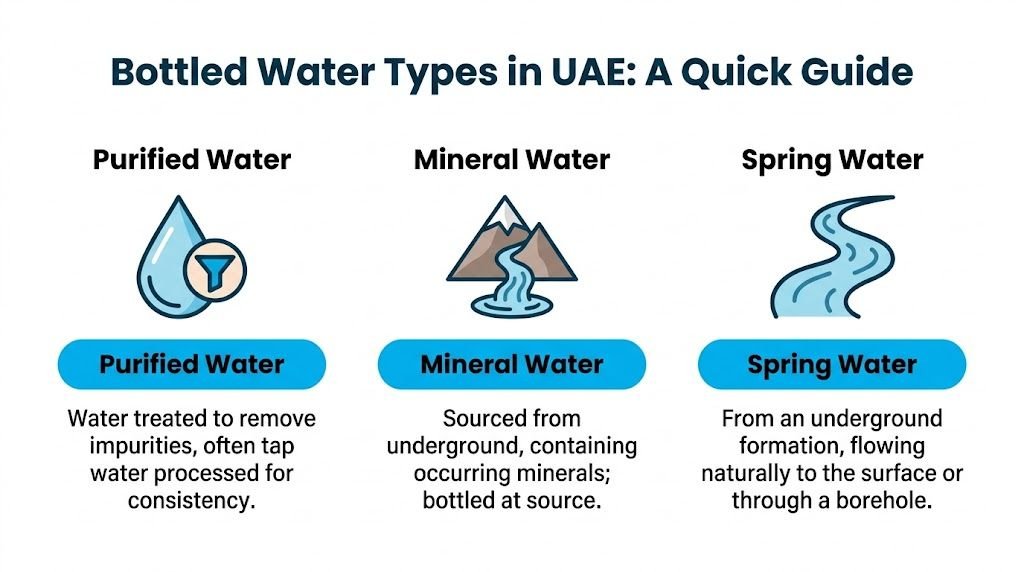
A simple way to think about each type
Purified water is like a clean slate. It has been treated to remove unwanted impurities so the result is more controlled and consistent.
That’s one reason many homes and offices prefer it. If you want a predictable taste every time, purified water often feels straightforward.
Mineral water comes from an underground source and contains naturally occurring minerals. People usually choose it because they like the natural composition and taste profile.
Spring water also comes from an underground formation, but the key idea is that it reaches the surface naturally or is collected through a borehole. Many people associate it with a more natural source journey.
The easiest question to ask is this. Do you want highly treated consistency, or do you prefer water known for its natural source and mineral character?
Some readers assume “mineral” always means “better” and “purified” means “less natural”. That’s too simplistic. These are different categories, not automatic quality rankings.
Water Types at a Glance
| Water Type | Source | Key Feature | Best For |
|---|---|---|---|
| Purified Water | Treated water source | Filtered for consistency | Homes, offices, regular daily use |
| Mineral Water | Underground source | Naturally occurring minerals | People who prefer a distinct mineral taste |
| Spring Water | Underground formation | Collected as it flows to the surface or via borehole | People who prefer source-based water choices |
How this helps you choose faster
For a family, the decision often comes down to routine. If everyone drinks from the same supply every day, you’ll probably want something consistent, easy to reorder, and practical in larger formats such as 5-gallon water.
For an office, the decision usually includes storage, dispenser use, and delivery schedule. That’s why many businesses looking for drinking water delivery UAE focus on reliability first, then water type second.
A few useful examples:
- For daily home use: Purified water is often the simplest option when you want a regular supply and a familiar taste.
- For guests or preference-led buying: Mineral water may suit people who enjoy a more noticeable mineral profile.
- For label-conscious shoppers: Spring water appeals to buyers who care about how the source is described.
Don’t overcomplicate it. Start with your use case. The “best” water is usually the one that matches your household habits or your office setup, while also giving you confidence in quality and supply.
How to Read the Label Decoding Quality Marks
You are standing in a supermarket aisle or approving an office order, and three bottles look equally convincing. The front labels all sound clean and reassuring. The main difference usually shows up in the small print.
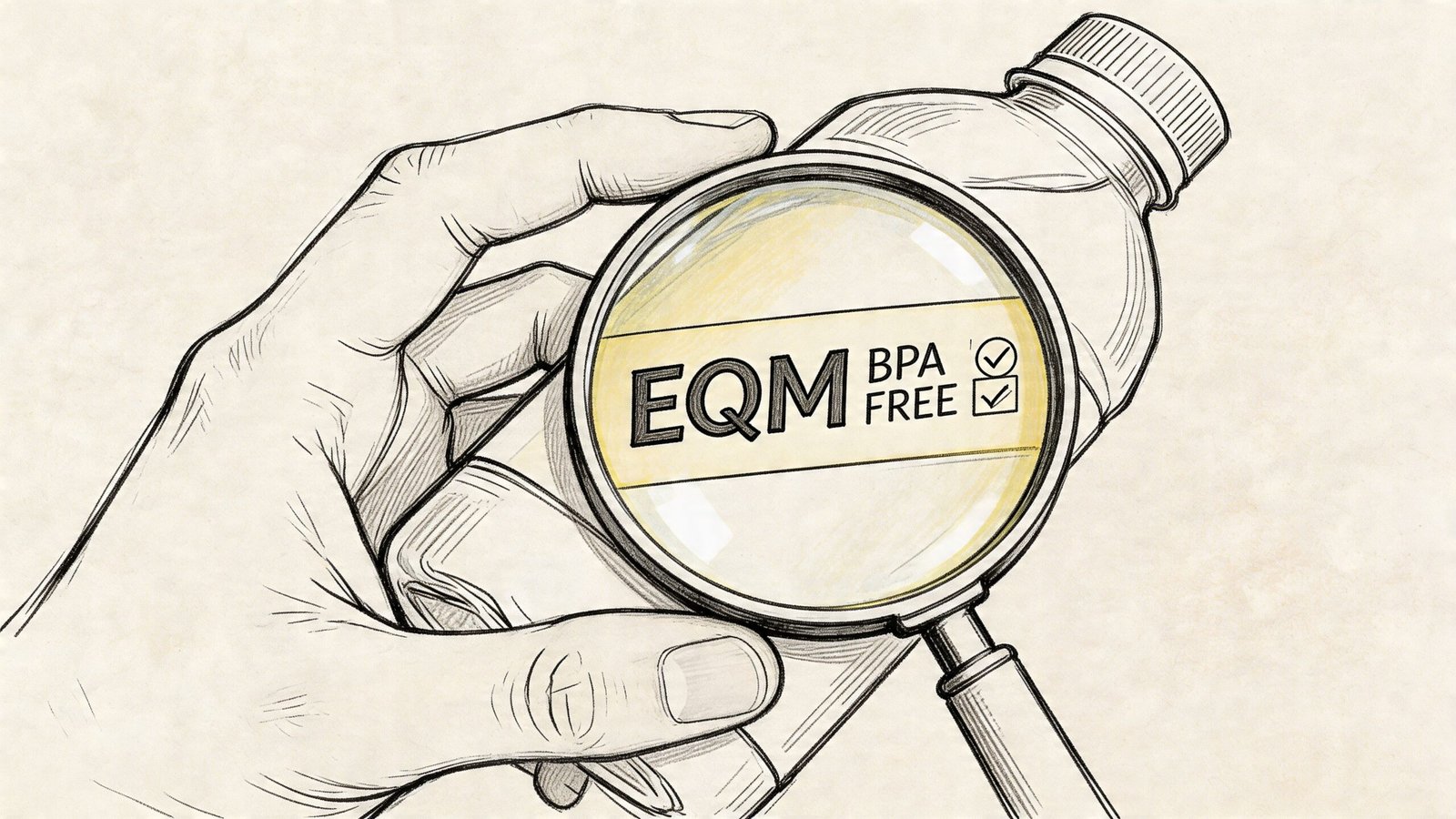
A water label works like an ID card. It gives you clues about where the water came from, how it was handled, and whether the producer follows recognised standards. Once you know what to scan for, you can compare bottles with much more confidence instead of relying on branding alone.
The marks that matter most
In the UAE, quality marks are more than design elements. They help you separate a polished label from a product backed by documented processes.
The first mark many buyers look for is the Emirates Quality Mark. For everyday shoppers, the practical meaning is simple. It shows the product has met UAE requirements tied to quality and conformity.
You may also see GRS and ASCB(E) mentioned by some suppliers. These are not the same type of mark, so it helps to read them carefully. GRS is generally linked to recycled material traceability, while ASCB(E) relates to accredited certification frameworks. If that sounds technical, the easy takeaway is this: one mark can relate to the product itself, while another can relate to how the company manages quality or verifies materials.
If you want a clearer explanation of how these logos affect your buying decision, this guide on why quality certification matters when choosing a purified water manufacturer breaks it down in plain language.
A quick label check usually comes down to three questions:
- Is there a recognised UAE quality mark?
- Does the label or supplier clearly explain the certification instead of just displaying initials?
- Do the marks relate to product compliance, packaging traceability, or company certification systems?
How to read those marks without overthinking them
A simple rule helps. Start with the mark that tells you the water meets local requirements. Then look at the extra certifications as supporting information, not as a substitute.
For a home buyer, this can save time. You do not need to become a lab expert. You just need to know whether the producer gives you clear, checkable information.
For an office manager, school administrator, clinic buyer, or gym operator, this matters even more because consistency affects many people, not just one household. Clear certification can also make internal approvals easier, especially if your team needs to compare vendors in a practical way.
A useful habit before you order
Check the bottle or supplier page the same way you would check ingredients on food packaging. Scan for the quality mark first. Read the wording around it. Then see whether the company explains bottle handling, delivery process, and product details in a clear way.
That habit gives you a better standard for comparison.
One example in the UAE market is Oxy Plus Water, which states that it supplies purified drinking water with certifications including Emirates Quality Mark, GRS, and ASCB(E), and provides delivery to homes and businesses in Dubai, Sharjah, and Ajman through WhatsApp ordering.
The goal is not to memorise every acronym. The goal is to know what to verify so you can choose bottled water for your family or team with less guesswork and more confidence.
Simple Health Checks pH Balance and Sodium
You don’t need deep chemistry knowledge to make a sensible choice. Two simple things often come up on bottled water labels and product pages: pH balance and sodium.
What pH means in everyday terms
For consumers generally, pH is really about preference and product profile. Many shoppers choose pH-balanced water because they want something positioned as balanced and easy for daily use.
If that term confuses you, this article on why pH-balanced water matters for daily hydration choices explains it in a more practical way. The key is not to turn pH into a miracle claim. It’s one part of how a water brand describes its composition.
Why sodium deserves a quick check
This part is easier to act on. Research cited by UserQ notes a “growing concern about the composition of bottled water in the UAE”, including concern about “chronic consumption of water with high sodium ion levels”. The same source also notes that 51.6% of children’s water intake comes from plain drinking water, as discussed in UserQ’s article on UAE water drinking habits and trust.
That matters because children, older adults, and people watching their sodium intake may want to pay closer attention to the label. You don’t need to panic. You just need to notice.
A simple home rule works well:
- If the water is for everyday family use, check sodium information
- If the water is for an office, choose a supplier that explains composition clearly
- If someone in your home has specific dietary concerns, compare labels before committing to recurring delivery
For many families, low-sodium water isn’t about trends. It’s about making a careful everyday choice.
That same thinking helps in workplaces too. When staff drink from the same supply every day, a clear and transparent product description is more useful than flashy branding.
Choosing a Reliable Water Delivery Service
Once you know what you want in the bottle, the next question is who should bring it to your door. Many people make a rushed decision here and regret it later.
The UAE bottled water market was valued at USD 1.61 billion in 2025 and is forecast to grow significantly, which means more suppliers are competing for attention in places like Dubai, Sharjah, and Ajman, according to IMARC Group’s UAE bottled water market outlook.
What to check before you order
More suppliers can be good news, but only if you know how to filter them. For both families and offices, reliability usually matters just as much as the water itself.
If you’re searching for water delivery Dubai or water delivery Sharjah, check whether the service feels organised from the first message. Slow replies, unclear delivery windows, and vague answers often become bigger problems later.
For water delivery Ajman, the same rule applies. A local service should make reordering easy, explain bottle exchange clearly, and help you avoid last-minute shortages.
A practical checklist
Use this list before you commit to a regular supplier:
- Area coverage: Make sure they actively serve your location in Dubai, Sharjah, or Ajman.
- Ordering method: WhatsApp is often the easiest option because it keeps your request, address, and timing in one thread.
- Container options: If you need dispensers or larger bottles, ask about 5-gallon drinking water availability.
- Schedule consistency: Ask how repeat deliveries are handled for homes and offices.
- Communication quality: Good suppliers answer clearly and don’t make basic ordering feel complicated.
Office managers should also ask about practical details. Can the team handle recurring office pantry needs? Can they deliver during business hours? Can they work with reception or building access rules?
Home users usually care about different details. Will the driver call before arrival? Can you reorder quickly when guests visit? Is there a smooth exchange process for empties?
A reliable water supplier should reduce your mental load, not add to it.
This is especially true for office water delivery Dubai where interruptions affect more people at once. In a home, running out is annoying. In an office, it affects staff, clients, and day-to-day operations.
If you’re comparing providers for 5 gallon water delivery UAE, trust the simple signals. Clear answers, area coverage, easy WhatsApp ordering, and a consistent delivery rhythm usually tell you more than a long sales pitch.
Your Guide to Ordering and Delivery Logistics
Once you pick a supplier, the process is usually much easier than people expect. Most problems happen because customers aren’t told what the normal routine looks like.
How a normal order usually works
For a first order, you usually send your name, location, and quantity. If you’re ordering through WhatsApp, the conversation stays easy to track, which is useful for both a family flat and a busy office.
If you’re new to bottled water in UAE, larger formats can be more practical than buying small bottles constantly. Many households and workplaces prefer recurring deliveries because it reduces the chance of running out during a busy week.
A normal setup often includes:
- Your first request with address details and preferred delivery time.
- Bottle drop-off at your flat, villa, office, clinic, gym, or shop.
- Empty bottle handling on later visits, depending on the supplier’s exchange system.
- Repeat scheduling based on your usage pattern.
For readers comparing suppliers, this page on water bottles delivery options in Dubai and surrounding areas shows the kind of service details you should expect to see explained clearly.
Small habits that make delivery easier
A few practical habits make a big difference.
- Keep one spare bottle: Don’t wait until the last dispenser refill.
- Store bottles properly: Keep them in a clean, shaded indoor area away from direct heat.
- Message early before weekends or events: This is especially helpful if you’re hosting guests or preparing for office meetings.
- Use one contact channel: WhatsApp works well because everyone can confirm quantities, access notes, and timing in one place.
Families often benefit from a simple routine such as checking bottle levels every few days. Offices usually do better with one designated staff member handling reorder messages and empty bottle tracking.
If your building has access restrictions, send those details in advance. Gate instructions, tower names, office suite numbers, and contact names save time for both you and the driver.
The main goal is simple. Your water delivery should feel predictable, not stressful.
Your Questions Answered
Some questions always come up after the first order. These are the ones families and office managers ask most often.
FAQ
1. Is bottled water in UAE mainly for drinking, or do people use it for other things too?
Many residents use bottled water for drinking first, but some also use it for tea, coffee, and cooking, depending on personal preference. It often becomes part of the daily routine rather than an occasional purchase.
2. How do I know if a bottled water brand is trustworthy?
Start with the label. Look for recognised quality marks, clear product information, and a supplier that explains its process and delivery system without vague language.
3. Is purified water better than mineral or spring water?
Not always. They’re different categories. Purified water is often chosen for consistency, while mineral and spring water may appeal to people who prefer a source-based identity or a different taste.
4. Should I check sodium on the label for my family?
Yes, especially if the water is used every day. It’s a sensible habit for households with children, older adults, or anyone who prefers to monitor sodium intake.
5. What size is most practical for regular home or office use?
For many homes and workplaces, larger bottles are more convenient than constantly buying smaller packs. That’s why many people choose 5-gallon delivery for dispenser use and regular replenishment.
6. How often should I reorder water?
That depends on how many people are using it and how quickly you go through bottles. Most households and offices find it easier to set a routine instead of waiting until the last bottle is nearly empty.
7. Can I arrange drinking water delivery UAE through WhatsApp?
Yes. Many customers prefer WhatsApp because it’s quick, easy to track, and practical for sending location details or repeat orders.
8. What should office managers ask before starting service?
Ask about delivery timing, area coverage, recurring schedules, empty bottle exchange, and building access handling. That makes the service smoother from day one.
9. Does delivery coverage matter that much?
Absolutely. A supplier may sound good, but if they don’t reliably cover your part of Dubai, Sharjah, or Ajman, you may face delays or inconsistent service.
10. How should I store bottled water at home or in the office?
Keep bottles in a clean indoor space away from direct sunlight and strong heat. Good storage helps maintain freshness and keeps the setup tidy.
If you want a simple and dependable way to manage your home or office water supply, contact Oxy Plus Water on WhatsApp through the website and arrange your next delivery for Dubai, Sharjah, or Ajman.