You get home in Dubai after a long day, turn on the tap, and the flow feels weak. At the same time, you start wondering what's sitting inside the building's drinking water tank, and whether your family should really be drinking from it.
Office managers in Sharjah and Ajman run into the same worry. Staff need water all day, guests expect it, and nobody wants last-minute surprises when building storage, maintenance, or supply interruptions become an issue.
A drinking water tank is part of daily life across the UAE, but it also brings questions about sizing, materials, cleaning, and local rules. If you're comparing tank storage with 5-gallon drinking water for home or work, it helps to understand both sides clearly before you decide.
Table of Contents
- Introduction to drinking water tanks
- Understanding drinking water tank basics
- Materials and types of drinking water tanks
- Calculating the right tank size for your needs
- Cleaning disinfection and maintenance steps
- UAE regulations and quality considerations
- Pros and cons of tanks versus 5-gallon drinking water delivery
- Choosing the best hydration solution for your home or office
- FAQ
- Is a drinking water tank the same as ready-to-drink bottled water?
- How do I know if my tank is the right size?
- Do all tanks in the UAE need an overflow pipe?
- Why do many people still choose bottled water in the UAE?
- What material is commonly preferred for UAE water tanks?
- How much 5-gallon water does a family usually use?
- Is 5-gallon bottled water common in the UAE?
Introduction to drinking water tanks
It's 7:30 in the morning. Kids need water bottles packed, the office pantry is about to open, and someone notices the water pressure is weaker than usual. In many UAE buildings, that moment is exactly why a drinking water tank matters.
A drinking water tank stores water so your home or workplace can keep running when supply fluctuates or pauses. For many families and office managers in the UAE, it is part of the normal setup, not just a backup for rare problems.
Still, buying or using a tank is only the first layer of the decision.
The bigger question is what the tank really gives you, and what it does not. A tank helps with water availability. It does not automatically give peace of mind for direct drinking, because stored water can be affected by tank condition, cleaning quality, pipe age, and how long the water sits before use.
That difference matters more than many people expect. A tank can look like a one-time purchase, but costs often continue in the background through inspections, cleaning, disinfection, repairs, and compliance with local building and health requirements in the UAE.
A simple way to view it is this: stored water is like food kept in a fridge. The container helps you keep a supply on hand, but cleanliness and handling still decide whether you feel good about consuming it.
That is why many homes and offices split their water plan into two uses. They rely on building storage for general daily needs, then choose 5-gallon drinking water delivery from Oxy Plus Water for the water people drink most often. It can be a practical mix, especially for managers and parents who want fewer upkeep tasks and more confidence in what people are consuming.
The sections below break that choice down step by step, with extra attention to hidden maintenance costs and UAE rules that are easy to miss at first glance.
Understanding drinking water tank basics
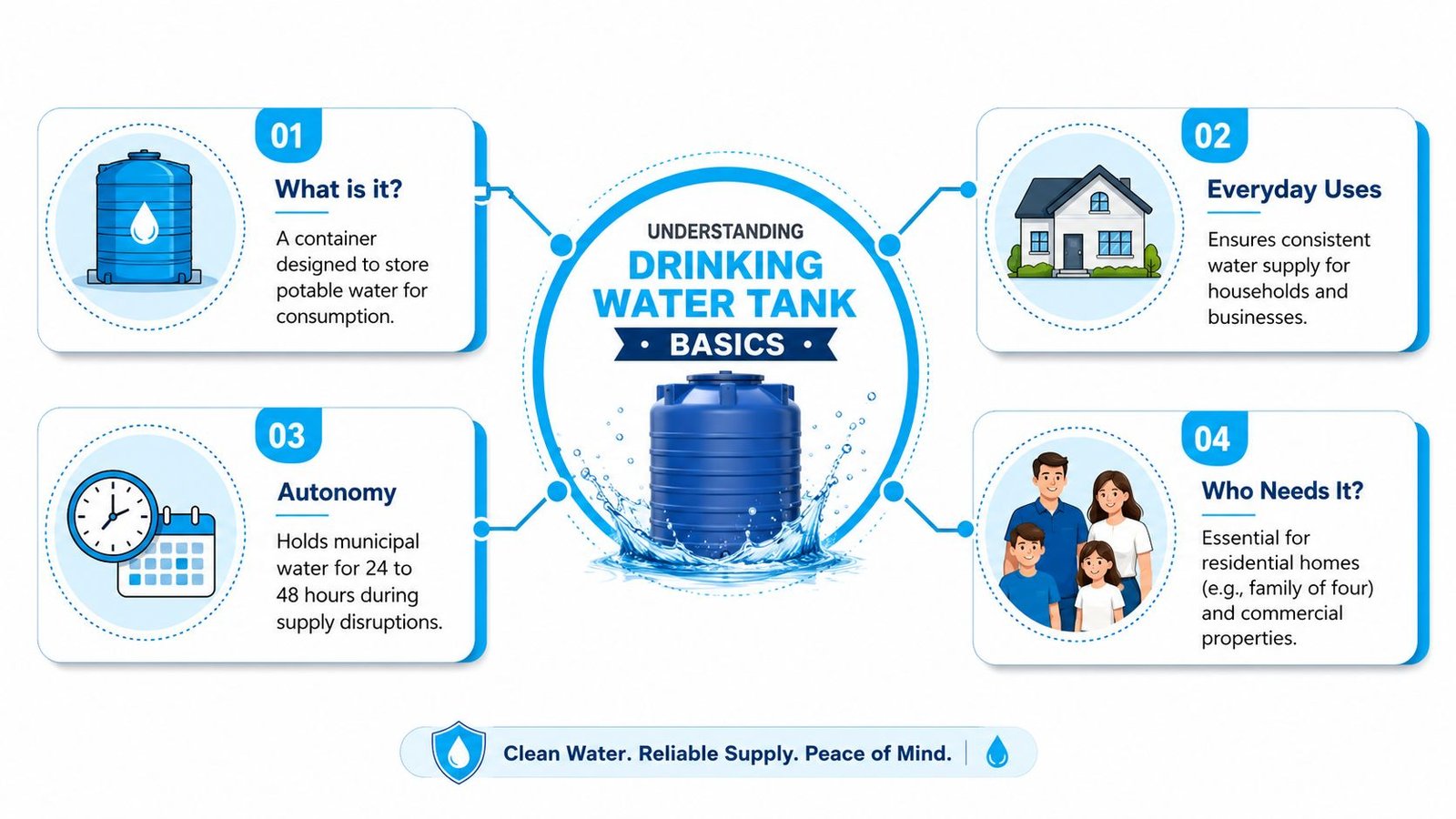
A drinking water tank stores potable water so you still have access when supply isn't steady. For a home, that means water for the kitchen, bathrooms, and normal routines. For an office, it supports washrooms, pantry use, and basic daily operations.
What a tank actually does
Think of your tank as a buffer between the public supply and your building. Water comes in, stays stored, and is used when you open a tap or run a fixture.
For families, that buffer helps during interruptions. For office managers, it reduces the chance that a short supply issue turns into complaints from staff or visitors.
Where people get confused
Many people assume a tank is only for emergencies. It isn't. In many UAE buildings, it's part of the normal water setup, not a backup that only matters once in a while.
Another common mix-up is between water availability and drinking preference. Your building may have enough stored water, but you may still prefer bottled water for direct drinking because stored water passes through pipes and sits inside tanks before reaching you.
Here's the easiest way to view it:
- Storage role: Your tank helps keep water available when supply changes.
- Daily use role: The same stored water often supports kitchen taps, washrooms, and cleaning.
- Drinking choice: Many households and offices still choose bottled water for direct consumption.
- Planning role: The tank affects how much reserve you have and how often you need checks.
A good tank setup is about continuity. A good drinking plan is about confidence.
Who usually needs one
Most villas, residential buildings, and many commercial premises depend on some form of stored water. A family in Ajman may want enough water for normal home use, while an office in Dubai may need a more organised approach so staff don't feel the impact of any interruption.
If you're researching water delivery Dubai or office water delivery Dubai, it helps to understand that these services often complement a building tank rather than replace it. One handles stored utility water. The other handles ready-to-drink water for people.
Materials and types of drinking water tanks
A tank's material shapes more than price. It affects heat resistance, cleaning effort, taste confidence, and how often small problems turn into paid maintenance visits.
In UAE conditions, that matters a lot. A tank may sit on a hot roof, inside a service area, or below ground where inspection is less convenient. The wrong choice can create extra cleaning work, faster wear, or more concern about the water you use every day.
Common tank materials
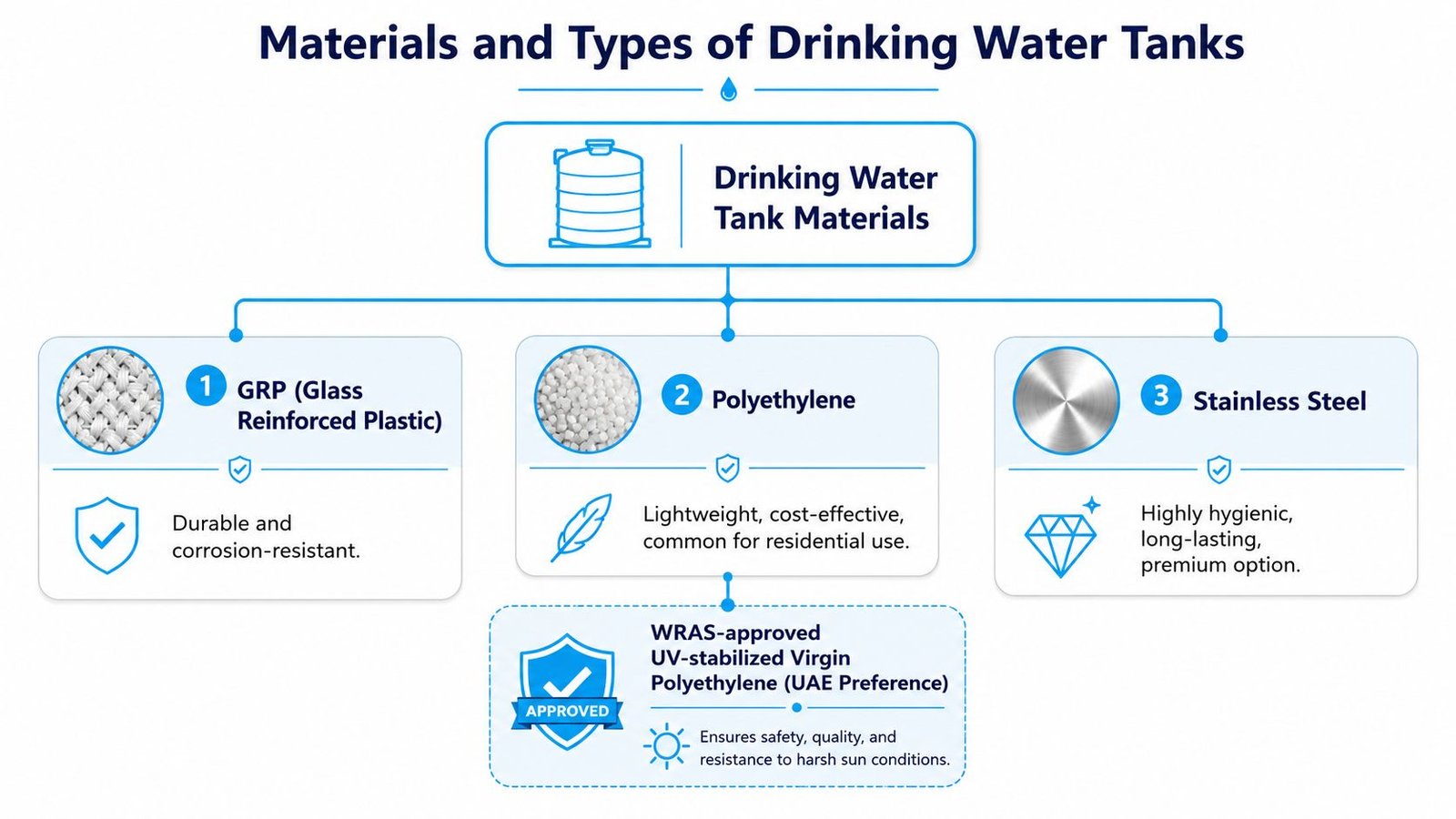
You will usually come across three main options. Polyethylene, GRP (glass reinforced plastic), and stainless steel.
Each one has a different job profile.
- Polyethylene is light, common in homes, and easier to install in tight spaces.
- GRP is known for strength and is often used where a tougher structure is needed.
- Stainless steel is popular in premium setups because it is durable and easier to associate with hygiene.
For many families and office managers, polyethylene often becomes the practical choice. It is widely used because it is lighter to handle and suits many residential layouts. In a hot country, material quality still matters. UV-resistant, food-grade construction helps the tank cope better with harsh sun and high outdoor temperatures.
The material is only part of the story
Location changes how the tank behaves in real life.
A rooftop tank gets more direct sun. An underground tank stays out of sight, but access for inspection and cleaning can be harder. A large concrete or built-in storage setup may suit bigger properties, yet it can also mean more planning, more cleaning effort, and more attention to upkeep over time.
That is where hidden costs begin to show up.
A cheaper tank on paper can cost more later if it is awkward to reach, harder to disinfect properly, or more likely to heat up. Families usually notice this as recurring service bills. Office managers notice it as facility coordination, tenant complaints, or staff avoiding tap water for drinking.
Common installation types
| Tank type | Best fit | Main trade-off |
|---|---|---|
| Rooftop tank | Buildings that use gravity support and want simple distribution | More sun exposure and faster heating |
| Underground tank | Properties that want to save visible space | Harder inspection and cleaning access |
| Large concrete tank | Bigger villas or sites with high reserve needs | More space, heavier installation, and more upkeep planning |
A simple way to choose
A good shortlist starts with three plain questions.
- Where will the tank sit? Sun-exposed areas need better heat and UV resistance.
- How easy is it to open, inspect, and clean? If access is frustrating, maintenance often gets delayed.
- Will you drink this water directly, or only use it for general supply? That choice affects how much confidence and treatment you want from the setup.
That last question is easy to skip, but it changes the whole decision.
Stored utility water and ready-to-drink water are not always the same thing in daily life. Many homes and offices in the UAE keep a tank for building supply, then use delivered water for direct drinking because it is simpler to manage and easier to trust for everyday hydration. If you are comparing those habits at home or work, this guide to daily water intake needs helps connect storage planning with actual drinking use.
A tank helps you store water. It does not remove the need for cleaning, disinfection, and compliance checks. In the UAE, local rules and building requirements can also affect what materials and installation methods make sense, which is one reason some homes and offices prefer to keep tank water for general use and use 5-gallon delivery for drinking.
Calculating the right tank size for your needs
A common UAE situation goes like this. Your home or office runs fine for weeks, then water use jumps during a busy weekend, extra guests arrive, or staff numbers rise. Suddenly, the tank that looked “big enough” feels small. A month later, you may be paying for a larger tank, more cleaning time, and extra checks you did not budget for in the first place.
That is why sizing should start with daily use and reserve time, not with the tank model.
Start with your real daily pattern
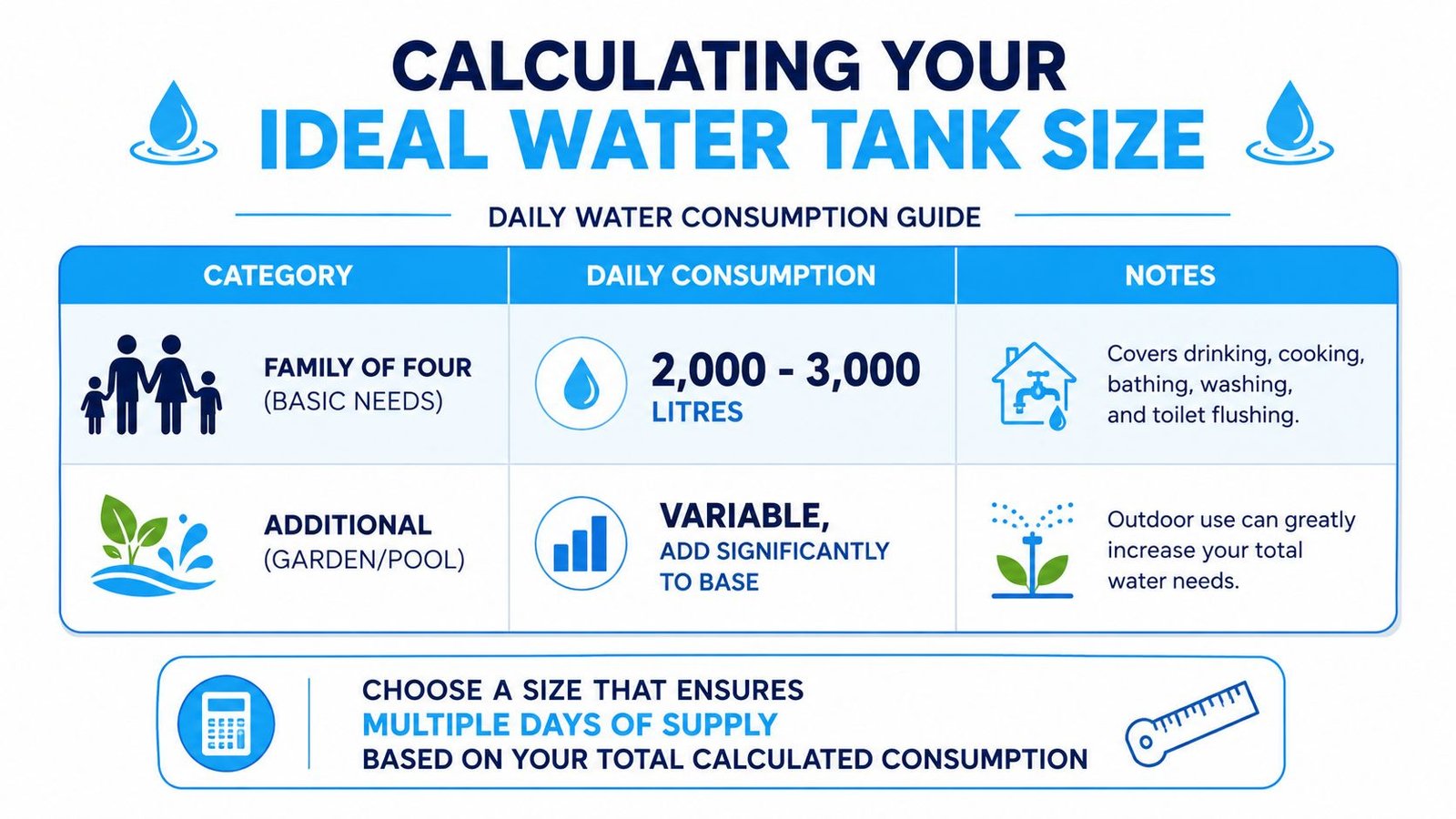
A tank works like a pantry for water. If you guess too low, you run short. If you go too large, you may pay more for space, installation, inspections, and cleaning than your household or office really needs.
For homes, start with simple questions.
- How many people use water every day?
- Do you have guests often?
- Is outdoor use part of the picture, such as garden watering or pool top-ups?
- How long could you comfortably manage if supply is interrupted?
Those answers matter more than shopping by label alone.
If you want a clearer sense of actual drinking needs before choosing storage, this guide on how much water people usually drink each day helps separate hydration needs from total household water use.
A practical way to estimate tank size
Use this simple formula:
Daily use x desired reserve time = target tank capacity
For example, if your family uses a certain amount each day and you want enough stored water to cover roughly one to two days, your tank should match that reserve window. In many UAE homes, that reserve period is part of the planning conversation because hot weather, building type, and occupancy can all change usage patterns.
Here is the easy part that people miss. Drinking water is only one slice of total demand. Showers, handwashing, pantry use, cleaning, and outdoor tasks often take far more storage than the water you drink.
A simple sizing table
| Situation | Typical capacity guide |
|---|---|
| Small family home | Size based on daily household use and short reserve time |
| Larger family home | Add extra margin for more bathrooms, laundry, and guests |
| Home with outdoor water use | Plan for much higher demand, especially in hotter months |
Here's a useful walkthrough if you want a visual explanation before deciding on capacity:
What about offices
Office sizing depends on behavior more than floor area.
A quiet office with light pantry use may need far less storage than a similar-size office with frequent visitors, shared washrooms, and regular cleaning. Headcount helps, but peak usage matters more. Morning rushes, lunch breaks, meeting days, and cleaning schedules can all push demand higher for short periods.
A practical office check looks like this:
- Count regular users, plus frequent visitors if they use the facilities.
- Note peak times, such as start of day, lunch, and end of shift.
- List extra water uses, including pantry prep, janitorial work, and shared amenities.
- Choose a reserve period that fits how disruptive a supply interruption would be.
There is also a cost question hiding in the background. A larger tank usually means more surface area to inspect, more time to clean, and more responsibility to keep records if your building management or local authority requires them. That is one reason many UAE offices keep tank water for general building use and choose 5-gallon delivery from Oxy Plus Water for direct drinking. It can be simpler to manage, easier to monitor, and less exposed to the upkeep burden that comes with stored drinking water.
If you are unsure between two sizes, do not just choose the bigger tank by default. Choose the setup you can maintain properly and that fits local building rules, cleaning access, and your real day-to-day use.
Cleaning disinfection and maintenance steps
A drinking water tank only stays useful if you treat maintenance as routine, not as a once-in-a-while emergency job. Most tank problems build up unnoticed, then show up as bad taste, sediment concerns, or trust issues.
What to check regularly
Busy homes and offices do better with a short checklist than with a vague promise to “inspect later”.
- Check the lid and openings: Make sure covers are secure and the tank isn't exposed to dust or unwanted entry.
- Look for visible build-up: Sediment, staining, or slime on inner surfaces means it's time for cleaning attention.
- Inspect connected points: Pipes, vents, and entry points should look intact and properly sealed.
- Notice changes quickly: If water smell, taste, or clarity seems different, don't ignore it.
A practical maintenance rhythm
Think in three layers instead of one big annual panic.
Routine checks are the quick visual look. You're confirming the tank area is clean, closed, and free from obvious issues.
Scheduled cleaning is the deeper task. That usually means draining, scrubbing internal walls, removing settled material, and disinfecting with suitable methods handled safely.
Professional review is the smart step when access is difficult, the tank is large, or your building has older infrastructure. Office managers especially benefit from a documented schedule so nothing slips between maintenance teams and property management.
Clean water storage depends on boring habits done on time.
Hidden upkeep costs people forget
The tank itself isn't the whole story. Time, labour, access, follow-up inspection, and disruption all add effort, even when the process goes smoothly.
For a family, the hidden cost is often inconvenience. For an office, it's coordination. Someone has to organise access, check the result, and make sure staff still have reliable drinking water while the tank is being cleaned.
That's one reason many homes and workplaces in water delivery Sharjah and water delivery Ajman searches are really looking for convenience, not just supply. They want fewer moving parts to manage.
UAE regulations and quality considerations
A water tank can look clean from the outside and still create problems on paper. In the UAE, rules for potable water storage are not just about the tank itself. They also affect how the tank is installed, monitored, and documented in a home, villa, shop, or office building.
That catches many people off guard.
For families, the practical question is simple. Is the tank set up in a way that meets local requirements and helps protect drinking water quality? For office managers, the question is wider. Who checks that setup, who keeps records, and what happens if a building issue turns into a health complaint or a maintenance dispute?
What compliance usually means day to day
Local requirements can cover details such as safe overflow handling, suitable fittings, and water level controls on larger systems, as noted earlier in the article. These are easy to treat as technical extras. They are not. They affect cleanliness, overflow risk, and how easily a problem is spotted before people start using poor-quality water.
A simple way to view it is this. Regulations set the minimum rules. Good water quality needs more than the minimum.
That is where many hidden costs show up. A tank may need access checks, contractor visits, paperwork, and follow-up reviews to stay in line with building expectations. In shared properties, the cost is often time and coordination as much as money.
Quality checks are not only about the tank shell
Safe drinking water depends on the full chain. The tank material matters, but so do the lid, pipe connections, surrounding environment, and the condition of the water by the time it reaches the tap or dispenser.
If you want a clearer picture of what should be checked beyond basic storage, this guide to water quality monitoring for homes and workplaces helps explain the broader process in plain language.
This distinction matters in the UAE. Many buildings use tanks for general water storage, but households and offices still prefer separate 5-gallon drinking water for direct consumption. The reason is often practical. It reduces the burden of relying on one system for everything people drink.
Why many homes and offices choose a split approach
A tank can support building water needs well when it is installed correctly and managed properly. But drinking water adds another layer of responsibility. You are not only storing water. You are also taking on compliance checks, upkeep planning, and the risk of missed issues.
That is why the local choice is often mixed rather than all-or-nothing. Tanks handle storage. Delivered 5-gallon bottles from Oxy Plus Water handle convenient day-to-day drinking water with less maintenance responsibility for the people on site.
Pros and cons of tanks versus 5-gallon drinking water delivery
It is 8:30 on a Monday morning. Your family wants breakfast and your office staff want tea and coffee. The water is there, but the essential question is simple. Do you trust the source enough for drinking, and how much work does it take to keep it that way?
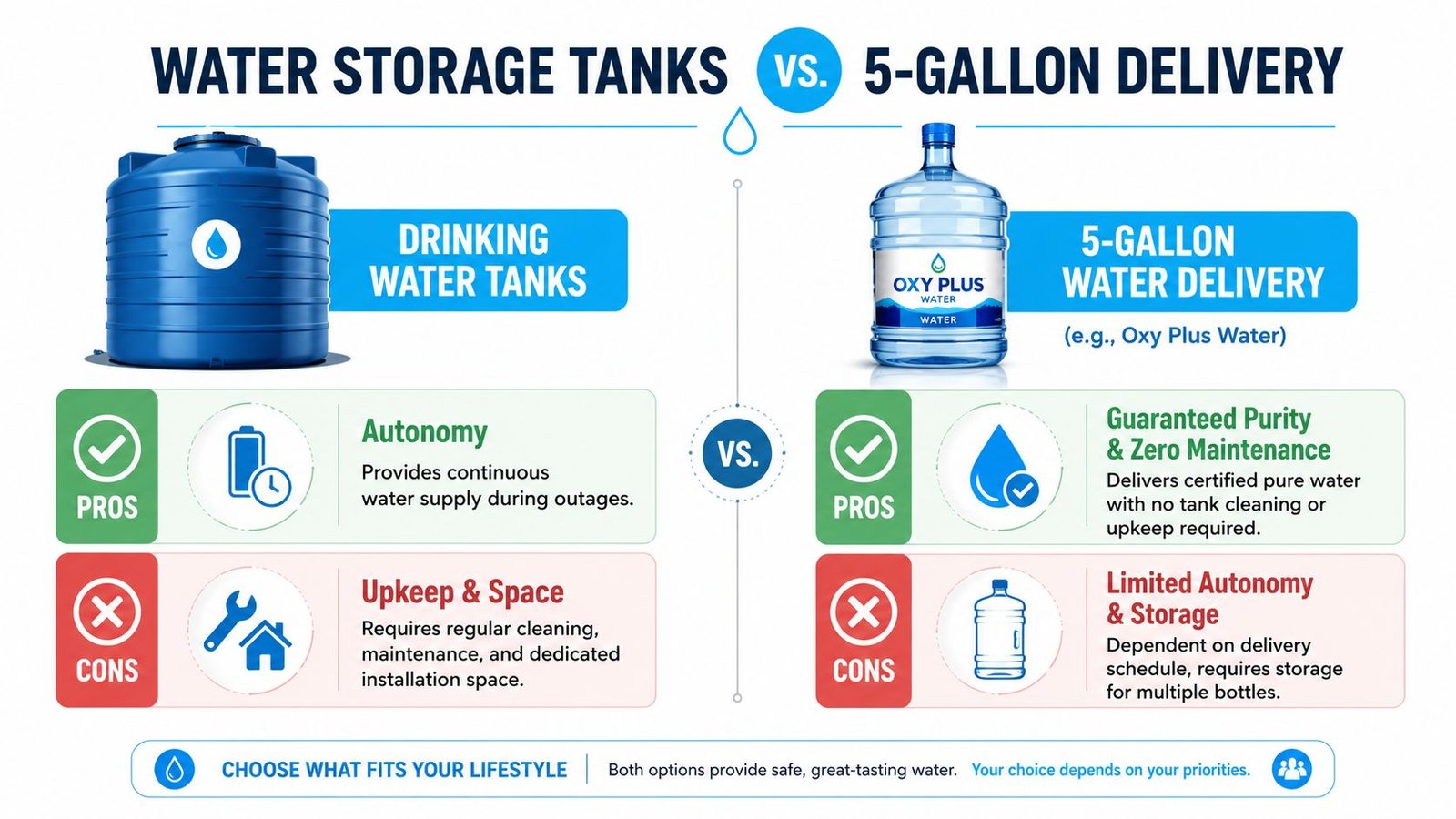
That is the practical difference between a tank and delivered bottles in the UAE. One solves storage for a building. The other solves daily drinking water with less upkeep on your side.
Side by side view
| Option | Main strengths | Main drawbacks |
|---|---|---|
| Drinking water tank | Helps during supply interruptions, supports wider building water use | Adds cleaning, inspection, access, and compliance work |
| 5-gallon drinking water delivery | Easy for direct drinking, predictable for homes and offices, less maintenance responsibility for users | Needs repeat ordering and a place to store bottles |
The hidden cost is where many people get caught.
A tank may look cheaper at first because it stores a lot of water in one place. But drinking use brings extra jobs with it. You need scheduled cleaning, disinfection, access for service teams, checks on lids and pipe connections, and in some cases coordination with building management or property rules. The cost is not only money. It is also time, follow-up, and the risk of delays.
Delivered bottles work more like a ready-to-use pantry item. You still need to order on time and keep a few bottles in reserve, but you are not taking on the same maintenance chain for the water people drink every day. If you want to see the format people usually choose for homes and workplaces, Oxy Plus offers 5-gallon drinking water delivery.
Where tanks make sense
Tanks are useful when your main concern is reserve capacity. If a building needs stored water for general use, a tank does that job well when it is managed properly.
They also suit properties where water demand goes beyond drinking. Washrooms, cleaning, and kitchen use all draw from the same wider system.
Where 5-gallon delivery makes life easier
Bottled delivery is often the simpler choice for direct consumption. Families do not need to wonder if the last tank cleaning happened on time. Office managers do not need to answer the same pantry question again and again.
That clarity matters in the UAE, where local rules and building practices can add another layer to tank ownership and upkeep. A bottle delivery plan avoids much of that day-to-day responsibility for drinking water, even if the building still uses a tank for other needs.
For many homes and offices, the practical answer is mixed use. Let the tank support the building. Let delivered bottles handle the water people drink.
Choosing the best hydration solution for your home or office
The right choice depends on what problem you're trying to solve. If your main concern is building resilience during supply interruptions, a properly sized and maintained tank matters. If your main concern is simple, dependable drinking water with less hassle, delivery is often easier to live with.
For families, the biggest question is usually time. Are you comfortable staying on top of tank checks, access, cleaning schedules, and storage conditions? If not, bottled supply can remove a lot of uncertainty from daily life.
For office managers, the key issue is consistency. Staff need water every day, and they don't want mixed messages about whether pantry water is fine this week. A clear bottled water plan can make workplace hydration much easier to manage.
If you're based in Dubai, Sharjah, or Ajman, it helps to think in layers. Let the building tank handle building water needs. Let bottled water handle what people drink.
That approach fits many common searches people make every day, from water delivery Dubai to water delivery Sharjah and water delivery Ajman. It's practical, simple, and easier to organise over time.
If you want an easy way to keep your home or office supplied with purified 5-gallon water, contact Oxy Plus Water on WhatsApp through the website to arrange delivery in Dubai, Sharjah, or Ajman.
FAQ
Is a drinking water tank the same as ready-to-drink bottled water?
No. They serve different jobs.
A water tank stores water for the property. That can include backup supply and general daily use. Ready-to-drink bottled water is meant for direct consumption, which is why many families and office managers in the UAE keep these as two separate systems.
How do I know if my tank is the right size?
Start with a simple question. What do you want the tank to do?
If it is mainly for reserve supply during interruptions, size it around how long you want that backup to last and how much water your household or office uses in a normal day. If it is also part of your regular building supply, you need to allow for daily demand, refill timing, and safe storage conditions.
A tank that looks big can still feel small if cleaning downtime, summer demand, or building occupancy changes are not considered.
Do all tanks in the UAE need an overflow pipe?
Tank requirements can vary by emirate, property type, and tank size. In practice, fittings such as overflow protection, covers, access points, and proper placement are common parts of a compliant setup.
The easy way to think about it is this. A water tank is like a small storage system that needs safe entry, safe exit, and safe control if the water level rises too high. For exact rules, check the current requirements from your local authority or building management before installation or replacement.
Why do many people still choose bottled water in the UAE?
One reason is peace of mind.
People may feel comfortable using tank-fed water for washing and other building needs, but still prefer bottled water for drinking and making tea or coffee. Concerns usually come down to storage conditions, old pipework, irregular cleaning, or uncertainty about what is happening inside a rooftop or underground tank that they rarely see.
That hidden upkeep cost matters. A tank may look like a one-time purchase, but cleaning, inspections, access, repairs, and compliance checks can keep adding to the overall cost over time.
What material is commonly preferred for UAE water tanks?
Food-grade materials made for potable water use are commonly preferred. In the UAE, heat resistance and UV protection also matter because tanks may be exposed to strong sun and high temperatures.
For many buyers, the better question is not just what the tank is made from, but whether the full setup is suitable for drinking water use and local conditions. The material, lid seal, insulation, pipe connections, and installation quality all work together.
How much 5-gallon water does a family usually use?
It depends on the household.
A small family that uses bottled water only for drinking may go through fewer bottles than a family that also uses it for cooking, baby formula, or hosting guests. Office use can rise quickly too, especially in hot months or in workplaces with regular visitors.
The practical approach is to track one month of use, then adjust your delivery schedule so you are not over-ordering or running out.
Is 5-gallon bottled water common in the UAE?
Yes. It is a familiar option in homes and offices, especially for direct drinking.
That popularity makes sense. Delivery is simple to manage, and the quality route is easier to understand because the water arrives in sealed bottles ready for use. For many families and office managers, that feels easier than depending on a tank that also needs regular maintenance, cleaning records, and attention to local rules.
For direct drinking, a lot of people choose the split approach mentioned earlier. Let the building tank handle building water. Let 5-gallon delivery from Oxy Plus Water handle what people drink.