You’re probably here because the question keeps coming up in real life, not in theory.
At home, it’s the moment you fill a glass in your Dubai flat and wonder if the taste is normal. At work, it’s when your team in Sharjah finishes the last bottle before lunch and you realise water isn’t something you can leave to chance.
In the UAE, water choices feel bigger because the climate is hot, routines are busy, and people drink a lot more every day than they might in milder places. For families and office managers, the best drinking water isn’t the one with the fanciest label. It’s the one that’s safe, tastes good, arrives on time, and makes life easier.
This guide keeps things simple. If you want clean drinking water UAE households and offices can trust, you need to know what to check, what the labels mean, and what to ask before choosing a supplier for water delivery Dubai, water delivery Sharjah, or water delivery Ajman.
Table of Contents
- Introduction Why Thinking About Your Water Matters
- What Makes Drinking Water Good For You
- Reading the Labels Certifications to Trust
- Your Delivery Options Explained
- Ordering and Scheduling Made Easy
- A Checklist for Choosing Your Water Supplier
- Frequently Asked Questions
Introduction Why Thinking About Your Water Matters
If you live in Dubai, Sharjah, or Ajman, thinking about your drinking water is just part of daily life. You notice the taste, you notice when supply runs low, and you definitely notice it more in the hotter months.
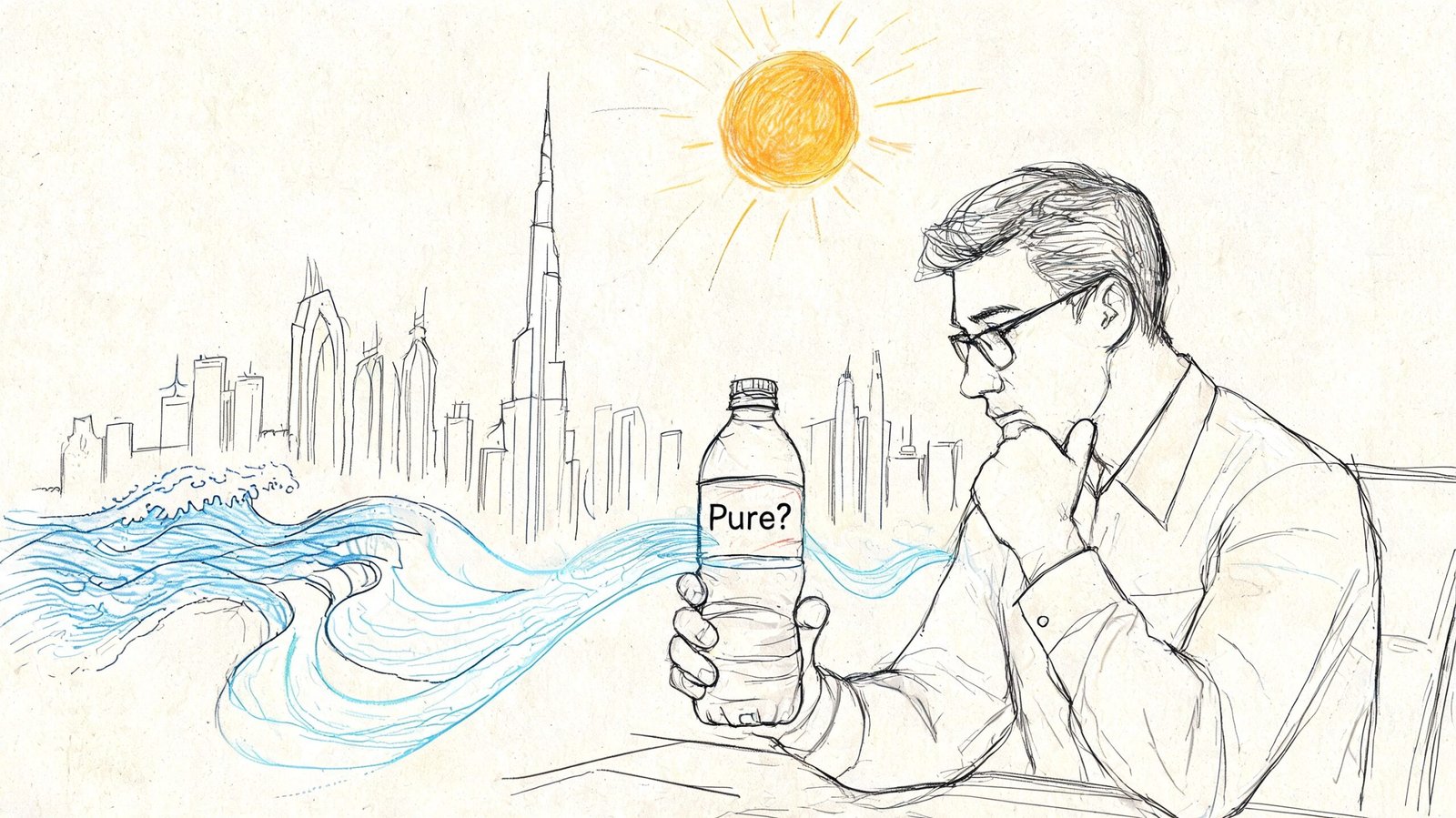
The UAE depends heavily on desalination. According to CDC drinking water facts referenced in the verified UAE data, over 99% of the country’s potable water needs come from desalination, and the Emirates produces over 1.7 billion cubic metres annually from 77 desalination plants.
That’s impressive, but it also explains why many people pay close attention to the water they drink every day. Safe supply matters. Taste matters too.
Practical rule: If you drink it every day, don’t choose based only on convenience. Choose based on quality details you can actually verify.
A family in Ajman usually wants the same thing as an office manager in Dubai. They want water that tastes clean, feels easy to drink, and arrives without the stress of last-minute shopping.
That’s why delivered bottled water is such a normal choice here. It fits the way people live in the UAE, especially when you want one dependable option for home use, guests, staff, or clients.
Here’s the key idea to keep in mind:
- Good water should be easy to drink: If it tastes odd or too salty, people drink less.
- Good water should be easy to trust: You should be able to check the quality details.
- Good water should be easy to get: A reliable delivery routine saves time for both homes and offices.
When people search for the best drinking water, they often get generic advice. That usually isn’t very helpful in the UAE. Local conditions matter, and so do local standards.
What Makes Drinking Water Good For You
Some people think “good water” just means clear water. In practice, it’s more than that. The best drinking water usually comes down to a few simple things you can understand without needing a science degree.
Why taste and comfort matter
If your family keeps leaving half-full glasses on the table, or your staff keep buying small bottles outside the office, taste is usually part of the reason. People naturally drink more water when it tastes fresh and balanced.
Water should feel clean in the mouth, not heavy, flat, or salty. That’s one reason many UAE residents prefer purified bottled water over whatever happens to come through building storage.
A useful way to think about water quality is this. You’re not looking for something extreme. You’re looking for balance.
Water quality isn’t about chasing trendy words on a label. It’s about finding water that is balanced, consistent, and comfortable to drink every day.
If you want a simple local example of how water quality is discussed, this guide to mineral water in Dubai is useful for seeing the kind of details people often compare.
The three numbers worth checking
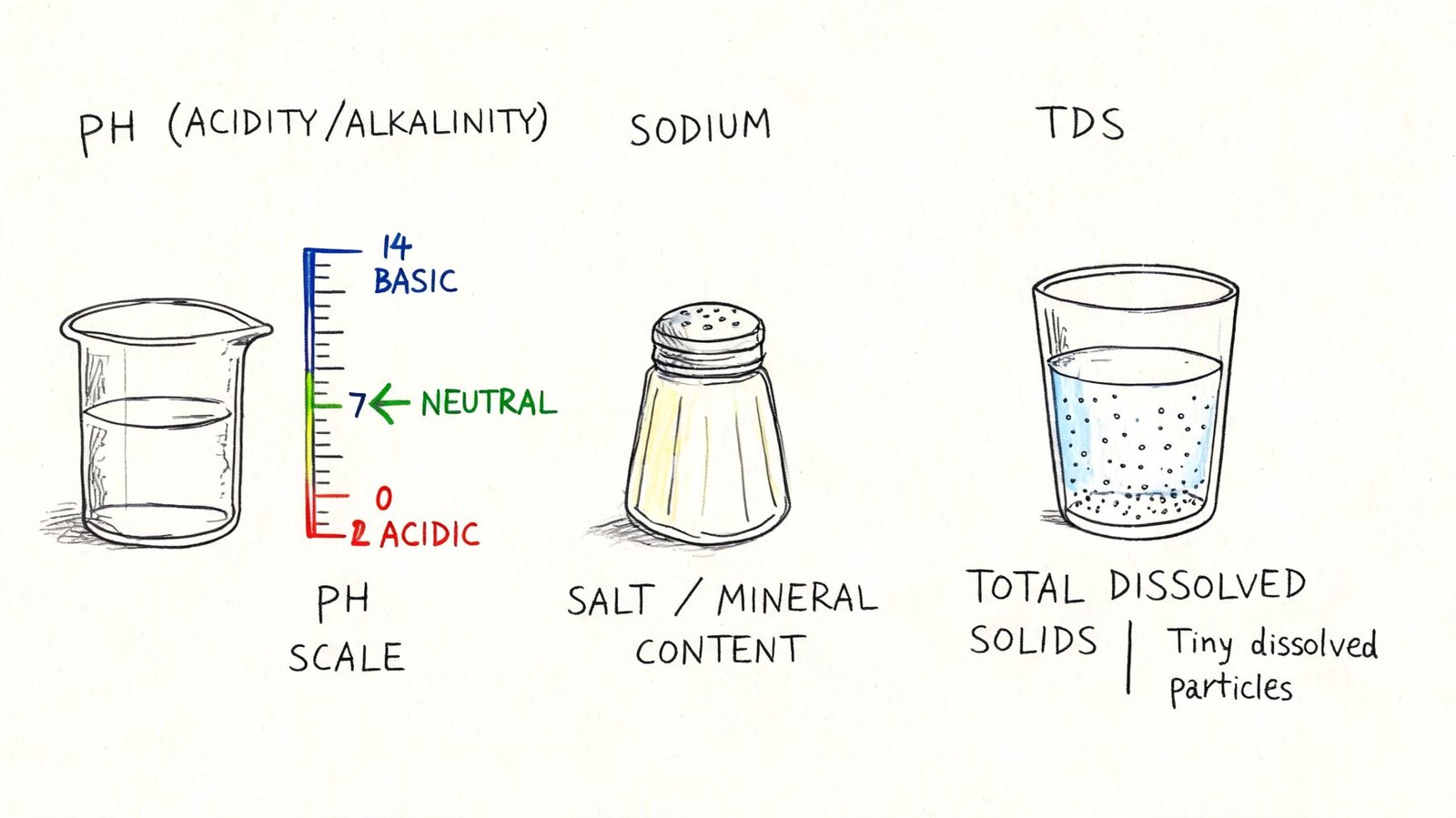
The first number is pH. Think of pH like balance in food seasoning. Too far one way or the other, and the result feels off. Verified UAE bottled water standards require pH between 6.5 and 8.5 for bottled water.
The second is sodium. This one confuses many people because they assume only people on strict diets should care. In reality, lower sodium is a smart feature for everyday drinking because water is something you consume again and again throughout the day.
The third is TDS, which means Total Dissolved Solids. That sounds technical, but the idea is simple. TDS tells you how much dissolved material is in the water, which affects taste and feel.
According to the verified TDS guidance used in the UAE context, 50 to 150 ppm is the recommended range for optimal bottled drinking water, and municipal tap water can exceed 500 ppm. For a regular person, that usually translates into one very practical difference. Water in the better range tends to taste smoother and more pleasant.
Here’s an easy way to remember it:
| Measure | What it tells you | What you want |
|---|---|---|
| pH | Whether the water is balanced | A balanced range |
| Sodium | How salty the water may be | Low sodium |
| TDS | How heavy or mineral-rich it may feel | A moderate range, not too high |
A good label or product sheet should help you answer basic questions like these:
- Is the pH clearly stated?
- Is the sodium level easy to find?
- Is the TDS within a sensible drinking range?
If those answers are hard to find, that’s already useful information. A reliable supplier should make the basics easy to check.
Reading the Labels Certifications to Trust
A water bottle label can look busy, but you don’t need to read every line. You only need to spot the signs that show a supplier follows recognised standards and regular checks.
What a proper certification tells you
In the UAE, certifications aren’t decoration. They’re your shortcut to knowing whether the water has been produced and checked under proper rules.
The verified data notes that stricter ESMA regulations such as UAE.S 1492:2017 require bottled water to stay within TDS below 500 mg/L and pH 6.5 to 8.5, as outlined in the cited public health reference. For you as a buyer, that means standards exist for a reason. They set a baseline for safety and consistency.
A trusted supplier should be comfortable showing its quality credentials. If a company avoids that topic, or keeps things vague, that’s a warning sign.
One helpful read on this is why quality certification matters when choosing a purified water manufacturer. It gives a clear sense of why those marks matter beyond marketing.
What to look for on the bottle
When you check a label or product sheet, keep your eyes on a short list.
- Emirates Quality Mark: This is one of the clearest signs that the product follows recognised UAE requirements.
- Clear water specs: You should be able to see pH and other basic quality details without chasing customer support.
- Batch and date information: A professional supplier keeps traceable records.
- Company details: A proper address and service contact matter.
Quick check: If a label looks polished but tells you almost nothing about standards, testing, or compliance, keep looking.
Some suppliers also mention broader quality certifications such as ASCB(E) or GRS. These can show an added commitment to organised quality systems, but the important thing is still the same. You want clear proof that the water you order for your family or office is made and handled responsibly.
This matters whether you’re arranging drinking water delivery UAE wide for a small company branch or checking a regular household order in Sharjah. The label should answer more questions than it creates.
Your Delivery Options Explained
For most households and workplaces, the most practical choice is 5-gallon drinking water. It’s simple, familiar, and built for regular use rather than one-off supermarket runs.
Why 5-gallon bottles make sense
Small bottles are fine for travel or events, but they’re inconvenient as your main daily supply. You end up buying again and again, carrying more packs, and dealing with more plastic waste from constant repurchasing.
For that reason, many families and offices prefer 5-gallon water as the standard setup. It gives you a stable supply for normal drinking needs, and it suits both home routines and office pantry habits.
The verified UAE standards state that bottled drinking water should have pH between 6.5 and 8.5 and low sodium below 200 mg/L, while choosing 5-gallon deliveries with verified low sodium below 20 mg/L and balanced pH of 7.0 to 8.0 aligns with the benchmark described in the cited regulatory summary. That’s why many careful buyers ask for quality specs before setting up regular delivery.
If you’re comparing suppliers, this page on delivered water delivery shows the sort of practical service model many customers expect.
Simple storage habits that help
The bottle size is only part of the decision. You should also think about where you’ll keep it.
A few habits make a big difference:
- Keep bottles indoors: Store them in a clean, shaded place.
- Avoid direct sun: Heat isn’t ideal for any bottled drinking water.
- Rotate older stock first: Use earlier deliveries before newer ones.
- Plan backup bottles: Homes and offices both run into the same problem when they wait too long to reorder.
For office water delivery Dubai customers, the biggest benefit is routine. For families, it’s the same story. When the water is already there, no one has to stop their day to solve a basic need.
Ordering and Scheduling Made Easy
Good water delivery should feel boring in the best possible way. You place the order, confirm your timing, and the bottles arrive without turning into a weekly chore.
How regular delivery usually works
Many individuals start with a simple question. How many bottles do we need?
For a household, that depends on how many people are drinking from the same supply every day. For an office, it depends on team size, guests, and whether staff rely on the office kitchen for most of their daily water.
A regular schedule usually works better than ordering only when you run out. That’s true in a family home in Sharjah and in a busy office in Dubai.
The process is usually straightforward:
- Choose your area such as Dubai, Sharjah, or Ajman.
- Decide your usual quantity based on weekly use.
- Set a recurring schedule that matches your routine.
- Keep one extra bottle on hand so you’re not caught short.
What families and offices should plan for
For homes, the most common issue is underestimating weekend use or guest visits. For offices, it’s meetings, higher attendance days, or hot weather when everyone drinks more.
WhatsApp makes this much easier because it’s quick for reorders, confirmations, and small schedule changes. That matters when you don’t want to sit on long calls just to arrange basic drinking water delivery UAE customers need regularly.
A good delivery setup should work quietly in the background. You shouldn’t have to think about it much after the first arrangement.
If you manage a workplace, keep one person responsible for checking stock and messaging the supplier. If you’re ordering for home, try to reorder before the last bottle becomes the current bottle. That one habit prevents most water-related stress.
The best service isn’t the one with the loudest promises. It’s the one that keeps your kitchen or office supplied without hassle.
A Checklist for Choosing Your Water Supplier
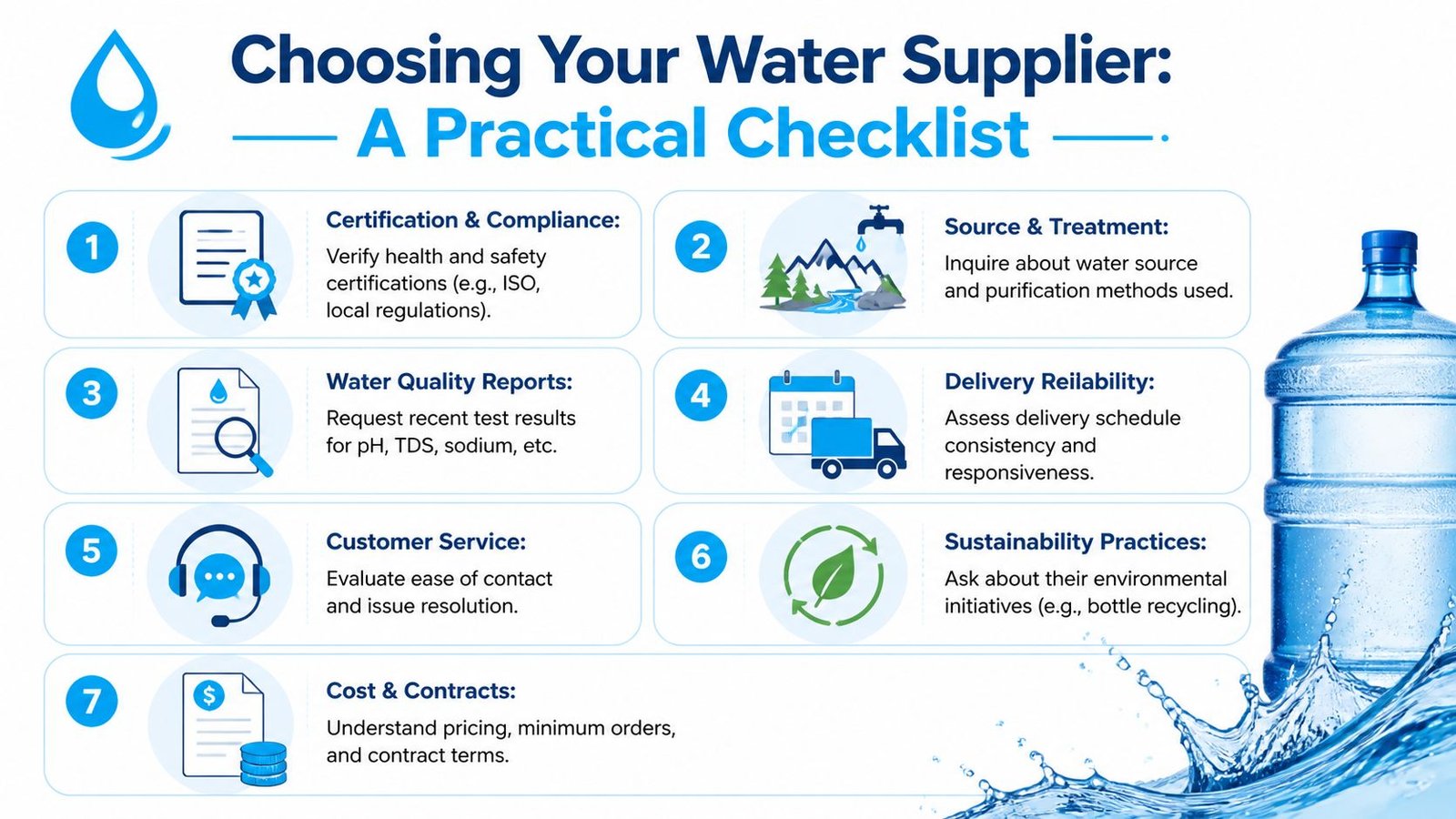
Choosing a supplier gets easier when you stop asking, “Who seems popular?” and start asking, “What can this company clearly prove?” That small shift helps you avoid guesswork.
Questions worth asking before you order
Use this like a real-world shortlist when comparing providers for water delivery Ajman, water delivery Sharjah, or 5 gallon water delivery UAE services.
- Do they show valid certifications clearly? You shouldn’t need to chase basic compliance details.
- Can they share water quality information? Ask for pH, sodium, and TDS details in plain language.
- Do they serve your exact area reliably? A company may cover Dubai broadly but not your building or zone consistently.
- Is ordering easy on WhatsApp or phone? Fast communication matters more than fancy branding.
- Can they handle home and office needs? Some suppliers are better organised for recurring deliveries than one-off orders.
- Do they offer flexible scheduling? You want easy rescheduling when plans change.
- Are they easy to reach when something goes wrong? Service quality shows up most clearly when you need help.
A quick yes or no check
This table helps if you want a fast decision tool.
| Question | Good sign | Warning sign |
|---|---|---|
| Are certifications visible? | Easy to verify | Vague answers |
| Are water specs shared? | Clear numbers and ranges | No product detail |
| Do they cover your area well? | Confirmed service in your location | Unclear delivery promises |
| Is reordering simple? | Quick WhatsApp response | Slow or confusing process |
| Do they suit regular use? | Can support repeat schedules | Focus only on occasional orders |
Buyer’s note: Don’t choose a supplier only because the first delivery was easy. Choose one that still looks reliable after you ask hard questions.
The best drinking water supplier for your home or office is usually the one that combines three things well. Strong quality standards, simple communication, and dependable delivery.
If a company does all three, you’ll feel it quickly. The process feels organised. The information feels transparent. The service feels steady.
Frequently Asked Questions
Some questions only come up after you’ve started comparing options. These are the ones families and office managers ask most often.
FAQ table
| Question | Answer |
|---|---|
| What is the best drinking water for daily use in the UAE? | For most people, the best choice is purified bottled water with clear quality details, balanced pH, low sodium, and sensible TDS. It should also come from a supplier that shows recognised certifications. |
| Why do so many people choose bottled water delivery in Dubai, Sharjah, and Ajman? | Convenience is a big reason, but consistency matters just as much. A scheduled supply is easier for homes and offices than relying on repeated supermarket trips. |
| Is 5-gallon water a good choice for offices? | Yes. It’s a practical format for regular use, especially when several people depend on the same supply each day. It also suits meeting rooms, staff kitchens, and reception areas. |
| How should I store bottled drinking water at home or in the office? | Keep bottles in a clean indoor space away from direct sunlight and excess heat. Use older stock first and avoid leaving your last bottle as your only plan. |
| What should I ask before choosing a supplier? | Ask about certifications, pH, sodium, TDS, delivery areas, scheduling, and how quickly they respond on WhatsApp or phone. Clear answers are a good sign. |
| Is water from air a better option for households? | Usually no. Verified data states that a 2025 Masdar Institute report found AWGs have high energy costs of AED 5 to 10 per litre and mineral deficiency, which makes them impractical for most households in Dubai, Sharjah, and Ajman, as noted in the cited unconventional water resource reference. |
| Why not just keep buying small bottles from the shop? | You can, but it’s less convenient for regular daily use. For families and offices, a steady 5-gallon supply is usually easier to manage and better organised. |
If you’ve been comparing clean drinking water UAE options and want something simple, focus on three things. Certified quality, easy ordering, and reliable delivery in your area.
If you want dependable 5-gallon bottled purified drinking water for your home or office in Dubai, Sharjah, or Ajman, contact Oxy Plus Water on WhatsApp through the website. It’s a simple way to arrange your next delivery, set a regular schedule, and get reliable support from a local team that serves UAE families and businesses.