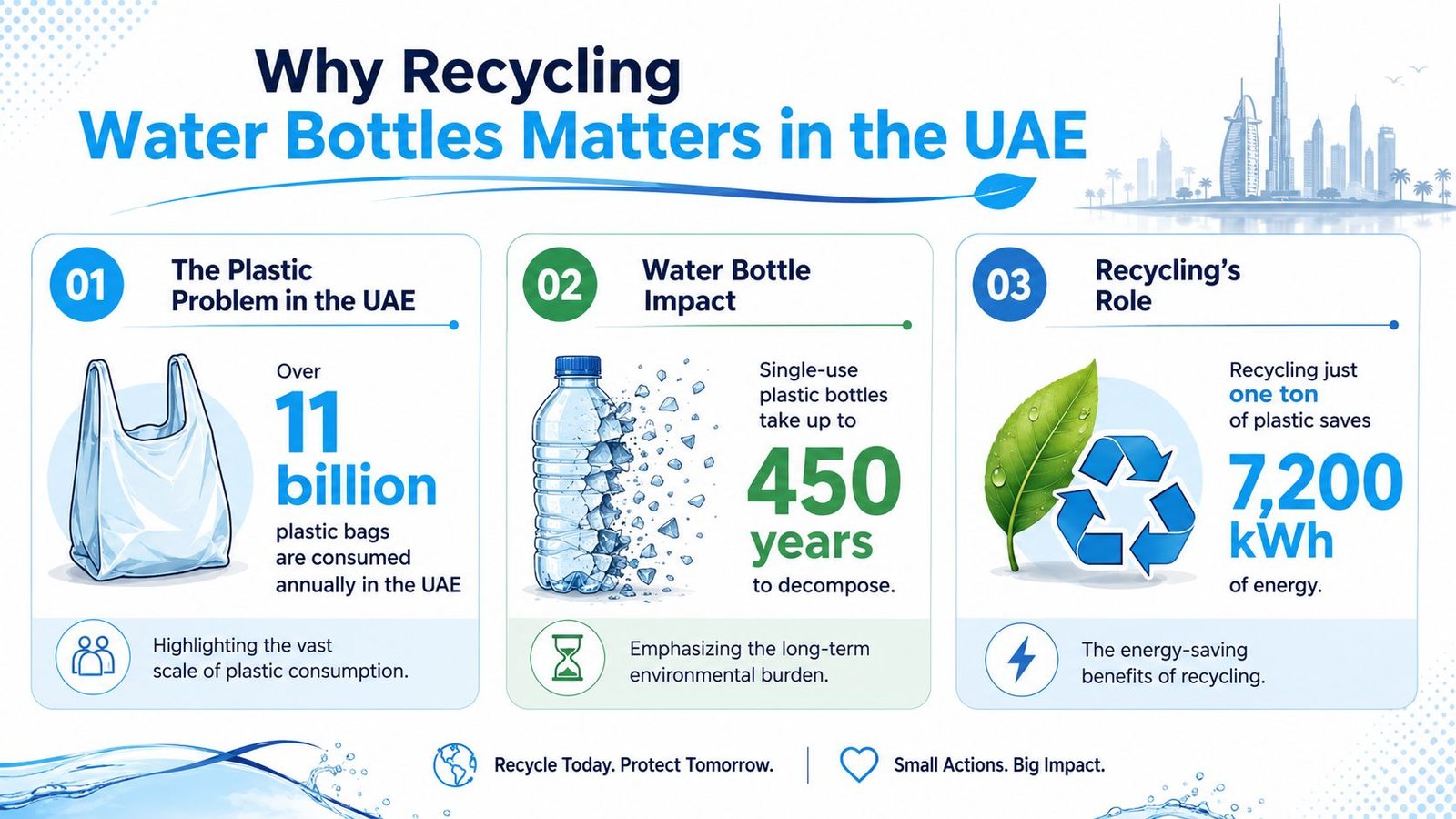
If you live or work in the UAE, this number should make you pause. The average resident uses around 450 plastic water bottles a year, and less than 6% are recycled, according to this UAE recycling snapshot.
That gap matters in busy places like Dubai, Sharjah, and Ajman, where families and offices go through water quickly. The good news is that recycling bottled water gets much easier when you focus on the right habit first: reuse large bottles whenever possible, and recycle properly when reuse isn't an option.
For many homes and workplaces, 5-gallon water is already the most practical format to manage. It creates a simple routine, especially when your supplier takes empty bottles back and keeps them in circulation.
Table of Contents
- Why Recycling Water Bottles Matters in the UAE
- Your Two Choices for Empty 5-Gallon Bottles
- Partnering With Your Supplier for Easy Reuse
- A Practical Guide to Municipal Bottle Recycling
- Smart Bottle Management for Homes and Offices
- The Big Impact of Your Small Actions
- Frequently Asked Questions About Water Bottle Recycling
- What should I do if my supplier won't take empty bottles back
- Can I put a 5-gallon bottle in any regular recycling bin
- Why is reuse often better than recycling for large water bottles
- Do caps and colour really matter when recycling
- Is recycled plastic allowed in water bottles in the UAE
- What's the easiest way for an office to stay organised
- Should families store empty bottles indoors or outdoors
Why Recycling Water Bottles Matters in the UAE
In the UAE, bottled water is part of everyday life for many families and workplaces. That makes bottle handling more than a small housekeeping task. It is a local waste issue that shows up in apartment buildings, villa communities, school pickup areas, office pantries, and loading bays across Dubai, Sharjah, and Ajman.
For smaller single-use bottles, the challenge is volume. For large 5-gallon bottles, the challenge is making sure they follow the right path after use. A reusable bottle works like a library book. It delivers the most value when it goes back into circulation instead of being treated like something meant for one trip only.
Why this issue feels confusing
The confusion is understandable. A kitchen bin, a building recycling room, and a supplier pickup all seem like reasonable options, but they do not lead to the same result.
In homes, one empty bottle may sit near the door for days because no one is sure whether to keep the cap on or wait for collection. In offices, the problem grows faster. A few empties can turn into a storage and hygiene headache by the end of the week if no one owns the process.
Practical rule: For 5-gallon bottles, the best outcome is usually return and reuse through the supplier.
Why large bottles deserve special attention
Large bottles are different from small disposable bottles because they are often designed to stay in service for repeated use. That matters in the UAE, where scheduled water delivery is common and many homes and offices already have a ready-made return route.
This is where small habits make a real difference. If a household in Ajman stores empties cleanly and hands them back on the next delivery, that bottle can stay in the reuse cycle. If an office in Dubai mixes returnable bottles with general waste or damages them in storage, that same bottle may drop out of the system.
That is why 5-gallon bottles deserve their own set of rules. They are not just plastic containers. In many cases, they are part of a managed reuse program, and supplier take-back is often the most sustainable option available.
Your Two Choices for Empty 5-Gallon Bottles
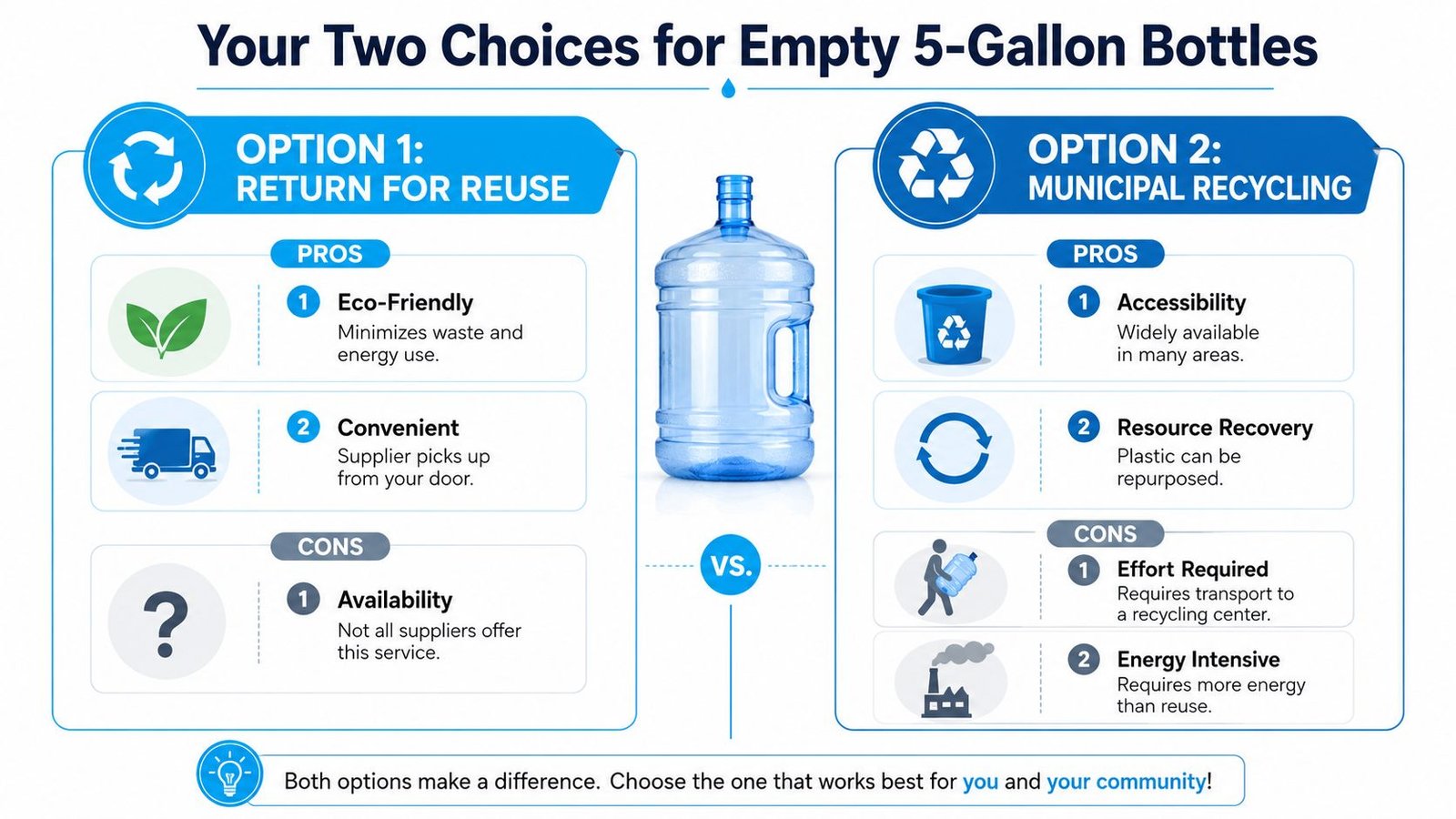
When your bottle is empty, you usually have two practical choices. You can return it to your supplier for reuse, or you can send it into the municipal recycling stream if reuse isn't available.
Those two routes sound similar, but they work very differently. One keeps the same bottle in service. The other breaks material down so it can be processed into something new.
Return for reuse
This is usually the better option for a large bottle. The supplier collects the empty container, cleans it, and puts it back into use if it meets their handling standards.
For homes in Ajman and offices using office water delivery Dubai, this is often the easiest system to maintain. You finish the bottle, set it aside neatly, and hand it back during the next delivery.
Municipal recycling
This is your backup option when take-back isn't possible. The bottle goes through collection, sorting, and reprocessing instead of returning to the same delivery cycle.
Reuse keeps the bottle as a bottle. Recycling turns the material into feedstock for another use.
A quick side-by-side view
| Option | Best for | What you do |
|---|---|---|
| Return for reuse | Regular home and office deliveries | Keep the empty bottle clean and give it back to the supplier |
| Municipal recycling | Bottles that can't go back to the supplier | Prepare it correctly and use an accepted recycling route |
If you're choosing between the two, think simple. Return first, recycle second.
Partnering With Your Supplier for Easy Reuse
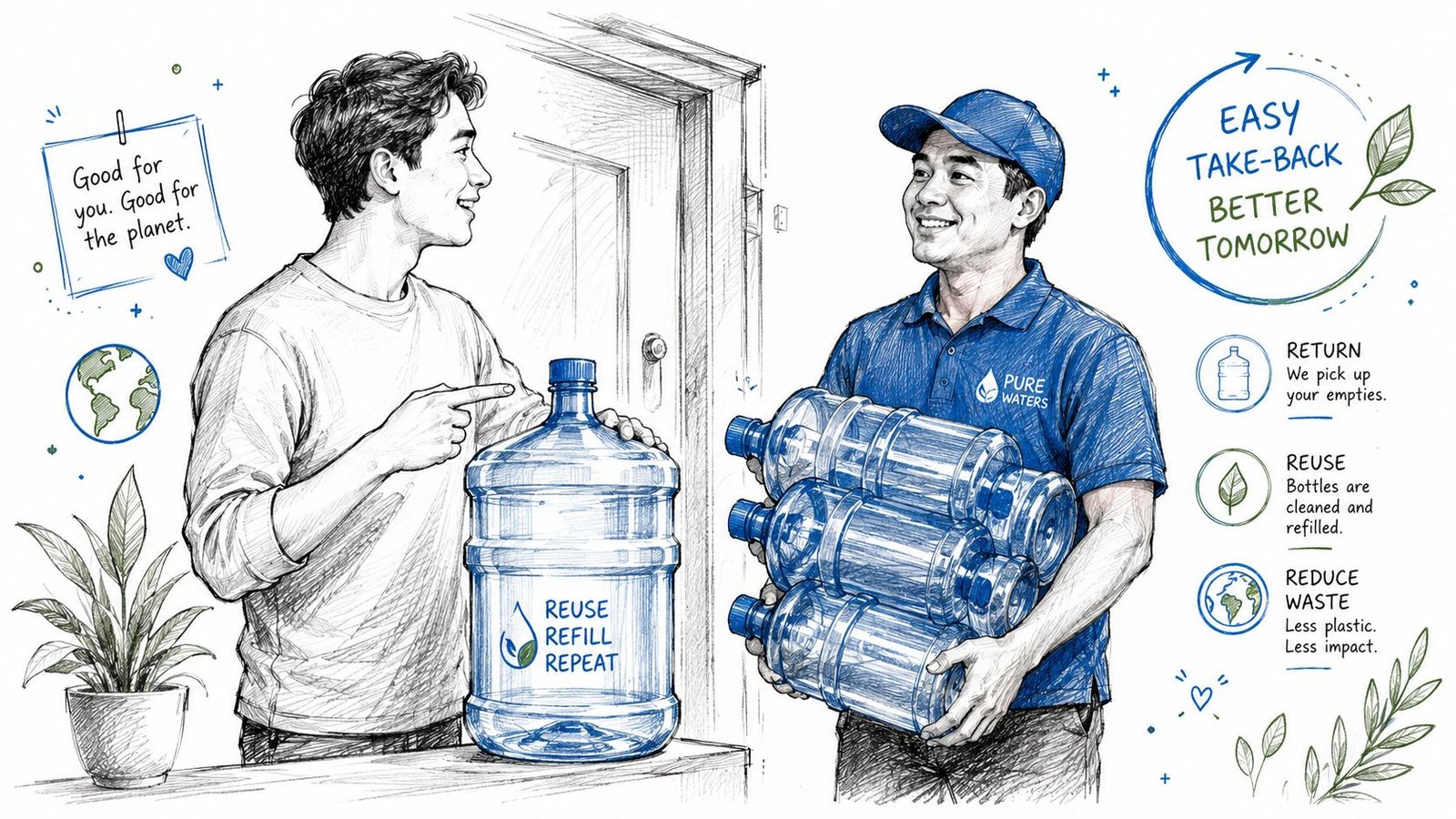
For most homes and offices, supplier take-back is the smoothest option. It removes guesswork and makes recycling bottled water feel less like a separate chore.
A standard 5-gallon drinking water bottle holds exactly 18.9 litres, and that size is widely used as a reusable container that suppliers in Dubai, Sharjah, and Ajman can collect, sanitise, and refill, according to this guide to 5-gallon bottle standards in the UAE.
Questions worth asking your supplier
A lot of people assume every supplier handles empties the same way. They don't, so it helps to ask directly.
You can keep it simple:
- Ask about collection: “Do you collect empty 5-gallon bottles from homes or offices?”
- Ask about timing: “Should I leave the empty bottle outside before my next delivery?”
- Ask about handling: “Do you want the bottle rinsed or just capped and stored upright?”
- Ask about damaged bottles: “What should I do if a bottle is cracked or badly marked?”
These questions work whether you need water delivery Ajman, water delivery Sharjah, or a regular office schedule in Dubai.
What makes reuse easier at home
Families do best when they give empties one fixed spot. A corner in the kitchen, pantry, or utility area is usually enough.
Keep the bottle upright, away from heat, and ready for collection. If you want a simple overview of why this format works so well for households and workplaces, this short guide on buying 5-gallon purified water for your home and office is useful.
A return system works best when everyone in the home knows one rule: empty bottles are stored for pickup, not thrown out.
What makes reuse easier in offices
Office managers usually need one extra step. Tell staff where empty bottles go, who checks them, and when they should be placed out for collection.
A written note in the pantry or store area helps. So does assigning one person to message the supplier when stock is low or empties are ready.
If your team already orders water delivery Dubai on a schedule, reuse becomes much easier to manage. It turns into a routine instead of a reminder.
A Practical Guide to Municipal Bottle Recycling
If your supplier doesn't take a bottle back, municipal recycling is the next best route. The key is preparation.
In the UAE, PET bottle recycling follows a simple chain: collection, sorting by colour, removing caps, processing PETE, and repurposing. But success stays low because many bottles are sorted incorrectly at the source, as explained in this practical note on how PET bottle recycling works in Dubai.
The basic steps that matter most
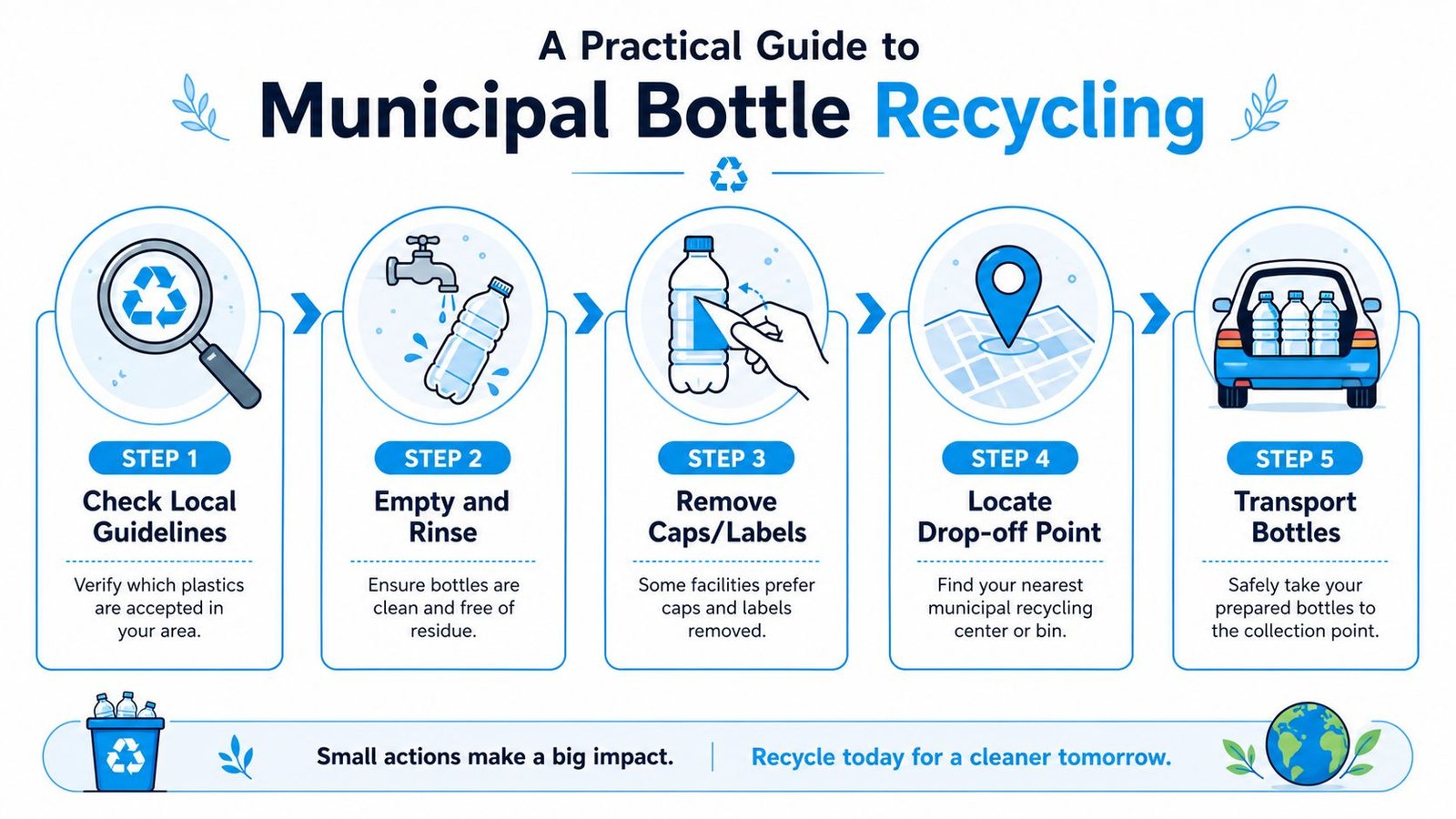
You don't need technical knowledge. You just need a clean, consistent routine.
- Empty the bottle fully. Don't leave old water sitting inside for long periods.
- Rinse it if needed. A quick rinse helps avoid odour and residue.
- Remove the cap if your recycling route requires separation, as sorting rules can differ.
- Keep similar bottles together. Mixed materials and mixed colours can create problems later.
- Use a proper collection point. Don't assume every general waste area handles bottles the same way.
Where people usually go wrong
The biggest mistake is contamination. If bottles are mixed with general rubbish, badly crushed, or left with the wrong parts attached, they may not move cleanly through the recycling process.
Another common problem is wishful recycling. People place a bottle in any nearby bin and assume the job is done.
Clean and sorted beats quick and careless every time.
A simple decision guide
| Situation | Better choice |
|---|---|
| Supplier will collect the bottle | Return it for reuse |
| Supplier won't take it back | Prepare it for municipal recycling |
| You're unsure what your area accepts | Check local guidance before placing it out |
For readers in Dubai and Sharjah, local habits and collection options can vary by building or neighbourhood. If you want a broader local overview, this page on recycling in Dubai gives a useful starting point.
Smart Bottle Management for Homes and Offices
Good habits matter more than perfect systems. That's true in a flat in Sharjah and just as true in a busy office in Dubai.
At home, the easiest method is to give empty bottles one home and one owner. One adult keeps track of what's full, what's empty, and what's ready to go back.
For families at home
A family using clean drinking water UAE delivery often does well with a simple weekly check. If you've got empty bottles, move them to the same corner every time so they don't become clutter.
Children also need one clear rule. Empty bottles are not for play, and they're not general rubbish.
- Choose one storage spot: Keep empties upright in a dry area.
- Keep the area tidy: Don't mix bottles with cardboard, food waste, or cleaning supplies.
- Make collection day easy: Put bottles where pickup won't be forgotten.
For office managers
Offices need visibility. Staff should know where to place empties and who handles collection.
A labelled storage point helps a lot, especially when several teams share one pantry or stock room. If your office already relies on office water delivery Dubai, the return habit can be added to the same weekly routine.
Door-to-door services can also help with smaller recyclables. In Dubai and Sharjah, RECAPP by Veolia offers free collection and rewards, which has helped encourage participation, as noted in this report on UAE recycling initiatives and bottle recovery.
For readers thinking about alternative reusable container habits at home, this page on glass water jugs may give you a few practical storage ideas.
The Big Impact of Your Small Actions
This issue is bigger than one kitchen or one office pantry. The UAE bottled water market was valued at USD 3.81 billion in 2025, which shows just how large everyday consumption has become, according to this UAE bottled water market overview.
That scale can feel overwhelming, but your part is still simple. Return large bottles when you can. Recycle them properly when you can't.
What your routine really changes
You reduce avoidable waste when you keep bottles in a reuse loop. You also make life easier for collection teams and building staff when bottles are stored cleanly and handled the right way.
For families, that can mean one calmer household routine. For workplaces, it can mean a cleaner supply area and a more organised 5 gallon water delivery UAE setup.
Small actions count most when they become normal, repeatable habits.
If you order water delivery Sharjah or manage water delivery Ajman for a villa, flat, or office, the most useful question is a practical one. What happens to the empty bottle next?
Frequently Asked Questions About Water Bottle Recycling
A lot of confusion around bottle recycling comes from one simple problem. People treat a large 5-gallon bottle like a small single-use bottle, even though the handling rules can be different in Dubai, Sharjah, and Ajman.
What should I do if my supplier won't take empty bottles back
Start by asking a clear question. Is the bottle refused because of its type, its condition, or the supplier's own policy?
That matters because some suppliers accept only their own branded bottles, while others refuse damaged containers. If your supplier confirms they will not collect it, keep the bottle separate from general waste and prepare it for the recycling route available in your building or municipality.
Can I put a 5-gallon bottle in any regular recycling bin
Sometimes yes, sometimes no.
Large bottles often need more space and different handling than everyday plastic packaging. In many buildings, especially apartments and office towers, the right option depends on the collection setup managed by building staff or the local service provider. A quick check with your building management can save the bottle from ending up in the wrong stream.
Why is reuse often better than recycling for large water bottles
Reuse keeps the same bottle working longer, like refilling a sturdy container instead of replacing it each time. For 5-gallon water bottles, that is often the cleaner and more practical system.
It also suits the way many UAE homes and offices already receive water. If your supplier has a take-back program, returning the bottle for reuse is often the best first choice before recycling is considered.
Do caps and colour really matter when recycling
Yes. Small details affect sorting.
Caps may be made from a different plastic than the bottle, and bottle colour can affect how material is separated and processed. The safest approach is to follow the preparation instructions given by your local collector, building team, or supplier instead of guessing.
Is recycled plastic allowed in water bottles in the UAE
Yes, under controlled conditions. A 2023 MoIAT decision allows rPET in food-contact packaging like water bottles only from approved facilities with strict safety certifications, as outlined in MoIAT's announcement on the UAE rPET standard.
What's the easiest way for an office to stay organised
Keep the system simple enough that no one has to stop and think.
Choose one storage spot for empties. Assign one person or team to monitor returns. Match bottle pickup to the same delivery schedule your office already follows. That routine works well in busy workplaces because it turns bottle handling into part of normal pantry management, not an extra task.
Should families store empty bottles indoors or outdoors
Indoors is often easier to manage because bottles stay cleaner and are less likely to blow over, collect dust, or be forgotten near the parking area.
If you need to place them outside for pickup, do it close to collection time and keep them upright. That makes handling easier for drivers and building staff.
If you want a simple, reliable way to manage 5-gallon bottled purified drinking water for your home or office in Dubai, Sharjah, or Ajman, Oxy Plus Water makes ordering easy through WhatsApp at oxypluswater.com. Whether you need regular household supply or organised office delivery, you can arrange a schedule that keeps your water routine simple and your empty bottle handling more organised.