You're probably looking at the same situation most families and office admins hit sooner or later. The bottles run low, someone asks about the water bottle rate in Dubai, and suddenly you realise there isn't one simple answer.
That's because the rate usually depends on how you order, how often you need deliveries, and how organised your usage is. If you're managing a home in Dubai or setting up regular supply for a workplace in Sharjah or Ajman, it helps to understand the structure first and the rate second.
Table of Contents
- Understanding Typical Water Delivery Plans
- Key Factors That Affect Your Water Rate
- How to Calculate Your Monthly Water Needs
- The Simple Ordering and Delivery Process
- Why Quality and Certifications Matter
- Your Water Delivery Questions Answered
Understanding Typical Water Delivery Plans
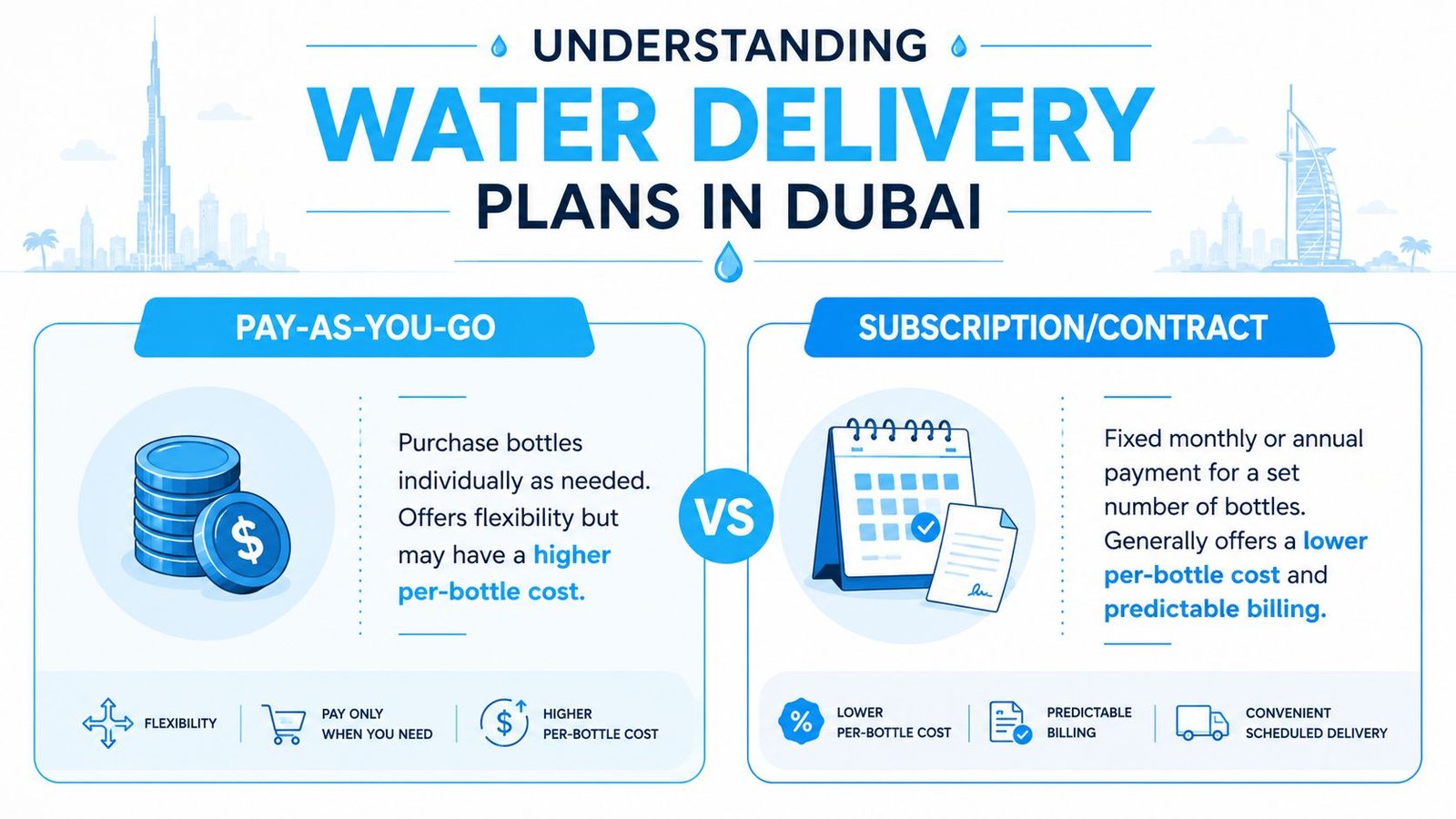
A single standard price is often expected for water delivery Dubai services. In practice, suppliers usually structure the offer in one of two ways, and that structure affects what you pay over time.
A 5-gallon water bottle is the standard format used across the UAE, and it contains approximately 18.9 litres of drinking water, including in Dubai, Sharjah, and Ajman, as noted in this guide to 5-gallon delivery standards in the UAE. That's why 5-gallon drinking water is the normal choice for both homes and offices.
The wider market also explains why this setup is so common. The UAE bottled water market was valued at USD 3.74 billion in 2025 and is projected to reach USD 6.4 billion by 2032, with still bottled water making up about 85% of the market, according to MarkNtel's UAE bottled water market outlook. For everyday use, still water in larger bottles is the practical norm.
You can also see how suppliers present this kind of service on a typical 5-gallon water delivery page.
Two common ways to pay
The first model is pay-as-you-go. You order when you need bottles, pay for that order, and reorder later when stock gets low.
The second model is a plan system, sometimes called a subscription, coupon, or voucher arrangement. You commit to a regular delivery pattern or a set quantity, which makes billing more predictable.
Here's the easiest way to understand it:
| Plan type | How it works | Best for | Main trade-off |
|---|---|---|---|
| Pay-as-you-go | Order bottle by bottle when needed | Small homes, irregular use | Flexible, but less predictable |
| Subscription or plan | Set quantity or recurring schedule | Families, offices, steady use | Better routine, but needs planning |
Practical rule: If your usage changes every week, flexibility usually matters more than locking into a routine. If your usage is steady, a plan is easier to manage.
What works for homes and offices
For a family, pay-as-you-go works well when you travel often, host guests only occasionally, or don't want a fixed schedule. It's also easier when you're still figuring out your real monthly usage.
For an office manager, a plan is usually smoother. Your team drinks water every day, and running out during office hours creates more hassle than the effort of setting up a regular schedule.
A lot of confusion around the water bottle rate in Dubai comes from comparing two offers that aren't structured the same way. One provider may sound cheaper at first, while another may be easier to manage because reordering, replacements, and regular delivery are already built into the plan.
Key Factors That Affect Your Water Rate
Once you understand the plan type, the next step is to look at what pushes your rate up or down. For both homes and offices, the biggest lever is usually usage volume.
Dubai is the largest regional market for packaged drinking water in the UAE, holding 40.9% of total market share in 2025, driven by dense commercial infrastructure and consistent consumption patterns, according to IMARC's UAE bottled water market analysis. That matters because high demand creates a lot of variation in how suppliers package and schedule their service.
Volume changes everything
A household that uses a few bottles here and there will often be offered a simpler arrangement. A workplace with regular weekly demand may have more room to organise deliveries efficiently.
That doesn't mean bigger is always better. It means you should match the service to your real pattern.
For example:
- Small home use: You may prefer ordering only when needed, especially if family members are away during parts of the month.
- Busy family use: If everyone is home daily and you cook often, regular supply usually feels easier.
- Office use: If staff need water every working day, a repeat delivery schedule often saves admin time even more than it saves money.
When you compare providers, don't ask only, “What's your rate?” Ask, “How does your plan work when my usage changes?”
Some suppliers also have different service expectations around timing, bottle returns, and communication. If you want a smoother experience, ask how reorders are handled and whether you can adjust delivery frequency without making the process complicated.
For readers who want background on how bottled water is prepared and handled, this overview of water processing methods gives useful context without changing the basic buying advice.
Location and service habits matter too
If you need water delivery Dubai service in a central business area, the routine may differ from a residential order in Sharjah or a villa delivery in Ajman. The main issue usually isn't the bottle itself. It's the route, access, timing, and how smoothly the exchange happens.
A few practical factors often shape the final offer:
- Delivery area: Water delivery Ajman, water delivery Sharjah, and water delivery Dubai may be organised on different routes and schedules.
- Order frequency: Weekly routine orders are easier for both sides than scattered last-minute requests.
- Bottle turnover: Families and offices that return empties neatly usually have a simpler reorder process.
- Communication style: WhatsApp ordering is often easier than repeated phone calls because addresses, timings, and instructions stay in one thread.
What doesn't work well is guessing your needs and then blaming the provider when your setup feels expensive or messy. In most cases, a better rate starts with a better usage estimate and clearer delivery routine.
How to Calculate Your Monthly Water Needs
A lot of overpaying happens because people order without knowing their real monthly pattern. Some families order too little and keep rushing reorders. Some offices order too much and end up with bottles stacked in corners.
In Dubai, residential and commercial buildings consume up to 88.6% of total water used in the Emirate, which highlights how important reliable hydration planning is in daily life, as noted by the World Green Building Council's article on water use in the region. For drinking water delivery UAE wide, that means your best starting point is a simple estimate, not a random guess.
A useful reference point for personal planning is this guide to daily water intake.
A simple way for families
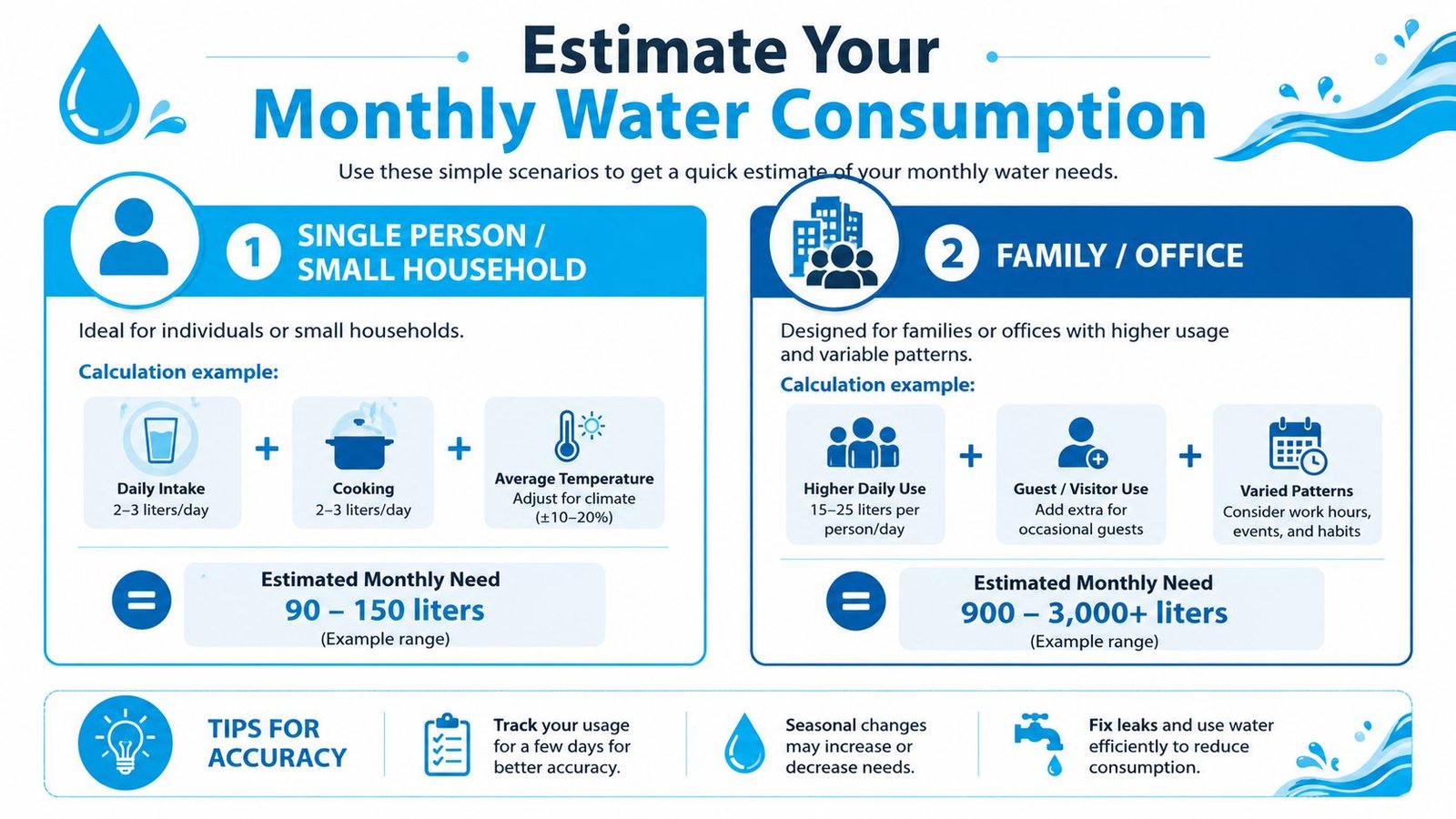
Start with the number of people at home. Then think about how the water is used.
Drinking is only part of it. Many homes also use bottled water for tea, coffee, and basic food preparation.
Use this checklist:
- Count regular users: Include adults, children, and any full-time helper at home.
- Add lifestyle habits: More time at home usually means more bottle use.
- Check guest patterns: Some homes are quiet most weeks, while others host family often.
- Notice the season: Hotter periods can push usage higher.
A family usually gets a better result by tracking bottle use for a few weeks than by trying to predict the whole month from memory. Write down when each bottle arrives and when it empties.
A good home estimate isn't perfect. It's close enough that you don't run short and don't over-order.
A practical formula for offices
For office water delivery Dubai needs, keep it simple. Start with headcount, then adjust for attendance and working style.
This formula works well:
- Count the people who are in the office most days
- Estimate daily drinking use per person
- Add shared use for pantry drinks
- Multiply by working days
- Convert that total into 18.9-litre bottles
A small office with steady attendance is easier to forecast than a hybrid team. If staff come in on different days, your weekly pattern may swing more than you expect.
A short office planning table helps:
| Office pattern | What to watch |
|---|---|
| Full-time team on site | Keep a stable standing order |
| Hybrid attendance | Review usage every two weeks |
| Client-facing office | Add buffer stock for visitors |
| Small team in serviced office | Avoid over-ordering storage-heavy quantities |
If your team uses more water during meetings, training days, or visitor-heavy periods, build that into the plan early. That's usually where under-ordering starts.
The Simple Ordering and Delivery Process
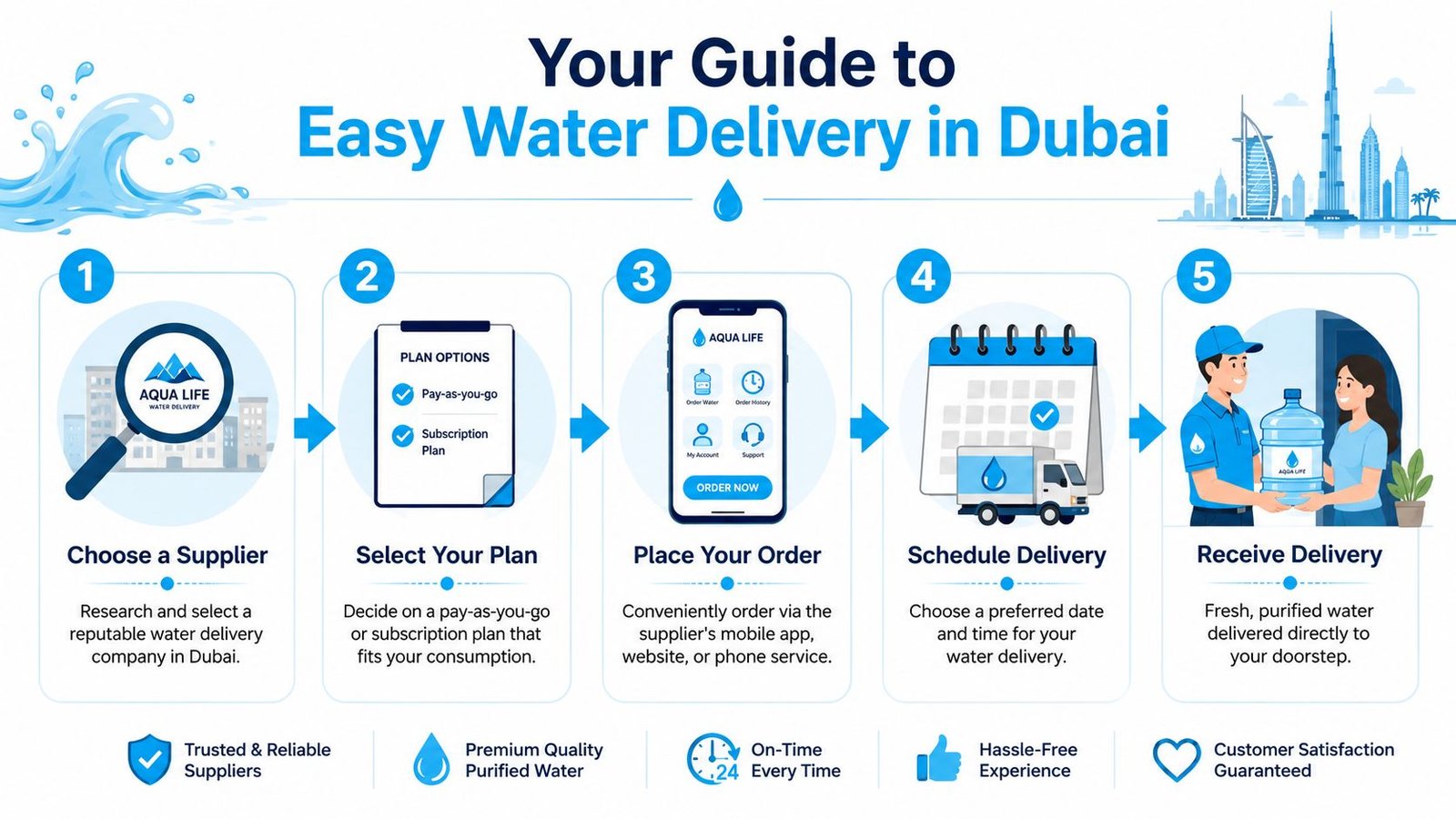
Once you know your likely usage, ordering becomes easy. Most households and office admins don't need a complicated setup. They need a clear message, a confirmed address, and a repeatable routine.
For many suppliers in the UAE, especially with 5 gallon water delivery UAE services, the process now feels more like scheduling a regular household service than placing a formal bulk order.
How the first order usually goes
The easiest start is usually WhatsApp. You send your name, location, and how many bottles you need, then the supplier confirms service availability in areas such as Dubai, Sharjah, or Ajman.
After that, the usual steps are straightforward:
- You share your address: Flat, villa, office tower, or warehouse details matter.
- You confirm quantity: Your monthly estimate serves as a guide for this.
- You choose timing: Some people want a one-time delivery first. Others want a repeating schedule from day one.
- You clarify access notes: Gate instructions, building reception details, or parking guidance can prevent delays.
This is one reason WhatsApp works so well. The conversation stays organised, and your previous order details are easy to find.
What repeat deliveries look like
The second order is usually much easier than the first. Once your location and routine are already recorded, reordering often becomes a quick message.
A common setup in Dubai is bottle replacement with empties left out for collection, and some suppliers use a wallet top-up style system for ongoing weekly swaps, as described in this Dubai community discussion about 5-gallon delivery routines. Even if each supplier handles the admin differently, the basic idea is simple: empty bottles go out, full bottles come in.
Keep your empties together in one clean, easy-to-access spot. It saves time for you and the delivery team.
What usually doesn't work is waiting until the last bottle is nearly finished before sending the message. Homes can sometimes get away with that. Offices usually can't.
Why Quality and Certifications Matter
A water order can look fine on day one and still turn into a problem later. The price seems reasonable, the bottles arrive, and then you notice the labels are unclear, the bottle condition is inconsistent, or nobody gives a straight answer about quality standards. That is usually where a cheap rate stops looking cheap.
The UAE bottled water market is crowded and still growing, with buyers showing more interest in premium, functional, and mineral-enriched products, according to this UAE bottled water market summary. That makes it even more useful to understand how suppliers present quality, because two offers can look similar on the surface while giving you very different confidence in what you are receiving.
Rate matters, but quality controls affect the real value
A useful price comparison is not only about the bottle charge. It is also about how the supplier runs the service behind that charge. If the handling is sloppy or the product description is vague, you are not comparing like for like.
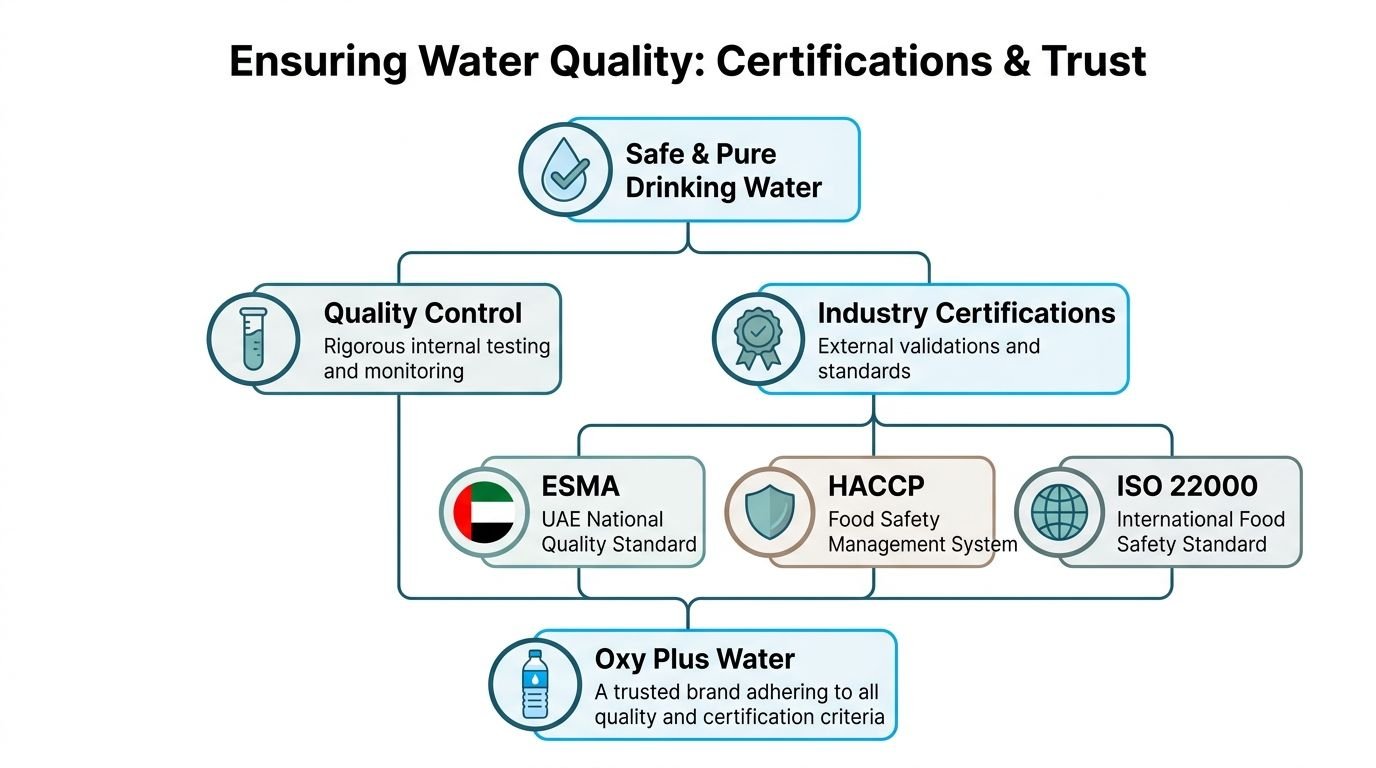
Ask direct questions and listen for direct answers. A reliable supplier should be able to explain:
- Which certifications they hold: Recognised certifications show the company follows a defined quality process.
- How bottles are cleaned and handled: Reusable bottles need proper sanitising and consistent inspection.
- What water you are ordering: Purified, mineral, pH-balanced, or low-sodium should be stated clearly, not left fuzzy.
- How consistently they deliver: Missed slots and confused replacements often point to wider operational issues.
For many households and offices, pH-balanced and low-sodium water are preference choices, not marketing buzzwords. The point is simple. You should know what you are paying for and why it suits your day-to-day use.
If a supplier answers delivery questions quickly but becomes vague on quality checks, pause there and ask for clarity before you place a repeat order.
Reusable bottles only work well with proper standards
The 5-gallon model depends on return, cleaning, refilling, and redistribution. That system can be efficient, but only if the supplier is disciplined about bottle care. In practice, bottle condition tells you a lot. Clean caps, intact seals, readable labels, and decent handling are small details that usually reflect a better-run operation.
In the UAE, many suppliers use reusable 18.9-litre containers as part of their normal service model, as explained in this article on reusable 5-gallon bottle delivery practices. For homes and offices, that can mean less waste and easier bulk water management. It also means you should pay attention to the return-and-reuse process, not only the quoted rate.
The practical trade-off is straightforward. A slightly higher rate from a supplier with clear standards, cleaner bottle handling, and consistent service often costs less in hassle than a cheaper offer that creates doubts every week.
Your Water Delivery Questions Answered
A typical first order sounds simple until the practical questions start. How many bottles should stay on site, what happens to empties, and what changes the monthly bill if usage jumps for a week? Those are the questions that determine whether a supplier is easy to work with.
FAQ
How do I know if I need a pay-as-you-go plan or a regular plan?
Start with your usage pattern, not the headline rate. Pay-as-you-go suits homes and offices that swing up and down. A regular plan suits teams or families with a steady routine and fewer surprises. The trade-off is simple. Flexible ordering can cost more per delivery or require more frequent reordering, while a regular arrangement is easier to manage if your consumption is predictable.
What if my office or home suddenly needs more water than usual?
That usually happens during meetings, school holidays, guests staying over, or a busy workweek. Ask the supplier how extra bottles are priced, whether short-notice deliveries are available, and whether your normal plan changes if you order above your usual quantity. That's usually how under-ordering starts. Someone waits until the last bottle is nearly empty and then pays for urgency instead of planning a small buffer.
Do I need to keep the empty bottles?
Usually, yes. Empty bottles are part of the service model, and suppliers normally collect them on the next drop. Before you order, confirm whether there is a bottle deposit, how returns are tracked, and what happens if a bottle is damaged or goes missing. Those details affect the final cost more than many buyers expect.
How often should I reorder?
Reorder timing should follow your actual consumption, not guesswork. For a home, that often means noticing how long a small batch lasts across workdays and weekends. For an office, check attendance, pantry habits, visitor traffic, and whether staff also use the water for tea and coffee. After a few deliveries, the pattern usually becomes clear.
Is water delivery only useful for big offices?
No. Small offices often see the benefit faster because they do not want staff leaving to buy cartons or running out before a client meeting. Homes benefit for the same reason. One reliable delivery routine is easier to manage than repeated shop runs, especially once you understand the pricing structure behind it.
What should I ask on WhatsApp before placing my first order?
Keep the first message practical. Ask about your service area, delivery windows, minimum order expectations, bottle deposit policy, empty bottle collection, and how they handle repeat orders. If you live in an apartment or manage an office tower, confirm parking, access rules, and whether the driver can deliver to your door or reception.
Can I use the same service for my home and office?
Yes, if the supplier covers both locations and can keep the arrangements separate. Many buyers prefer one provider because it simplifies ordering, billing, and follow-up. Just check whether pricing, delivery slots, or bottle return rules differ between residential and office addresses.
If you want a simple, reliable way to arrange 5-gallon bottled drinking water for your home or office in Dubai, Sharjah, or Ajman, order through WhatsApp with Oxy Plus Water at oxypluswater.com.