You’re probably reading this because your current setup is annoying. At home, you’ve got loose bottles rolling around the kitchen or balcony store. In the office, someone always notices the water is finished only after the last cup is poured.
That’s why choosing the right water dispenser in dubai matters more than often realized. In a city where heat, humidity, busy schedules, and building rules all affect your daily routine, the best choice is the one that keeps water simple, safe, and easy to manage for your family or team.
Table of Contents
- Why Your Home or Office Needs Better Hydration
- Bottle-Fed vs Plumbed-In Dispensers Explained
- Essential Features for Your Dubai Water Dispenser
- Understanding Water Quality pH and Sodium
- A Practical Look at Atmospheric Water Generators
- Simple Ordering for Uninterrupted Water Supply
- Your Decision Checklist and Top Questions Answered
Why Your Home or Office Needs Better Hydration
In Dubai, hydration isn’t a nice extra. It’s part of your daily survival plan. If you rely on small bottles, you already know the problem. You keep buying them, carrying them, chilling them, and throwing them away.
For families, it becomes household clutter fast. For offices, it creates a constant refill headache and makes the pantry look messy by noon.

Dubai life uses more water than most people realise
The scale is huge. The United Arab Emirates leads the world in per-capita bottled water consumption at 68.6 gallons per person annually, well above the global average of 29.3 gallons, and the UAE Water Dispensers Market is projected to reach 121.42 USD Million by 2032 according to this UAE water consumption and dispenser market report.
That tells you something important. People here aren’t buying dispensers because they look modern. They’re buying them because regular access to clean drinking water UAE households and workplaces can depend on is a practical need.
Practical rule: If your home or office goes through water every day, a dispenser stops hydration from becoming a daily errand.
A dispenser fixes the everyday problems
A good dispenser gives you one place for drinking water, one routine for refills, and less mess around your space. That matters in a flat in Dubai Marina, a villa in Sharjah, or an admin office in Ajman.
It also helps with the little things people forget to mention in generic guides.
- Less lifting all day: You stop hauling packs of small bottles from the supermarket.
- Cleaner storage: You manage one organised water point instead of bottles in every room.
- Faster serving: Kids, guests, staff, and visitors know exactly where to get water.
- Better routine: People drink more regularly when water is visible and easy to access.
For offices, this is even more obvious. A dispenser keeps meetings moving, helps reception areas feel prepared, and reduces the usual “who forgot to reorder?” problem that wastes time.
Why this matters in homes and workplaces
At home, a dispenser works best when it removes friction. You want water ready for school mornings, late-night tea, gym recovery, and visiting relatives. You don’t want a system that adds more hassle.
In offices, the goal is consistency. Staff need cold water without waiting, and managers need a setup that doesn’t create constant pantry complaints. That’s why office water delivery Dubai services and reliable dispensers go hand in hand.
If you live in Dubai, Sharjah, or Ajman, this decision is simpler than people make it. If you use a lot of water, stop relying on scattered small bottles. Get a proper dispenser and a steady refill routine.
Bottle-Fed vs Plumbed-In Dispensers Explained
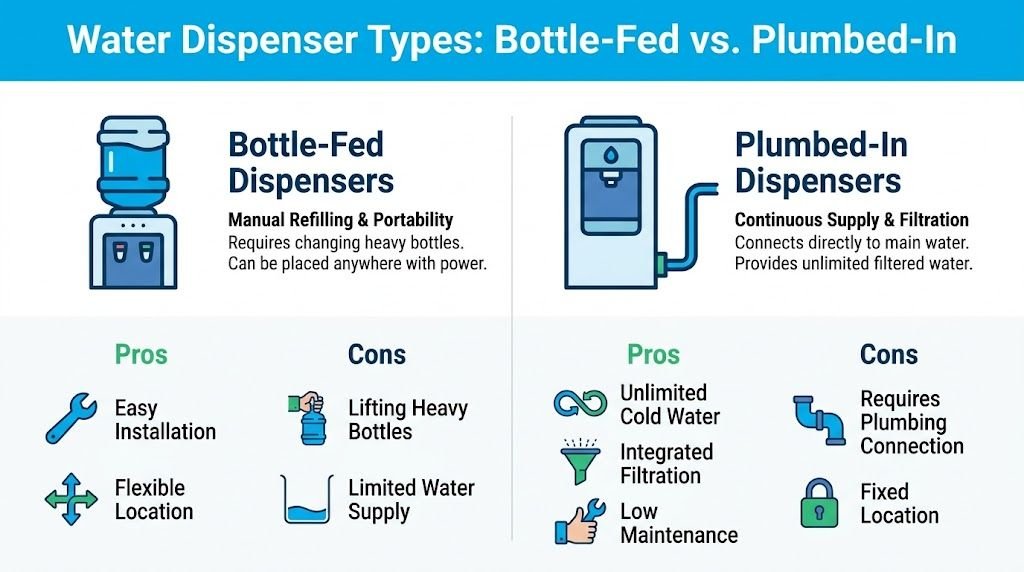
This is the first real choice. One should decide between bottle-fed dispensers and plumbed-in dispensers, then ignore the rest of the noise.
If you want the short version, bottle-fed is usually better for flexibility. Plumbed-in is better only when your building setup and maintenance plan support it properly.
Bottle-fed works best for most homes
A bottle-fed unit uses 5-gallon water bottles. You place the bottle on top or load it into a bottom cabinet, and that’s it. No connection to your building’s water line is needed.
For flats and family homes, that’s a big advantage. You can move the dispenser if you change rooms, change apartments, or want it closer to the kitchen or dining area.
Here’s where bottle-fed wins:
| Type | Best for | Main advantage | Main drawback |
|---|---|---|---|
| Bottle-fed | Homes, small offices, rented spaces | No installation | You need bottle storage |
| Plumbed-in | Fixed office pantry areas | Continuous supply | Needs water line access and approval |
A lot of families in Dubai prefer bottle-fed because building rules can be strict. If you’re renting, you may not want to ask for permissions, drilling, or maintenance visits just to get drinking water sorted.
If you want a practical breakdown of why delivered bottles remain popular, read this guide on why 5-gallon purified water suits homes and offices.
Plumbed-in sounds easier than it often is
A plumbed-in dispenser connects directly to a water source. In theory, that means no bottle changing. In real life, it also means installation, filter servicing, access to the right plumbing point, and often some discussion with building management.
That doesn’t make it bad. It just makes it less simple than sales brochures suggest.
For many Dubai apartments, the smartest option is the one that works without approvals, alterations, or maintenance delays.
Plumbed-in makes more sense when you manage a stable office with a dedicated pantry and a team that can handle filter maintenance properly. It suits places that won’t move the unit and don’t want to store bottles.
My straight recommendation
Choose bottle-fed if any of these sound like you:
- You rent your home: You want zero installation issues.
- You move furniture often: Portability matters.
- You need water delivery Dubai or water delivery Sharjah on schedule: Bottled refill service fits naturally.
- You run a small or medium office: It’s easier to manage than a connected machine.
Choose plumbed-in only if these are true:
- You control the space fully: No landlord or building approval problems.
- You have a fixed pantry area: The unit won’t need moving.
- You can maintain it properly: Filters and servicing won’t be ignored.
For most homes and many offices in this region, bottle-fed wins because it respects real life. It’s simple, fast, and doesn’t create extra building complications.
Essential Features for Your Dubai Water Dispenser
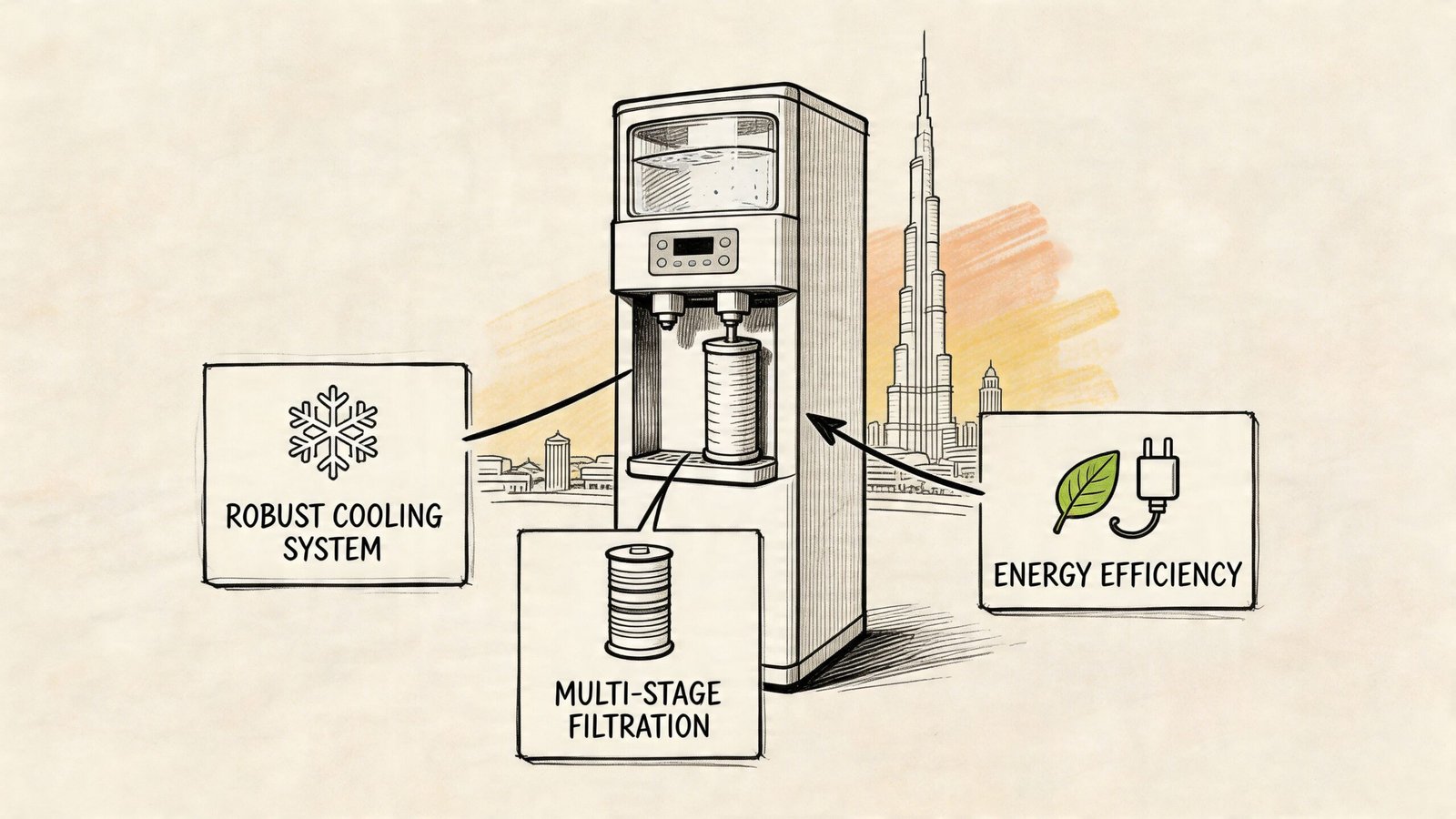
Don’t buy a dispenser just because it looks neat online. In this climate, build quality matters. If the machine can’t handle humidity, regular use, and basic hygiene demands, you’ll regret it quickly.
The biggest mistake I see is people focusing on colour, shape, or a cheap-looking exterior while ignoring the parts that touch the water.
Start with the inside, not the outside
In Dubai’s humid climate, corrosion is a real issue. Quality dispensers use SS 304-2B inner tanks and SS 430-BA outer bodies because these materials resist rust and pitting better, which helps protect hygienic water delivery, as noted in this overview of stainless steel water cooler construction for UAE conditions.
That matters more than many buyers think. If the inner tank material is poor, the unit may still look fine from outside while the important parts age badly.
Features I’d never skip
Not every buyer needs the same setup, but a few features are worth insisting on.
- Cold and hot taps: Cold water is obvious in the UAE. Hot water is useful for tea, coffee, and quick baby bottle prep routines.
- Child safety lock: If you have children at home, this isn’t optional on the hot tap.
- Stable base or bottom-load design: This helps in homes where kids may bump the unit or where lifting bottles is difficult.
- Easy-clean drip tray: You’ll use it every day. It should remove easily and wash fast.
Check your actual placement before you buy
A dispenser can be perfect on paper and wrong for your flat or office. Measure the space first. Then check the nearby socket, walking space, and bottle storage area.
For homes, ask yourself these questions:
- Will the bottle block a cabinet or doorway?
- Can older family members use it comfortably?
- Is the unit close enough to daily use areas?
For offices, the better questions are different:
- Will people queue around it? Reception and pantry traffic matters.
- Can the cleaning team access it easily? Hidden corners get ignored.
- Is the floor surface level? Wobble becomes a daily annoyance.
A dispenser should fit your routine, not force you to redesign the room around it.
Match the machine to the people using it
A family with toddlers needs safety and easy access. A busy workplace needs reliability and steady cooling. A clinic, gym, or staff accommodation setup needs durability first.
That’s why I usually tell buyers to think in this order:
| Priority | Home | Office |
|---|---|---|
| First | Safety | Reliability |
| Second | Ease of use | Capacity |
| Third | Appearance | Cleaning access |
If you’re comparing models, don’t get distracted by flashy extras. Focus on tank material, tap safety, cleaning ease, and whether the dispenser suits your real daily usage in Dubai, Sharjah, or Ajman.
Understanding Water Quality pH and Sodium
The dispenser is only half the decision. The water itself matters just as much. A great machine with poor water choice still gives you a poor daily setup.
This topic is often overcomplicated. You don’t need a chemistry lesson. You just need to ask the right questions.
What pH means in normal language
When people say pH-balanced water, they’re usually talking about water chosen for everyday drinking comfort and consistency. For most families and offices, the practical benefit is simple. You want water that tastes clean, feels easy to drink, and suits regular daily use.
If this matters to you, it helps to read a plain-English explanation of why pH-balanced water matters for everyday hydration.
Why low-sodium water gets attention in Dubai
In a hot climate, people often become more careful about what they drink every day. That’s one reason many households and offices prefer low-sodium water for routine use.
This is especially relevant if your household includes:
- Young children: Parents often want a straightforward daily water option.
- Older adults: Simplicity and consistency matter.
- Health-conscious adults: Many prefer to keep sodium intake in mind across their routine.
- Office teams: A neutral, widely suitable water choice avoids unnecessary fuss.
I’m not saying every buyer needs to obsess over labels. I am saying you should check what water you’re putting into your dispenser instead of treating all bottled options as identical.
Ask these questions before you commit
Don’t just ask, “Do you deliver?” Ask better questions.
If you’re choosing a long-term water supplier, ask about consistency first and convenience second.
Use this shortlist:
- Is the water described as pH-balanced?
- Is it presented as low-sodium for everyday use?
- Does the taste stay consistent from delivery to delivery?
- Can the supplier handle regular family or office demand without missed schedules?
For homes, taste and trust usually decide the winner. For offices, consistency and reliable replenishment matter even more. If your team doesn’t trust the water, they’ll go back to buying random bottles anyway.
A Practical Look at Atmospheric Water Generators
You move into a new Dubai apartment, buy a sleek water setup, and then the building asks about power load, placement, drainage, and service access. That is the point where atmospheric water generators stop feeling simple.
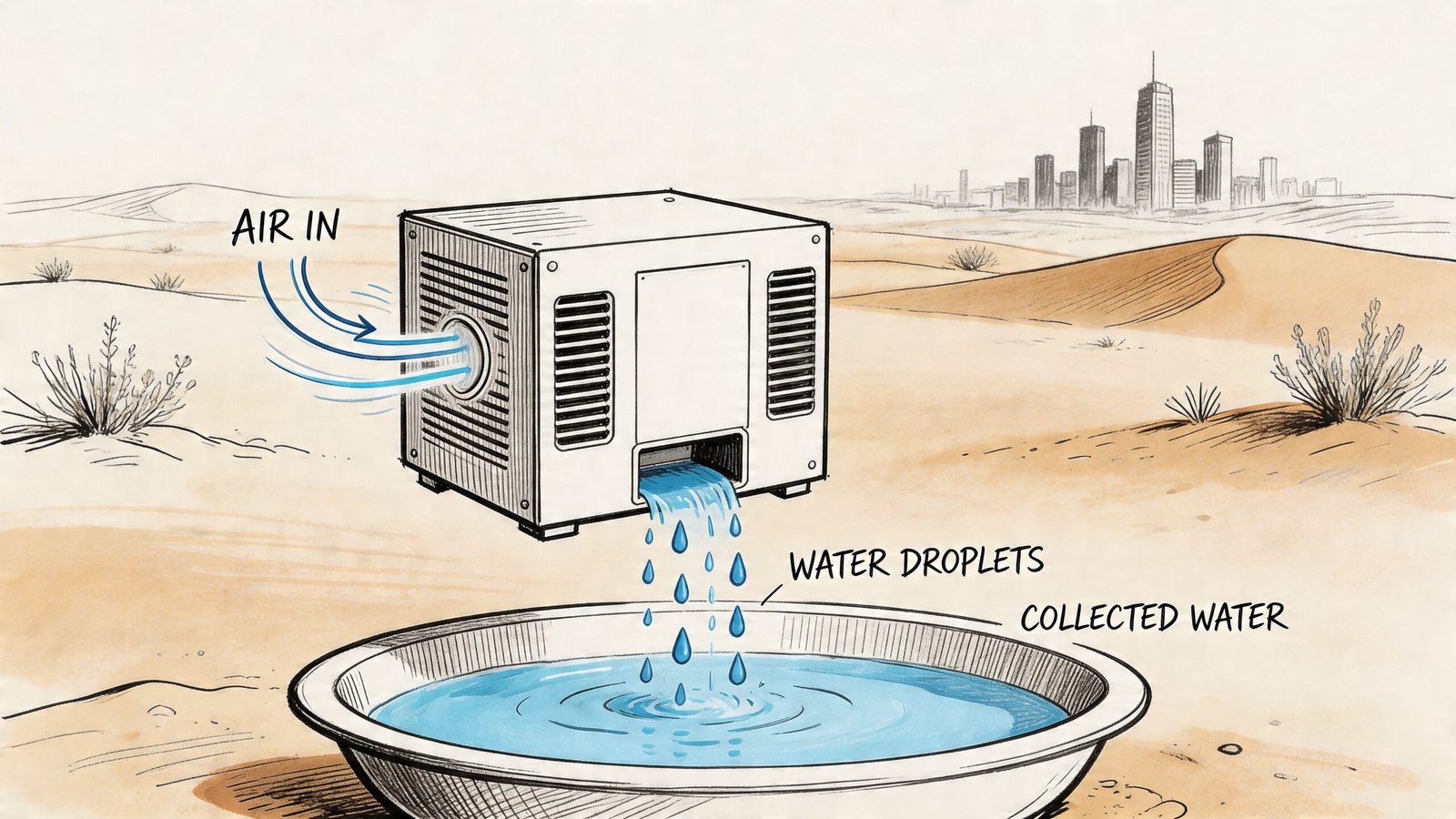
Atmospheric Water Generators, or AWGs, pull moisture from the air and turn it into drinking water. The idea gets attention for obvious reasons. Less dependence on delivered bottles sounds attractive, especially in a city that cares about convenience and sustainability.
For a typical home or office in Dubai, I would not make an AWG my first choice.
The technology is clever. The setup is not light.
Private AWG units are expensive to buy, and they add another appliance that needs power, cleaning, filter changes, and regular checks. In Dubai, that matters more than brochure copy suggests. Apartment residents may need to think about where the unit will sit, how noisy it is, whether maintenance access is practical, and whether the building has any restrictions on equipment placement or utility use.
That is before you get to output. An AWG is only useful if it produces enough water for your real daily routine, not your best-case estimate.
A family that drinks heavily through the summer, or an office pantry that gets constant use, usually wants certainty.
Daily practicality matters more than novelty
Here is the simple comparison buyers need:
| Question | AWG | Delivered 5-gallon drinking water |
|---|---|---|
| Upfront cost | High | Low |
| Installation planning | Often required | Usually minimal |
| Electricity dependence | Yes | No special setup |
| Ongoing maintenance | Regular cleaning and servicing | Mostly bottle replacement |
| Easy for apartments and small offices | Sometimes awkward | Usually straightforward |
That last row matters in Dubai. Plenty of residents live in towers with limited utility space, strict building management processes, or service-lift rules that already affect how equipment is brought in and maintained. A water system should reduce hassle, not add another approval trail.
Where AWGs can work
AWGs can make sense for buyers who are deliberately testing a premium, tech-heavy setup and are ready to manage it properly. Some villas, specialty spaces, and sustainability-focused projects may decide the trade-off is worth it.
For everyone else, the smarter move is usually a reliable dispenser with scheduled bottle supply. If you want the practical route, compare 5-gallon water delivery options in Dubai and choose a setup that fits your household or office consumption without extra maintenance.
My recommendation
Choose an AWG only if you want the technology itself and are comfortable handling the added cost, servicing, and setup details.
Choose delivered water if your goal is consistent hydration with less friction. In Dubai, that is the better fit for far more homes and offices.
Simple Ordering for Uninterrupted Water Supply
A dispenser only works if your refill system works. Many homes and offices often falter in this regard. They buy the machine, feel organised for a week, then forget to reorder until the bottle is nearly empty.
The fix is boring but effective. Build a simple delivery routine and stop relying on memory.
Make reordering automatic in your head
Most families don’t need a complicated schedule. They just need one reliable pattern. The same goes for small offices.
A good delivery setup should feel easy, not formal. You shouldn’t have to chase customer service, repeat your address every time, or explain your building access on every order.
That’s why many people prefer a supplier that supports regular delivery and simple communication. If you’re comparing options, it helps to review available water bottle delivery options in Dubai and see what fits your routine.
What works best for homes and offices
For homes in Dubai, Sharjah, or Ajman, the best ordering system is usually the one that matches your weekly family rhythm. Some homes need regular top-ups before weekends. Others need them around school and work schedules.
For offices, assign one person to manage the water account. Don’t leave it vague. Pantry supplies get missed when everyone assumes someone else handled it.
Here’s a practical routine that works well:
- Set a reorder point: Don’t wait for the last bottle.
- Keep one spare bottle: This prevents panic when delivery timing shifts.
- Use one contact method: WhatsApp is usually the easiest for fast repeat orders.
- Confirm access details once: Tower name, unit, and timing should be clear from the start.
The best water service is the one you barely have to think about after setup.
Keep it simple, not clever
You do not need an elaborate system. You need consistency. That’s why drinking water delivery UAE services are most useful when they reduce admin, not add to it.
For households, that means fewer supermarket trips and fewer last-minute shortages. For businesses, it means the pantry stays ready, staff stop complaining, and water becomes one less task on your list.
Your Decision Checklist and Top Questions Answered
A good choice feels easy on a busy Tuesday. The dispenser fits the space, the water suits daily drinking in Dubai’s heat, and nobody in the home or office has to fuss with it.
Start there. Then rule out anything that creates extra work.
Your quick checklist
- Choose bottle-fed for rented flats and flexible layouts: It is usually the simplest option for Dubai homes and many small offices.
- Confirm building practicalities before you buy: Check lift access, delivery access, pantry space, socket location, and where spare bottles will sit.
- Pick safe, durable parts: A stainless steel tank holds up better and is easier to trust for daily use.
- Insist on child safety for hot water: If children are around, a hot tap lock is a basic requirement.
- Ask about the water, not just the machine: pH-balanced, low-sodium water is a smart choice for regular drinking, especially in a hot climate where people drink more throughout the day.
- Choose a supplier that is easy to deal with: Fast replies and simple WhatsApp reordering save time.
Building rules and everyday use
This is the part many generic guides miss. In Dubai, the right dispenser is often the one your building allows, your cleaner can reach, and your family or staff will use without crowding the area or spilling around the tray.
Plumbed-in units can work well, but only in the right setup. If your tower is strict about modifications, or your office pantry is small and shared, bottle-fed usually causes fewer problems. For many households, that matters more than having one extra feature on paper.
Low-sodium water also deserves more attention than it usually gets. In a hot climate, where people drink water all day, the quality of that water matters in a very practical way. You are not choosing a label. You are choosing what your family or team drinks every day.
Choose the dispenser that still feels easy to live with after six months.
FAQ Your Water Dispenser Questions
| Question | Answer |
|---|---|
| What’s the best type of dispenser for most Dubai homes? | Bottle-fed is the better fit for most homes because it avoids installation issues and works well in rented apartments and family villas. |
| Are plumbed-in dispensers better for offices? | They can be, but only if the office has a fixed pantry space, approval for setup, and someone responsible for maintenance. |
| What should I check before placing a dispenser at home? | Check the floor space, power socket, bottle storage, delivery access, and whether children can use it safely. |
| Why does low-sodium water matter? | It is a sensible choice for everyday drinking, especially in Dubai’s heat when families and office staff consume more water across the day. |
| Is WhatsApp a good way to order water? | Yes. It is usually the quickest way to repeat an order and sort out delivery details without extra back-and-forth. |
| Are atmospheric water generators a good replacement for bottle delivery? | For most homes and offices, no. They are harder to manage and less practical than regular bottled water delivery. |
| How many spare bottles should I keep? | Keep at least one spare bottle at home or in the office so a delayed delivery does not become a problem. |
If you want fewer supermarket runs, fewer last-minute shortages, and water that suits daily use in Dubai, order from Oxy Plus Water and set up a simple refill routine for your home or office. For repeat orders, use WhatsApp and keep your delivery details consistent from the start.