You've probably done this already. You moved into a new flat, opened the tap, filled a kettle, and paused for a second. Or you're setting up a new office and wondering what your team should use for everyday drinking water.
That question is normal in Abu Dhabi. Families want something simple and safe for home. Office managers want something practical that keeps people comfortable without turning water planning into a daily task.
The good news is that the water supply in Abu Dhabi is organised, modern, and built around a clear system. Once you understand where the water comes from, how it reaches your building, and why many people still choose separate drinking water for daily use, everything becomes much easier.
Table of Contents
- Welcome to Abu Dhabi Your Guide to Local Water
- Where Abu Dhabis Water Comes From
- How Water Reaches Your Home or Office
- Understanding Water Quality and Safety
- Managing Your Water Connection and Bills
- Choosing Your Drinking Water A UAE Perspective
- Frequently Asked Questions
- Should I think about both municipal water and drinking water delivery when moving to Abu Dhabi?
- Who should I contact if there is a water service issue at my Abu Dhabi property?
- What are easy ways to reduce water waste at home?
- How can an office save water without making it complicated?
- Why do many residents use scheduled bottled water delivery instead of buying packs whenever they run out?
- How should 5-gallon bottles be stored at home or in the office?
- Is delivered bottled water only useful for large families or big companies?
- How do I choose a water delivery service in the UAE?
Welcome to Abu Dhabi Your Guide to Local Water
A new resident in Abu Dhabi often learns the water system in small moments. The first shower feels fine, the washing machine works, the kitchen tap runs normally, but a key question emerges later when it's time to decide what the family will drink each day.
Office managers go through something similar. The water is there, the building is functioning, but staff still ask practical questions like what to use for tea, what to keep in meeting rooms, and how to make sure there's always enough for a busy workday.
That's why understanding local water matters. You don't need an engineering background. You just need a clear picture of what comes through the municipal system and what many households and workplaces choose separately for drinking.
Practical rule: Think of municipal water and drinking water as related, but not always identical, decisions.
If you live in the wider UAE, you'll notice this conversation happens beyond Abu Dhabi too. Families in Dubai and Sharjah often compare notes on daily habits, while office teams in Ajman may care more about reliable scheduled supply than anything technical.
For drinking, many homes and workplaces prefer 5-gallon drinking water because it's straightforward to store and easy to plan around. In the UAE, a 5-gallon bottle has a standard capacity of 18.9 litres, as noted by this guide to standard 5-gallon bottle size in the UAE.
That's also why terms like drinking water delivery UAE, clean drinking water UAE, and 5 gallon water delivery UAE come up so often in everyday conversation. People aren't always confused about safety. They're often making a comfort and convenience choice.
Where Abu Dhabis Water Comes From
Abu Dhabi lives in a dry region, so local water has to be managed carefully. For most residents, the easiest way to understand it is to think of two main sources. One comes from the sea, and the other comes from underground reserves.
The big source is the sea
The main story is desalination. In simple terms, seawater is processed so it can be used as fresh water for people and cities.
That might sound abstract until you see the scale. Abu Dhabi's annual consumption of desalinated water reached 1,101 million cubic meters in 2017, and this technology is the primary source of potable water for Abu Dhabi city as well as Al Ain and Liwa, according to Abu Dhabi energy and water data for 2017.
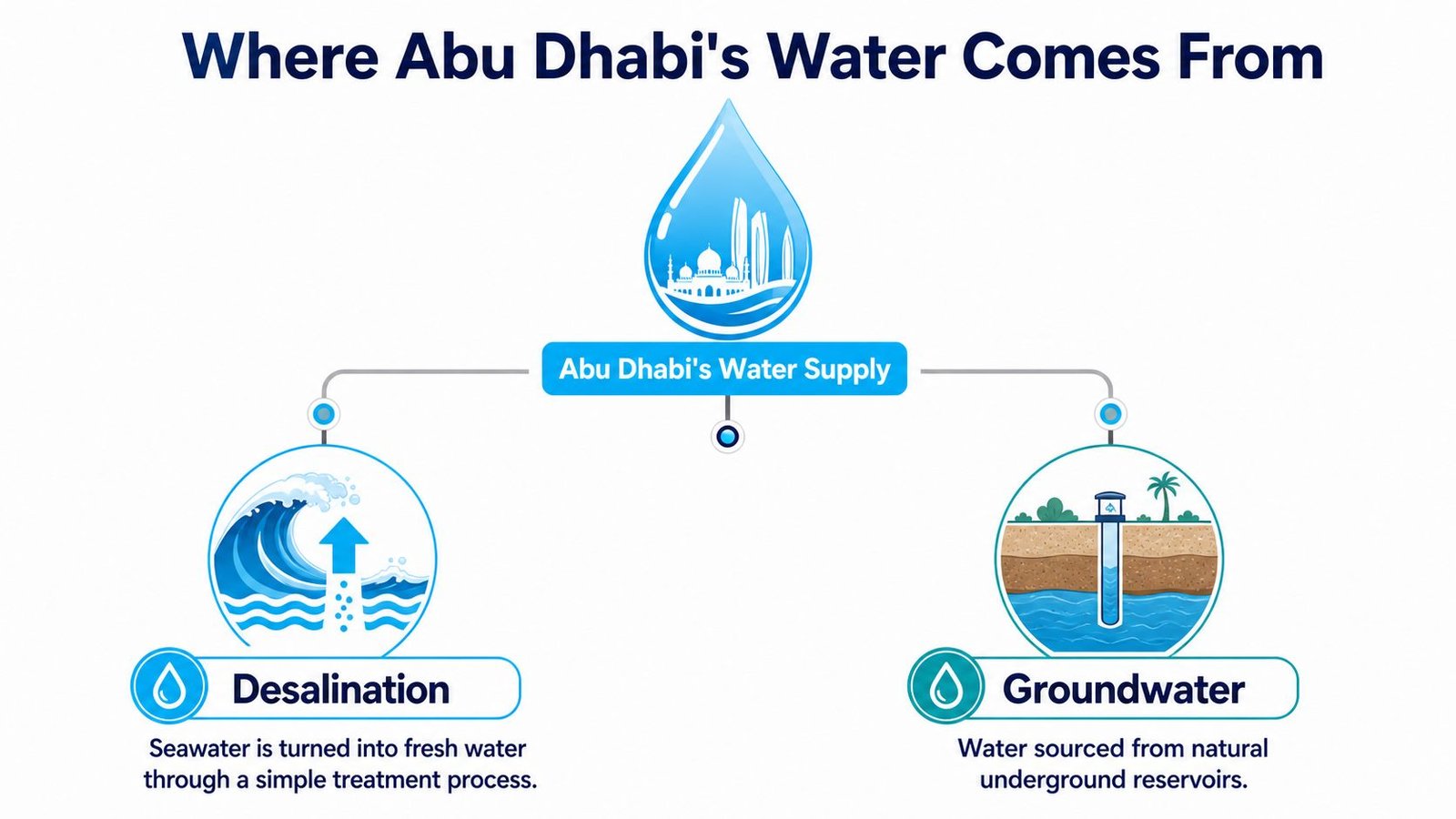
A simple way to picture desalination is this. The sea provides the raw water, then specialised plants remove the salt and prepare the water for public use. It's a huge piece of infrastructure, but for you at home or work, it shows up as something very ordinary. You turn on a tap and water arrives.
Groundwater still matters
The second source is groundwater. This is water stored beneath the ground in natural underground layers.
Groundwater is part of the wider water picture in the emirate, even though desalination carries the main load for city life. That's one reason people sometimes get confused. They hear “natural water” and assume most domestic supply comes from wells, when in fact the municipal story in Abu Dhabi is heavily shaped by desalinated seawater.
Here's the easiest way to separate the two:
- Desalinated water: This is the backbone of urban potable supply.
- Groundwater: This remains important in the broader water context.
- Your daily reality: Most homes and offices experience the system as a dependable public network, not as a direct connection to a natural spring or well.
Abu Dhabi's water system is impressive because it turns a harsh climate into something that feels routine indoors.
For families, that means showers, laundry, cooking, and cleaning can happen normally. For offices, it means the building can run without staff having to think about the engineering behind every sink, pantry tap, or washroom.
How Water Reaches Your Home or Office
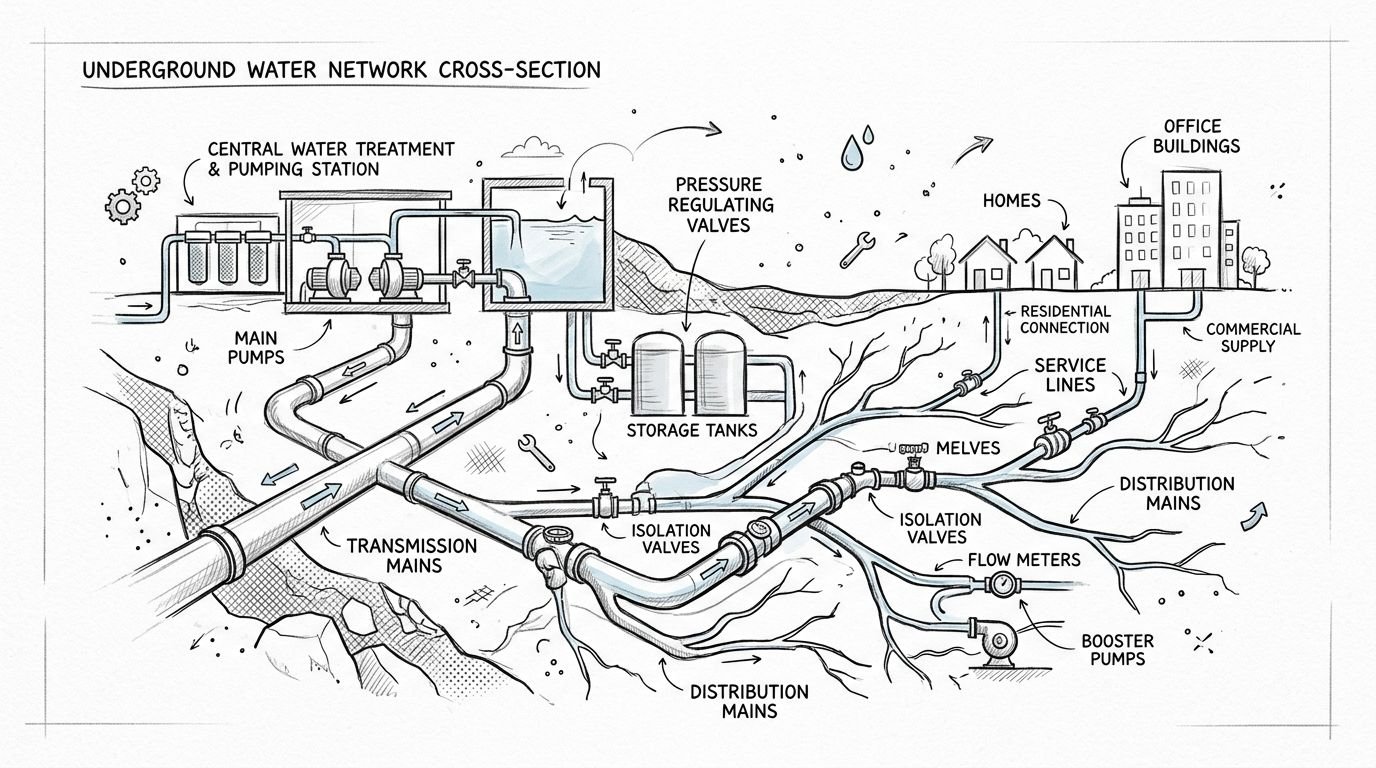
Once water has been prepared, it still has to travel across the city and into buildings. That journey happens through a large distribution network under streets and around neighbourhoods.
Near the start of that journey, this visual helps make the network easier to understand.
From plant to building
Think of the network like a citywide delivery route made of pipes instead of roads. Water moves from production facilities into the wider grid, then through local pipe systems, and finally toward individual properties.
Reliability is the key point. Abu Dhabi's water distribution networks are engineered to maintain a minimum pressure of 1.25 bar at the customer's property line, which supports reliable supply to ground-level storage tanks under standard conditions, according to AADC water network design guidelines.
That pressure figure matters because water doesn't just need to exist in the system. It needs enough push behind it to reach the building properly.
Why building tanks matter
In many buildings, water first feeds into a ground-level storage tank. If that term sounds unfamiliar, think of it as your building's holding area for incoming water.
This setup helps smooth daily use. A family in a flat may never see the tank, but it supports showers, sinks, and cleaning. An office manager may not think about it until maintenance raises a question, but it plays a quiet role in keeping the workplace running steadily.
A short visual explanation can make that easier to picture.
A practical way to think about the flow is:
- Water is prepared at the source.
- It enters the city network and moves through main lines.
- It reaches your property boundary with designed pressure.
- It feeds building storage so daily use stays steady.
If water pressure is the push, the building tank is the buffer.
That's why a tap can feel simple even though the system behind it is not. For your family or your office team, that hidden stability is what makes daily life feel normal.
Understanding Water Quality and Safety
The question of primary concern isn't engineering. It's simple. Is the water okay to use?
For normal daily tasks, residents generally treat the municipal supply as part of ordinary household and workplace life. That includes showering, handwashing, cleaning surfaces, flushing toilets, and many kitchen activities.
Safe for daily use
Confusion often starts when people hear concerns about taste or personal preference and assume that means the supply is unsafe. Those are not the same thing.
Municipal water systems are managed to support daily living across homes and commercial spaces. If you want a closer look at how organised water checking can work in practice, this overview of water quality monitoring gives a useful plain-language reference point.
A helpful way to separate the ideas is this table:
| Everyday question | Practical answer |
|---|---|
| Can you use tap water for washing and cleaning? | Yes, that's part of normal daily use. |
| Can you use it around the kitchen? | Many people do for routine household tasks. |
| Why do some people still choose separate drinking water? | Usually because of taste, convenience, or personal preference. |
Safe and preferred are not always the same thing
This matters for both families and offices. A parent may feel comfortable using tap water around the home, but still want a dedicated drinking supply for children and guests. An office may use municipal water for the premises while keeping a separate stock for staff hydration and meetings.
Safe for general use and preferred for drinking are two different decisions.
That distinction is common across the UAE. It's one reason people searching for clean drinking water UAE or drinking water delivery UAE are not always reacting to a problem. They're often choosing consistency, convenience, or a taste they prefer every day.
If you're new to the city, the easiest mindset is a balanced one. You don't need to panic about the tap. You also don't need to feel strange if you'd rather keep a separate drinking supply at home or in the office.
Managing Your Water Connection and Bills
You move into a new flat, turn on the taps, and then the first bill lands in your inbox. For many new residents, that is the moment the water system starts to feel confusing. The supply itself is one topic. The account, charges, and setup steps are another.
Getting a connection started
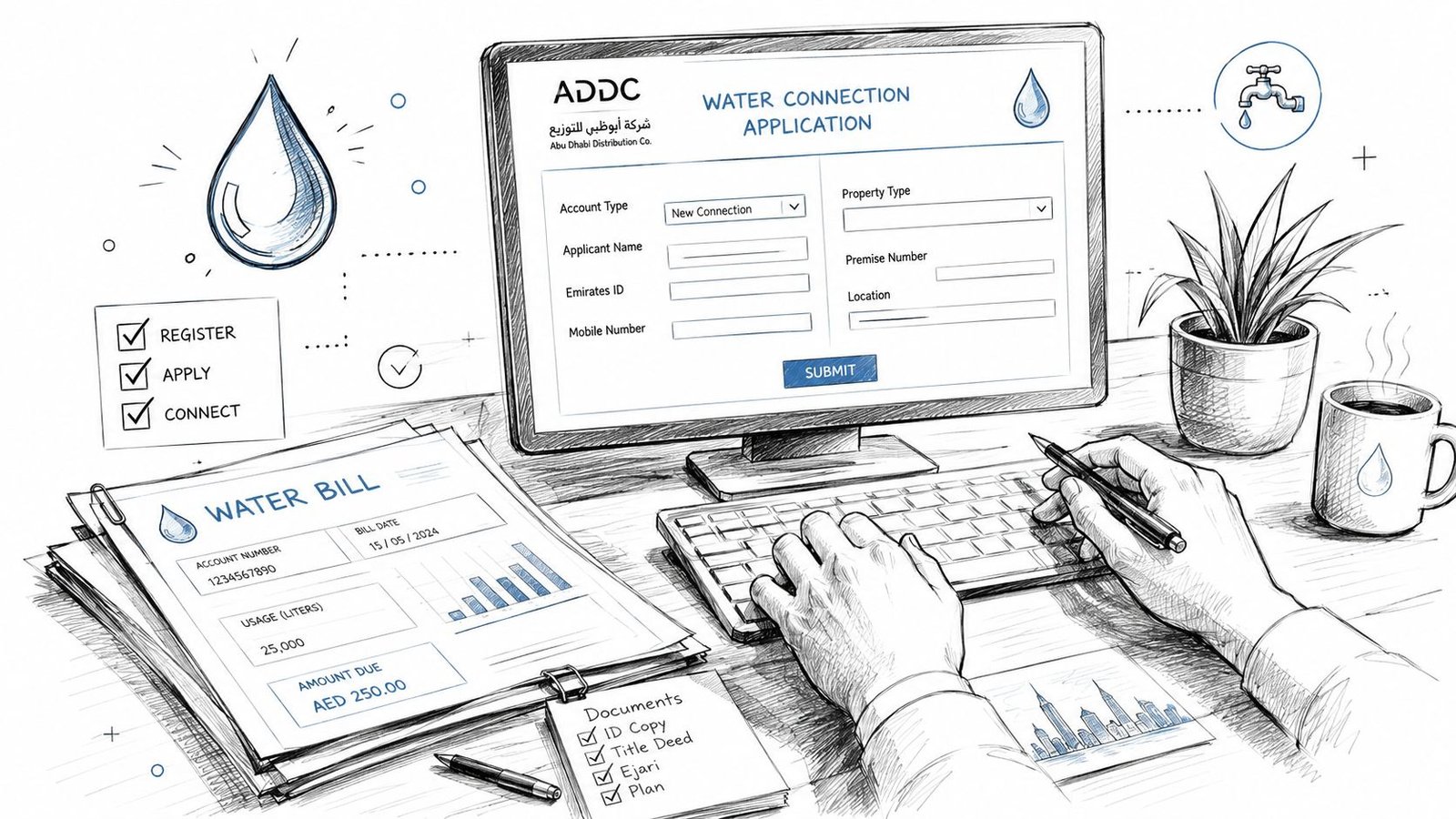
Starting service is usually a paperwork task, not a technical mystery. You confirm the property details, open the account with the relevant utility authority, submit the required documents, and wait for activation. If you are moving into a managed building, the property team may handle part of this process or tell you exactly what is needed.
A simple way to keep it straight is to separate two buckets. One bucket is your municipal water connection for showers, cleaning, washing, and day to day household use. The other is your drinking water plan. Many residents sort both at the same time during a move, but they are different decisions.
That distinction helps avoid stress later. Your utility account gives you access to the city network. Your preferred drinking water setup depends on taste, routine, convenience, and the needs of your family or office. If you want to compare those practical options while settling in, this Abu Dhabi bottled water delivery guide shows why many households and workplaces treat drinking water as a separate service.
Reading the bill without stress
A water bill is easier to understand once you read it like a meter report rather than a flat subscription. In plain terms, the amount can change with usage, property type, and the tariff structure that applies to the account.
Older public references to Abu Dhabi's tariff design show the basic logic clearly. Charges have been structured around consumption bands, with different treatment depending on the type of property and customer category. The exact rates and policies can change over time, so the useful takeaway is the structure, not an old number.
Here is the practical reading method:
- Check the account and property details: Make sure the bill matches the correct unit, villa, or office.
- Look at the billing period: A longer period can make one bill look unusually high even if daily use has not changed much.
- Review total consumption: Sudden increases often come from irrigation, leaks, extra guests, heavy pantry use, or cleaning routines.
- Keep utility costs separate from drinking water planning: The bill covers network water. Packaged drinking water is a separate household or office choice.
For families, this often becomes clear after a few months. Laundry patterns, outdoor use, and guest visits can all shift the total. For offices, pantry demand can rise quickly when headcount increases.
That is why many residents use the municipal supply for the property as a whole, while also keeping a reliable drinking water source on hand for daily hydration. The two systems serve different purposes, and it helps to manage them that way from the start.
Choosing Your Drinking Water A UAE Perspective
Once people understand the municipal system, the next decision becomes personal. What do you want your family to drink every day, or what do you want available for staff and visitors at work?
That's where habits across the UAE become easier to understand. People may be perfectly comfortable with municipal water for general daily use, while still preferring a separate drinking option for convenience or peace of mind.
Why many people separate drinking water from general household water
One reason is routine. It's easier to keep a dedicated supply ready for school mornings, guests, meetings, and long office days.
Another reason is personal need. Existing content rarely addresses the specific health impact of Abu Dhabi's high-desalination water supply on low-sodium dietary management, despite nearly 100% of its drinking water coming from this source. This creates a practical need for purified, low-sodium bottled water for health-conscious households, as discussed in this analysis of the UAE water scarcity and desalination context.
For readers managing a family member's diet, that point can be especially useful. The issue is not panic. It's matching your daily drinking choice to your household's preferences and needs.
What this means for homes and offices across the UAE
Different regional delivery habits cater to specific needs. A family in Sharjah may want regular bottles at home so they don't run out during the week. A workplace in Dubai may need a simple schedule that keeps meeting rooms and staff areas covered. A household in Ajman may just want less last-minute shopping.
That's why phrases like water delivery Dubai, water delivery Sharjah, water delivery Ajman, and office water delivery Dubai are so common in practical searches. People are often looking for reliability more than anything else.
If you're comparing providers and service areas, this guide to water companies in Abu Dhabi is a useful starting point for understanding local differences. Service coverage matters. Some suppliers focus on specific emirates rather than the entire country.
One more practical point matters in the UAE. Approximately 90% of UAE residents use WhatsApp for quick communication, and many people use it to place water orders and receive delivery confirmation, according to this explanation of ordering water by WhatsApp in the UAE. That fits how families and office managers already communicate. It's quick, familiar, and easy to track.
Frequently Asked Questions
Should I think about both municipal water and drinking water delivery when moving to Abu Dhabi?
Yes, because they serve two different daily needs.
Municipal water is the water your property runs on. It supports showers, sinks, cleaning, and toilets. Drinking water is a separate household choice, more like choosing how you want to stock your kitchen. Seeing those as two decisions from the start makes the whole system easier to understand.
Who should I contact if there is a water service issue at my Abu Dhabi property?
Start with building management if you live in an apartment tower or a managed compound. They can usually tell you whether the problem is inside the building, such as a pump or storage tank issue, or part of the wider public supply.
If it looks like a utility connection problem, check with the relevant local authority. In an office, tell maintenance early. A small water problem can affect washrooms, pantry use, and staff routines very quickly.
What are easy ways to reduce water waste at home?
Begin with habits you can keep. Turn taps off promptly, fix leaks as soon as you notice them, and pay attention to routine water use, especially during cleaning or watering plants.
It also helps to make one person in the home the “spotter” for waste. That simple role often works better than a long set of house rules.
How can an office save water without making it complicated?
Keep it practical. Ask cleaning and facilities teams to report leaks early, remind staff not to leave pantry taps running, and check high-use areas that may be wasting water.
Short reminders usually work well. People are more likely to follow a clear habit than a long policy document.
Why do many residents use scheduled bottled water delivery instead of buying packs whenever they run out?
Because it turns drinking water into a routine rather than an errand.
That matters in real life. You may have guests coming, children heading back to school, or a busy workweek ahead. In homes and offices alike, scheduled delivery helps avoid those last-minute moments when the municipal supply is working perfectly, but you still do not have the drinking water you prefer on hand.
How should 5-gallon bottles be stored at home or in the office?
Keep them indoors in a clean, shaded place. Avoid direct sunlight and unnecessary heat.
At home, store extra bottles somewhere accessible but not in the middle of daily foot traffic. In an office, one tidy storage area helps everyone see what is available and use older bottles first.
Is delivered bottled water only useful for large families or big companies?
No. A small flat can benefit from it for convenience alone. A small office can benefit because staff do not need to keep making shop runs.
The better question is whether you want a predictable drinking water setup. Size matters less than routine.
How do I choose a water delivery service in the UAE?
Start with the basics. Check whether the company serves your area, how easy it is to place and track orders, what bottle sizes it offers, and whether the delivery schedule fits your home or office routine.
Then look at the practical details. Ask about communication, replacement timing, dispenser compatibility, and what happens if you need an urgent refill. A good choice should feel dependable and easy to manage, not confusing.