You're probably in one of two situations right now. You're either standing in a shop aisle looking at rows of bottles that all say things like “BPA-free” and “safe”, or you're trying to sort out a better hydration routine for your home or office in Dubai, Sharjah, or Ajman.
That confusion makes sense. In the UAE, heat changes the conversation. A bottle that seems fine on a cool shelf can feel like a different choice once it sits in a car, on a school run, or in a busy office pantry all day.
If you're a parent, you want something simple and safe for daily use. If you manage an office, you want clean drinking water UAE teams can trust without overthinking every bottle on every desk.
Table of Contents
- That Moment in the Store Choosing the Right Water Bottle
- What Is BPA and Why Does BPA-Free Matter
- Comparing Your Bottle Options Glass vs Steel vs Plastic
- Beyond the Label The Hidden Story of BPA-Free Plastics
- Simple Tips for Keeping Your Bottles Clean and Safe
- A Smarter Hydration Strategy for UAE Homes and Offices
- Ready for Easy Safe Hydration
- Frequently Asked Questions
- Is BPA-free always the safest option?
- Which bottle material is best for UAE heat?
- Does the lid matter, or only the bottle body?
- Are BPA free water bottles good for children?
- What's the best hydration setup for a busy office?
- Is 5-gallon delivery practical for homes too?
- Which UAE areas commonly use scheduled water delivery?
That Moment in the Store Choosing the Right Water Bottle
You are standing in the store with two minutes to decide. One bottle says BPA-free. One is stainless steel. Another looks perfect for school or the office, but the lid feels flimsy and the care instructions are tiny.
That small choice can turn into a daily routine problem fast. In the UAE, bottles get refilled often, carried in school bags, left on office desks, and exposed to heat during commutes. A good label helps, but real life decides whether a bottle stays safe, practical, and easy to use.
For parents, the first question is usually simple. Which bottle is best for my child? For an office manager, the question grows quickly. Which option is safe, easy to clean, and realistic for a whole team to use every day?
A bottle works like a lunchbox. The material matters, but so do the lid, the cleaning routine, how often it is reused, and where it sits during the day.
Practical rule: If a bottle feels confusing in an air-conditioned shop, it will usually feel even harder to judge once daily heat, washing, and repeated use enter the picture.
That is also true for homes and workplaces already handling water bottles in Dubai for daily use. A personal bottle is only one part of hydration. If you are supplying water for a family, a classroom corner, or a busy office, the better question is bigger than “Which bottle should I buy?” It becomes “What setup gives people safe water without creating extra hassle or waste?”
Many shoppers get stuck on one label and stop there. They assume BPA-free means every bottle with that claim is equally safe, equally durable, and equally suited to UAE conditions. It is a useful starting point, but it is not the full answer.
What Is BPA and Why Does BPA-Free Matter
BPA stands for Bisphenol A. It is a chemical that was used for years in some hard plastics and resin linings, especially in older containers.
A simple way to understand it is to picture the bottle material as a barrier. A stable barrier keeps the water and the container separate. A less stable one can allow tiny amounts of chemicals to move into the water, especially after repeated use or extra heat.
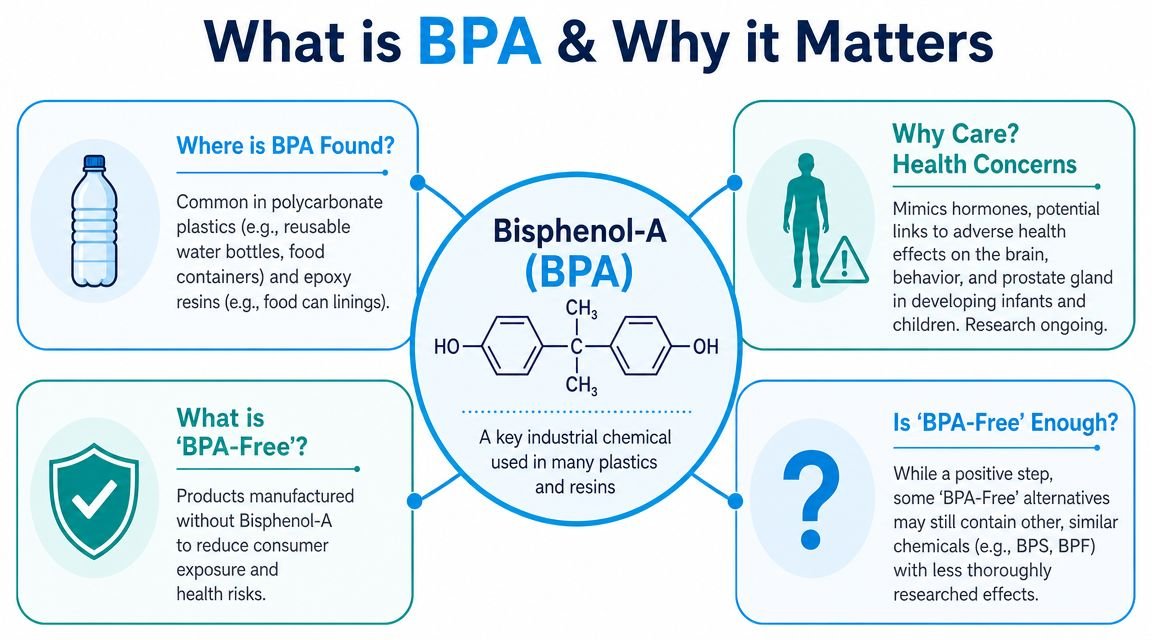
One peer-reviewed study compared older bottle materials with newer options. It found no detectable BPA migration from Tritan™ copolyester plastic, unlined stainless steel, and EcoCare™ lined aluminium during the test period, while older polycarbonate bottles did release BPA under the same conditions, according to this peer-reviewed bottle migration study.
That helps explain why the BPA-free label became so important. It tells you the product avoids one well-known chemical concern that was linked with older plastics.
Why UAE heat changes the conversation
In the UAE, bottle safety is not only about what you buy in the shop. It is also about what happens after. A bottle may spend part of the day in a car, near a window, in a school bag, or on a busy office desk. Heat and repeated use can put more stress on materials, which is why bottle choice needs to be practical, not only theoretical.
The same study reported higher BPA migration from epoxy-lined aluminium when boiling water was involved. You do not need to pour boiling water into a child's bottle to learn from that. The practical lesson is that heat can increase chemical movement in lower-quality or older materials.
What the label does, and what it does not do
When a bottle says BPA-free, the claim is useful. It means the manufacturer is saying Bisphenol A was not used in that product.
But the label answers only one question.
It does not tell you whether the plastic scratches easily, whether the bottle is hard to clean, or whether it is the best fit for daily life in a hot climate. That is why many families prefer steel for school and commuting, and why some homes choose glass water bottles for home use where breakage is less of a concern.
Health guidance from Mayo Clinic also takes a cautious, practical line. It notes that BPA exposure from foods and drinks is usually at very low levels, while still suggesting BPA-free products and recommending glass, porcelain, or stainless steel for hot liquids.
For parents and office managers, the takeaway is straightforward. BPA-free is a good starting point, not the final answer. It removes one known concern, which is even more relevant in the UAE's heat. For higher-volume hydration, the bigger goal is a setup that keeps safe water available all day without relying too heavily on bottles that get worn out, overheated, or difficult to maintain.
Comparing Your Bottle Options Glass vs Steel vs Plastic
Not all BPA free water bottles feel the same in daily life. Some are great at home but annoying on the school run. Some work well at an office desk but aren't ideal for children.
The best choice usually comes down to three things. How the bottle is used, how often it's cleaned, and whether it spends time in heat.
Quick Guide to BPA-Free Bottle Materials
| Material | Pros | Cons | Best For |
|---|---|---|---|
| Glass | Doesn't carry plastic taste, easy to inspect for cleanliness | Heavy, breakable, less practical for active use | Home use, desk use |
| Stainless steel | Durable, widely trusted, practical for frequent use | You can't always see inside as easily at a glance, often heavier than plastic | Offices, commuting, school, gym |
| Tritan or similar BPA-free plastic | Lightweight, easy for kids to carry, usually affordable | Plastic can scratch over time, and labels alone don't tell the whole story | Short daily carry, lighter bags |
If you want the simplest low-fuss option, stainless steel often wins. It's durable and feels reliable for repeated use.
Glass is excellent when breakage isn't a big concern. At home, on a desk, or in a meeting room, it can be a very comfortable choice.
Plastic still has a place, especially for children who need something light. But it pays to be pickier with plastic than many people realise.
What to check before you buy
Material details matter more than front-label marketing. Independent guidance notes that 18/8 stainless steel bodies are BPA-free, and that BPA-free bottles typically rely on materials such as stainless steel, PP, Tritan, and silicone gaskets. It also advises buyers to ask for a written material declaration for the body, lid, and gasket separately, as explained in these water bottle material specifications.
That last part is easy to miss. A bottle body can be fine while the lid or seal is unclear.
- Check the body first: If it says 18/8 stainless steel, that's a strong sign for the main container.
- Look at the lid and gasket: Food-contact parts matter too. PP and silicone are commonly used.
- Ask simple questions: If the seller can't clearly explain what the bottle body, lid, and seal are made from, move on.
A bottle is only as reassuring as its food-contact parts.
For parents, the practical question is often weight versus confidence. For office managers, it's usually durability versus easy upkeep. If you want a useful visual reference for home-style bottle options, this guide to a water glass bottle for everyday use helps show why many people still prefer non-plastic materials.
Beyond the Label The Hidden Story of BPA-Free Plastics
The words BPA-free sound like the end of the story. For many shoppers, that label feels like a green light.
It's a good start, but it's not a complete answer.
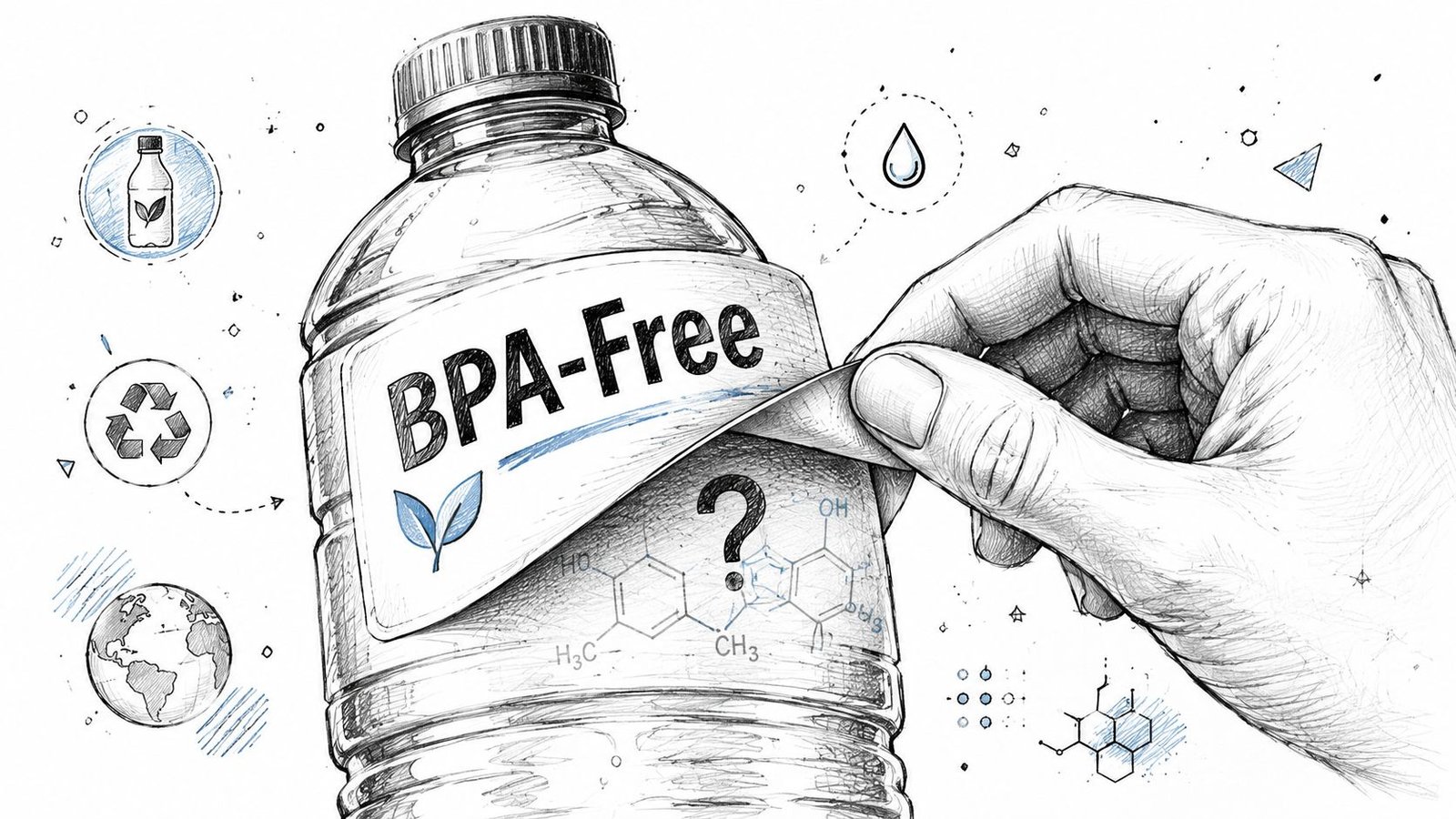
Why BPA-free is helpful but not the full story
Independent testing reported that 4 of 11 BPA-free reusable bottles leached substitute bisphenols such as BPS, BPF, and BPAP, with the highest readings around 80 ng/L in room-temperature water. Laboratory evidence of estrogenic activity was also observed at higher exposure levels, as discussed in this video covering BPA-free bottle testing.
You don't need to panic when you read that. The practical takeaway is simpler than the chemistry. A BPA-free label tells you one thing that isn't present. It doesn't always tell you everything that is.
That matters in the UAE because real life adds heat. If you leave a plastic bottle in a hot car in Dubai, on a loading area in Sharjah, or outside during a school activity in Ajman, you're not using it under ideal conditions.
How to lower your exposure without getting stressed
If this sounds annoying, that's because it is. People want a clear answer. The easiest one is to choose materials with a stronger track record for confidence, especially if the bottle will be reused a lot.
A practical approach looks like this:
- For highest confidence: Choose stainless steel or glass when possible.
- For lightweight daily carry: Use a well-made BPA-free plastic bottle, but avoid heat and replace it if it gets worn.
- For lids and seals: Don't ignore them. These are still food-contact parts.
This short video gives useful context on why the label alone doesn't tell the full story.
The goal isn't perfection. It's lowering avoidable exposure with sensible choices.
That mindset helps both families and office buyers. You don't need to fear every bottle. You just need to understand that “BPA-free” is a starting point, not the only thing worth checking.
Simple Tips for Keeping Your Bottles Clean and Safe
Even a good bottle can become unpleasant if it isn't cleaned properly. Most problems people blame on “bad bottle quality” are sometimes just old water, trapped moisture, or a lid that never gets washed well.
For busy homes and offices, the best routine is the one people will follow.
A simple cleaning routine
Wash your bottle regularly with warm water and mild soap. Pay extra attention to the cap, threads, spout, and seal, because those are the places where residue tends to sit.
Let every part dry properly before closing it. A bottle sealed while still damp can develop smells quickly.
A simple routine helps:
- Daily habit: Empty leftover water and rinse after use.
- Regular wash: Clean the full bottle, lid, and seal properly instead of only rinsing the inside.
- Dry fully: Leave parts open to air-dry before putting them back together.
If the bottle has a narrow neck, use a bottle brush. If the gasket comes out safely, remove it sometimes and clean underneath. That hidden area is easy to miss.
Signs it may be time to replace a bottle
Not every bottle needs replacing quickly, but some signs shouldn't be ignored.
- Persistent smell: If odour stays after proper washing, the material or hidden parts may be holding residue.
- Visible damage: Cracks, deep scratches, peeling inner surfaces, or warped parts are good reasons to stop using it.
- Worn lid or seal: If the seal looks damaged or rough, it may be harder to keep hygienic.
For parents, this matters because kids often close bottles while they're still wet. For office managers, shared storage areas and mixed bottle habits can make consistency harder. Simple cleaning rules usually solve most of it.
A Smarter Hydration Strategy for UAE Homes and Offices
Personal bottles are useful. They're great for school, commutes, meetings, and errands.
But for high-volume use, they don't solve everything. A family home or a busy office still needs a reliable, practical source of water throughout the day.
When personal bottles stop being the whole answer
If you manage a home with children, you already know the pattern. One bottle is in a bag, one is on the sofa, one is half-full in the car, and nobody is quite sure which one was washed last.
In offices, it gets even messier. Staff bring different bottles, small plastic bottles pile up, some sit in warm rooms too long, and cleaning habits vary from person to person.
That's why the daily issue in the UAE often isn't just BPA by itself. Workplace hydration guidance notes that BPA exposure is higher when plastic bottles are exposed to heat, and also highlights waste concerns from plastic use. It points to a bigger practical gap for households and workplaces that need dependable hydration without constant small-bottle handling, as discussed in this UAE-relevant article on BPA-free bottled water and bulk use.
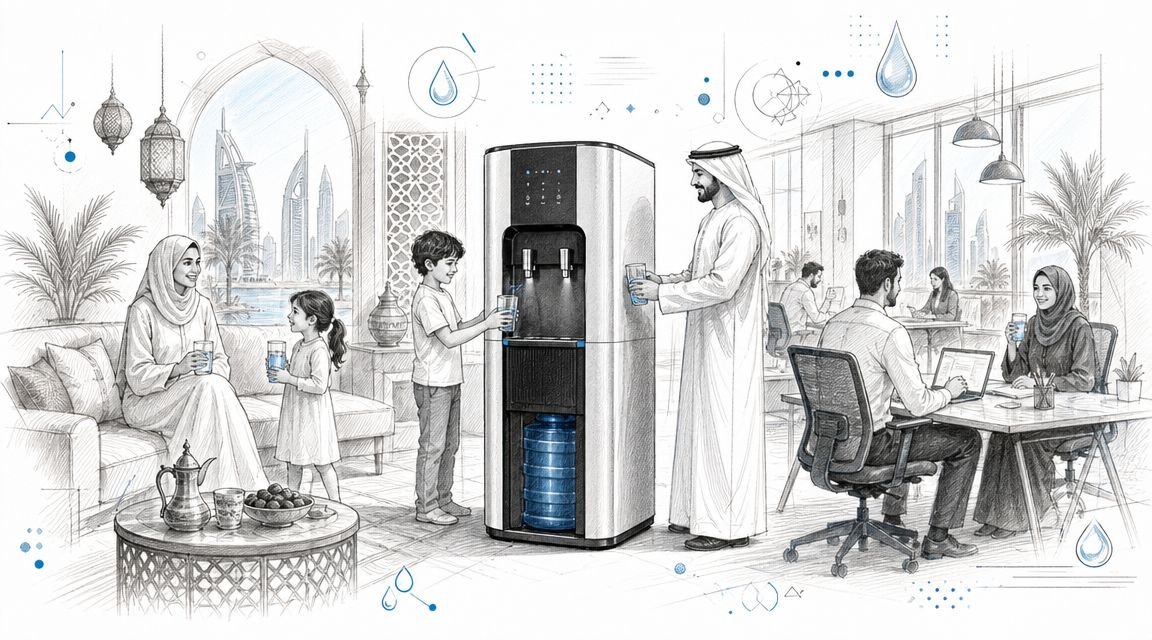
Why 5-gallon delivery makes practical sense
For homes and workplaces that use a lot of water, 5-gallon water changes the routine in a very practical way. Instead of depending on many small containers, you organise hydration around a larger, more consistent supply.
That helps in a few ways:
- Less handling of small bottles: Fewer individual containers means fewer chances for heat exposure and inconsistent reuse.
- Lower day-to-day clutter: Homes feel more organised, and offices avoid piles of empties.
- Easier planning: You know your main drinking supply is covered.
This is especially relevant for water delivery Dubai, water delivery Sharjah, and water delivery Ajman households and offices that go through water quickly. If your team keeps asking who ordered more water, or your family runs out at the wrong time, a regular delivery pattern is easier to manage.
For high-use homes and offices, the smarter question isn't only “Which personal bottle is best?” It's “How do we make daily hydration easier and cleaner overall?”
A larger delivery setup also fits the way many UAE families and companies already live. Monthly and scheduled ordering is normal. So instead of focusing only on bottle labels, it makes sense to build a system that reduces hassle from the start.
If you've been comparing options for drinking water delivery UAE needs, it helps to think in layers. Use a good personal bottle for carrying water. Use a dependable large-format supply for the water you drink all day. That's usually the most balanced answer.
For office managers looking at office water delivery Dubai, this is about reliability as much as convenience. For homes, it's about having clean drinking water UAE families can count on without last-minute supermarket runs.
If you want a clearer picture of what to prioritise in your main water supply, this guide to the best drinking water for daily use is a helpful starting point. And if you're searching by service area, terms like 5 gallon water delivery UAE often describe exactly the practical setup that suits busy homes and workplaces.
Ready for Easy Safe Hydration
The best bottle for you depends on how you use it. But for your main daily water supply at home or work, keeping things simple usually works best.
If you're in Dubai, Sharjah, or Ajman, a reliable 5-gallon drinking water service can make hydration easier, more organised, and less wasteful. When you're ready to order, contact Oxy Plus Water on WhatsApp through oxypluswater.com.
Frequently Asked Questions
Is BPA-free always the safest option?
It's better than older BPA-containing plastics, but it isn't always the full story. Some BPA-free plastic bottles may still use substitute chemicals, so stainless steel and glass often give more peace of mind.
Which bottle material is best for UAE heat?
Stainless steel is often the easiest all-round choice for hot conditions and regular reuse. Glass is also a strong option when breakage isn't a concern.
Does the lid matter, or only the bottle body?
The lid matters too. The body, lid, and gasket are all food-contact parts, so you should check all of them, not just the main bottle material.
Are BPA free water bottles good for children?
They can be, especially when weight matters for school bags. Just choose a well-made bottle, avoid leaving it in heat, and replace it if it becomes scratched or worn.
What's the best hydration setup for a busy office?
A good personal bottle for each staff member helps, but a larger shared water supply usually makes daily hydration much easier. That's why many workplaces prefer office water delivery Dubai solutions built around 5-gallon bottles.
Is 5-gallon delivery practical for homes too?
Yes. It's useful for families who go through a lot of water each week and want fewer supermarket trips. It also suits homes looking for dependable drinking water delivery UAE service.
Which UAE areas commonly use scheduled water delivery?
Many homes and offices in Dubai, Sharjah, and Ajman use regular delivery because it's convenient and easier to manage. That's why searches for water delivery Ajman, water delivery Sharjah, and water delivery Dubai are so common.
If you want an easier way to keep your home or office stocked with clean, reliable drinking water, order from Oxy Plus Water. We deliver 5-gallon bottled purified drinking water across Dubai, Sharjah, and Ajman, and you can arrange your order quickly on WhatsApp through the website.